



























Most disappointments from a garden statues sale have nothing to do with the sculpture itself. The piece is well cast, the patina is honest, the pose is good. It just landed in the wrong spot, at the wrong height, facing the wrong way, and now it reads like an afterthought instead of the centerpiece the buyer imagined. Placement is the quiet variable that decides everything, and it is the part most people skip while they browse a garden statues sale comparing prices.
We ship large bronze and metal work to gardens and interiors across the US and beyond, and the pattern repeats: buyers fall for a photograph, forget to measure the sightline, and end up with a beautiful object that never quite commands its space. This guide fixes that before you shop any garden statues sale.
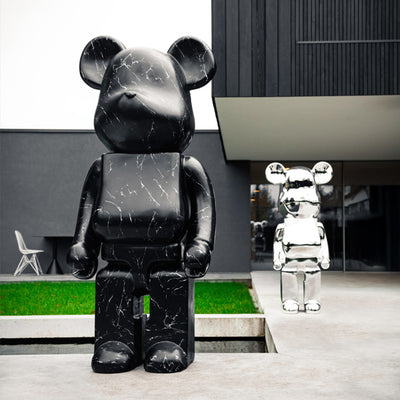
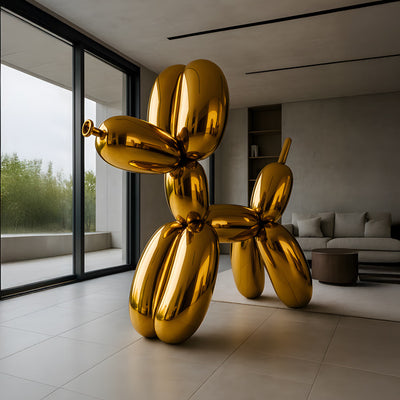
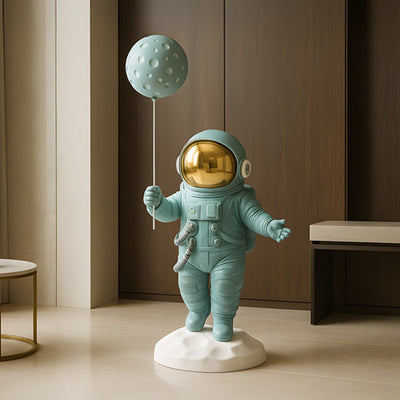
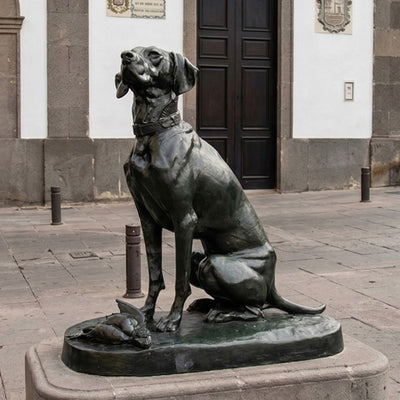
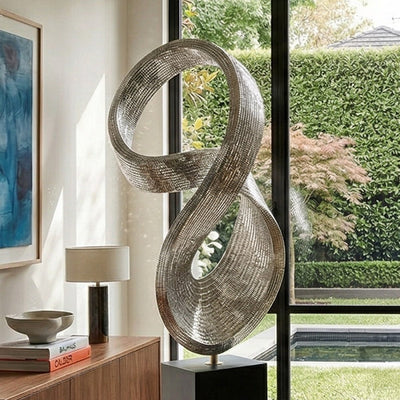
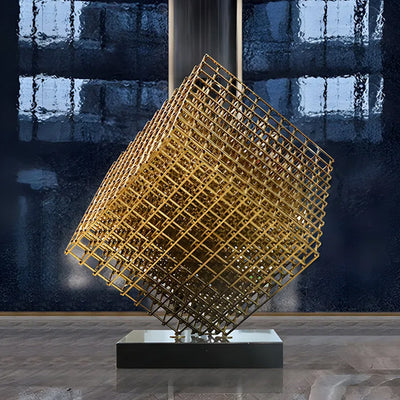
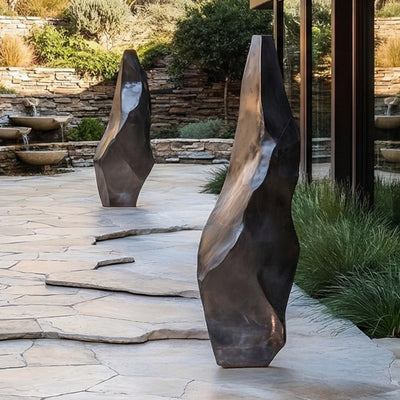
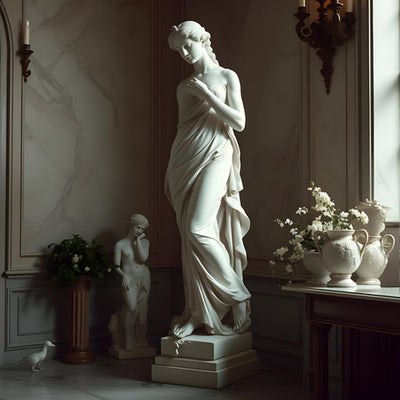
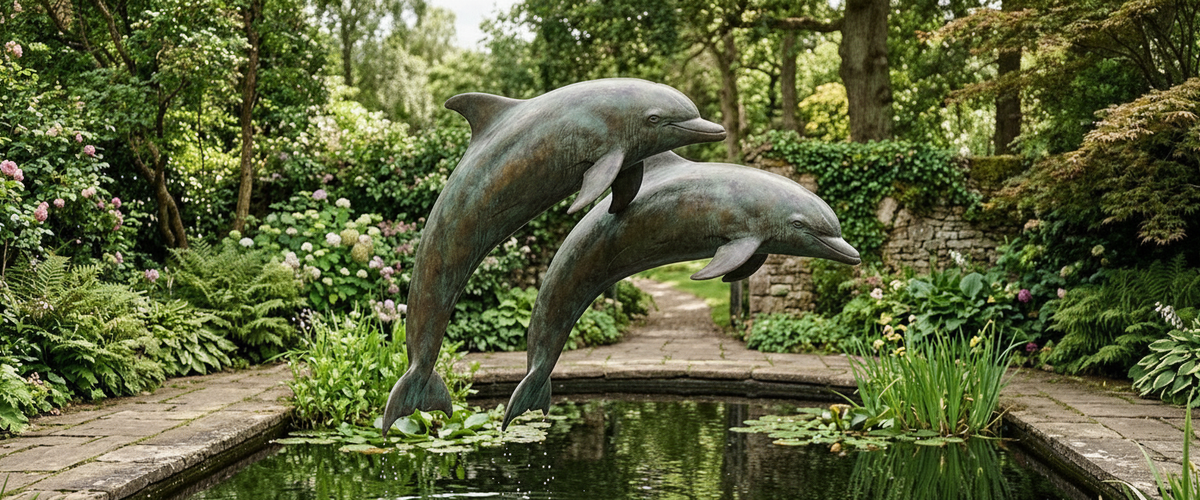
The same sculpture reads differently depending on where it lands.

Key Takeaways Before You Shop a Garden Statues Sale
Scale beats price. A piece that is one size too small will always look cheaper than it was, no matter what you paid.
Pedestal height changes the read. The same figure at eye level versus above the horizon line tells two different stories.
Backdrop is half the sculpture. A dark bronze against dark yew disappears; the same bronze against pale stone or open sky reads sharp.
Indoor and outdoor are different problems. Light, moisture and viewing distance all shift when you cross the threshold.
Measure the approach, not just the plot. How you walk toward a statue matters more than the square footage around it.

What a Garden Statues Sale Actually Looks Like in Different Settings
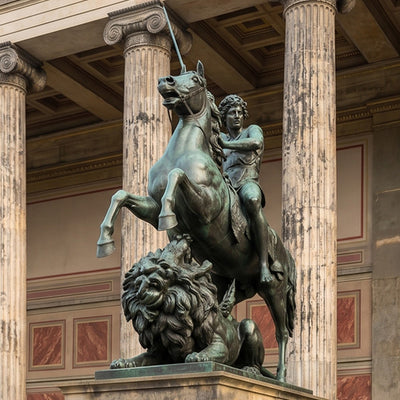
The same sculpture behaves differently depending on where it lands, and no garden statues sale can tell you that from a thumbnail. Drop a 6 ft (183 cm) bronze figure into a tight townhouse courtyard and it fills the frame; put it in the middle of a two-acre lawn and it can look stranded, like a garden ornament lost in a field. Neither the piece nor the price changed. The space changed.
Indoors, a sculpture works at close range. You read texture, tool marks, the way patina pools in the recesses. A tabletop or entry-hall piece invites people within a few feet, so surface finish carries the work. Outdoors, distance takes over. A statue seen from 40 ft (12 m) across a terrace lives or dies on silhouette. Detail you paid for at arm's length simply evaporates at that range, which is why a strong outline matters more than fine surface work for anything placed at the far end of a garden.
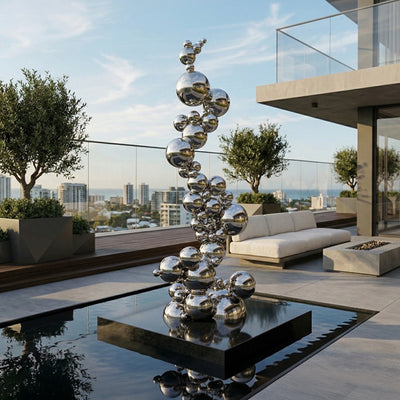
Water complicates the picture in a good way. Pieces sited near a pool, pond or fountain gain a second life through reflection, and animal forms in motion suit that setting. Where the composition needs arrested movement beside water, a leaping subject such as the Large Contemporary Leaping Dolphins Bronze Sculpture - 300cm doubles its energy the moment the surface reflects it. Browse the wider garden fountains and water features range if you want the sculpture and the water source to work as one composition rather than two competing focal points.

Scale, Sightlines and Pedestal Height
Here is the rule we repeat to almost every client shopping a garden statues sale: buy for the viewing distance, not the object. The further away a sculpture sits, the larger it needs to be to hold attention. A common miscalculation is choosing a piece that looks generous in a photo shot from three feet, then placing it at the end of a 60 ft (18 m) axis where it shrinks to a dot.
Pedestal height is the lever most buyers forget they can pull. Raise a figure so its focal point sits near eye level and it feels present and companionable. Lift it above the horizon line, silhouetted against sky, and it turns monumental and slightly formal. Set it low, almost on the ground, and it reads as intimate, something you come upon rather than something that announces itself. None of this requires a bigger sculpture; it requires a considered base.
Pedestal height and sightline decide whether a piece reads intimate or monumental.
Sightlines are the second half. Walk the route people actually take through the space. Where does the eye land as you come through a gate, round a hedge, or step off a deck? That arrival point is where a statue earns its keep. To terminate a long lawn axis you want height and a narrow profile that stays legible at distance without swallowing the border beside it, which is where a tall vertical form like the Monumental Crow on Apple Bronze Sculpture - 350cm at 350 cm (roughly 11.5 ft) does its best work.

Indoor Versus Outdoor: When Each Setting Wins
Bronze is happy in both worlds, which is why it dominates our garden statues sale catalog, but the decision still matters. Indoor placement wins when the work rewards close reading, when you want climate stability, or when the piece is a conversation object in a hall, gallery wall or double-height living room. A polished or detailed bronze holds its finish indefinitely inside because it is spared freeze-thaw cycles and UV exposure.
Outdoor placement wins when the sculpture needs room to breathe and a relationship with the sky, planting or water. Bronze develops its patina outdoors through slow reaction with the air, a process conservators at the Smithsonian's outdoor sculpture program have documented in detail, and many buyers prize that living surface. If you want the patina to age evenly rather than streak, factor in drainage at the base and avoid siting a piece directly under a drip line from a roof or heavy tree canopy.
A paired composition earns its place outdoors where there is room to circle it. Where a lawn or gravel court lets you walk a full circle, a piece designed to be read in the round, such as the Large Contemporary Cantering Horse Pair Bronze Sculpture - 180cm at 180 cm (about 6 ft), suits the setting far better than a wall-backed niche that hides half the work.

Light, Backdrop and Contrast
Light does more for a sculpture than any polish. Raking light early and late in the day pulls out every plane and edge; flat midday light flattens the same piece. Before you commit to a spot, watch it across a full day. East-facing placements catch morning drama, west-facing spots earn the golden hour, and a piece under dense shade all day will look inert no matter how good the casting is. This is the check most shoppers skip at a garden statues sale.
Backdrop decides contrast. Dark bronze against a dark hedge is the single most common own goal we see; the sculpture merges into the greenery and loses its outline. Set that same bronze against pale render, light stone, gravel or open sky and the silhouette snaps into focus. If your only available backdrop is dark, either uplight the piece at night or choose a lighter-patina or stainless finish that carries its own contrast.
Reflection and repetition help too. A single statue mirrored in still water reads as two. A form placed where late sun throws a long shadow gains a second graphic element for free. These are the details that separate a placed sculpture from a parked one, and they matter whatever the garden statues sale price says.

Common Placement Mistakes and How to Avoid Them
For wider placement ideas, Bronze Garden Statues: A Buyer's Guide to Scale, Finish, and Placement is useful companion reading before you finalise the setting and sightlines on a garden statues sale purchase.
These are the errors that come up most often in commissions we handle, and all of them are avoidable with ten minutes of planning.
Buying one size too small. The most frequent regret at any garden statues sale. When in doubt, size up; a sculpture that slightly dominates a space almost always beats one that gets lost in it.
Ignoring the pedestal. The right base can rescue a piece that would otherwise sit too low. Budget for it from the start.
Centering by instinct. Dead center is not always the strongest position. An off-center placement that answers a sightline usually reads more deliberate.
Forgetting winter. A statue framed by summer planting may stand naked and exposed in January. Check the year-round backdrop.
Skipping the foundation. Large bronzes are heavy. At true monumental scale, a piece such as the Monumental Contemporary Paired Whale Tail Bronze Sculpture - 500cm at 500 cm (around 16 ft) needs a properly engineered footing, not a paving slab. We advise on fixing and groundwork for exactly this reason.
No night plan. If you entertain outdoors, an unlit sculpture vanishes after dark. Plan discreet uplighting during install, not after.
Where to Find Unique Garden Statues for Sale
If you are searching for garden statues for sale near me and coming up short, the honest answer is that genuinely distinctive large-scale work rarely sits in a local garden center or a discount garden statues sale. It comes from studios that cast and commission at scale. Giant Sculptures is a bespoke supplier of large outdoor figures in bronze and engineered metal, and we ship worldwide, so proximity matters less than getting the scale, finish and fixing right for your specific site.
Start by browsing the full garden statues collection to calibrate your eye on scale and subject, then narrow to bronze garden statues if you want a material that ages gracefully outdoors and holds value over decades. This is a smarter route than a generic garden statues sale, because a bespoke commission lets us build the piece around your sightline, your backdrop and your groundwork rather than the other way around.
Budget depends on material, scale, complexity, engineering, installation and finishing, so the sensible move at any garden statues sale is to shortlist two or three pieces, tell us the site and the viewing distance, and ask for a tailored quote. That conversation usually saves more money than chasing a discounted garden statues sale price, because it stops you buying the wrong size.