





































































































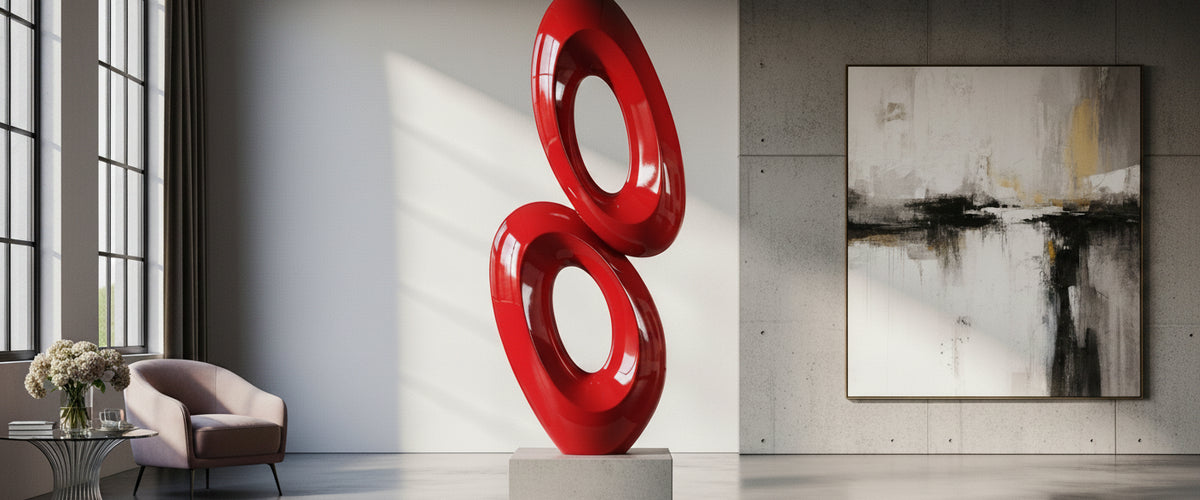

Fiberglass sculpture is the material that lets a 12 ft (3.7 m) stag stand on a rooftop terrace without collapsing the structure, and the same material that lets a winery install a glossy red apple the size of a small car without a crane crew on standby. It is light, strong, and remarkably versatile, which is exactly why designers and collectors keep returning to it when bronze and stone become impractical.
That versatility is also where buyers get caught out. Not all fiberglass is built to the same standard, finish quality varies wildly between studios, and the wrong specification will chalk, crack, or fade within a few seasons outdoors. This guide walks you through how to choose well, where to place a piece for real visual impact, and when a custom commission makes more sense than buying off the shelf.

At a Glance: Fiberglass Sculpture Key Takeaways
- What it is: Glass-fiber reinforced plastic (GRP), a layered composite of resin and woven glass strands, finished with gelcoat, automotive paint, or metallic powder.
- Best for: Large-scale figures, animals, abstract forms, seasonal installations, and rooftop or interior pieces where weight is a problem.
- Not best for: Buyers who specifically want the patina and weight of cast bronze, or museum-grade carved stone.
- Lifespan outdoors: 15 to 25+ years with quality gelcoat, UV-stable pigments, and occasional refinishing.
- Lead time: Stock pieces ship quickly; bespoke commissions usually run 8 to 20 weeks depending on scale and finish.

What Fiberglass Sculpture Actually Is
A fiberglass sculpture, sometimes called a fiberglass resin sculpture or GRP sculpture, is built by laying woven glass fiber into a mold and saturating it with polyester or epoxy resin. Once cured, the shell is rigid, hollow, and surprisingly tough. A life-size horse in fiberglass weighs roughly 150 to 250 lbs (68 to 113 kg). The same piece in bronze would exceed 1,500 lbs (680 kg) and need engineered footings.
That weight difference changes what is possible. A rooftop garden, a suspended installation in a hotel atrium, a touring brand activation across three cities: none of these are realistic in bronze or marble. Fiberglass makes them practical.
The trade-off is honesty about what the material is. Fiberglass can be finished to look like aged bronze, polished steel, weathered stone, or candy-gloss automotive lacquer, and a good studio can hold that finish for decades. It is still a composite shell, though, not a solid casting. Buyers who want the heft and dead-thud of bronze should commission bronze. Buyers who want scale, color freedom, and shipping sanity should look at fiberglass seriously.
Finishes, Colors, and Scale Decisions
Finish is where fiberglass either earns its keep or exposes a cheap supplier. Three quality tiers are worth knowing.
Pigmented Gelcoat
Color is mixed into the outer gelcoat layer before the piece leaves the mold. The advantage is depth; small scratches do not reveal a different color underneath. Good for solid hues, stone effects, and metallic looks.
Automotive Paint Systems
Two-pack polyurethane or acrylic systems applied over a primed gelcoat shell. This is how you get a mirror-finish red apple or a deep gloss black panther. Holds up well outdoors when properly clear-coated with UV inhibitors. The reference point here is Anish Kapoor fiberglass sculpture work, which leans hard on saturated pigment and surface perfection to make the form read as pure color rather than object.
Metallic and Faux Patina Finishes
Cold-cast bronze, copper, or iron powders mixed into the surface coat, then chemically patinated. From 6 ft (1.8 m) away, a well-executed cold-cast bronze fiberglass piece is genuinely difficult to distinguish from a cast bronze. Useful when budget or weight rules out the real thing.
On scale: fiberglass becomes more cost-effective per cubic foot as the piece grows. A 3 ft (0.9 m) figurine is usually better in resin or bronze. A 9 ft (2.7 m) figure or a 14 ft (4.3 m) abstract is where fiberglass starts to make obvious sense. Browse the fiberglass sculptures collection to see how proportion shifts the conversation; the bigger the work, the stronger the argument for GRP.
Where to Place Fiberglass Sculpture for Real Impact
For wider placement ideas, What Fiberglass Sculpture Actually Gets You (And Where It Fails) is useful companion reading before finalising the setting and sightlines.
Placement is where most buyers underspend their attention. A great piece in the wrong spot reads as decoration. The same piece on a considered sightline reads as art.
Gardens and Estates
For a fiberglass garden sculpture, think about the approach. A long driveway benefits from a single tall vertical placed at the curve, not a cluster at the entrance. A vineyard wants horizontal forms that echo the rows. Fiberglass animal sculptures, particularly stags, horses, and large birds, work beautifully against meadow planting because the matte finishes catch the morning light without glare.
Mounting matters. Even a light piece needs a concrete footing or a stainless plate anchored into hardstanding, especially in regions with hurricane or wildfire wind events. Our studio specifies internal steel armatures on any outdoor commission over 6 ft (1.8 m).
Lobbies, Atriums, and Retail
This is where fiberglass earns its reputation. A suspended 20 ft (6.1 m) abstract over a hotel lobby would be impossible in any other sculpture material at a sensible engineering budget. For retail flagships, color-shift automotive finishes turn a piece into a photographable moment, which is half the brief these days.
Seasonal and Themed Installations
Fiberglass christmas sculptures, nutcrackers, reindeer, oversized ornaments are the obvious commercial use, but the same logic applies to year-round resort theming. Light enough to install with two technicians, durable enough to live outside through the season, and easily refreshed with a repaint between cycles.
For broader options across material categories, the large garden statues collection is a useful comparison point when you are weighing fiberglass against stone or bronze at scale.
Budget, Commissioning, and Delivery
Budget for a fiberglass sculpture depends on five variables: scale, complexity of form, finish quality, internal armature engineering, and shipping. A 7 ft (2.1 m) standing figure in a single gelcoat color is a fundamentally different brief from a 15 ft (4.6 m) multi-piece abstract with a mirror-polish automotive finish and concealed lighting. Rather than quote ranges that mislead, we work to a tailored quote once the brief is firm.
What we recommend buyers lock down before requesting pricing:
- Final installed dimensions, including plinth or base.
- Indoor or outdoor, and climate zone (coastal salt air, desert UV, and hard freeze cycles all change the spec).
- Finish reference, ideally a photo or material sample.
- Site access, including door widths, ceiling clearances, and crane availability.
- Mounting surface: soil, paving, deck, or interior floor.
International shipping is one of the genuine advantages of fiberglass. A piece that would cost five figures to freight in bronze ships at a fraction of that weight, often crated and palletized for standard sea freight. We ship commissions routinely across the US and internationally, and the weight savings show up directly in the landed cost.
How to Make Fiberglass Sculpture (And Why Most Buyers Should Not)
The process for a large fiberglass sculpture runs roughly: clay or digital sculpt, silicone or fiberglass mold, layup of glass mat and resin in sections, demolding, bonding the sections, filling and fairing the seams, primer, finish coats, and clear coat. For a 10 ft (3 m) piece, that is 200 to 500 studio hours from a team that knows what they are doing.
DIY fiberglass at hobby scale is fine. DIY fiberglass at sculpture scale ends badly. The common failures we see when clients bring us pieces to rescue are starved layups (not enough resin), pinholing in the gelcoat, sagging unsupported spans, and color mismatches between sections. Fixing a botched 8 ft (2.4 m) figure costs more than commissioning a new one. Resin chemistry is also genuinely hazardous without proper extraction; consult the OSHA styrene guidance if you are tempted to attempt large-scale work without a properly ventilated studio.
Painting and Refinishing
How to paint fiberglass sculpture properly: scuff sand the existing surface with 320 to 400 grit, degrease with isopropyl alcohol, prime with a two-pack epoxy primer, apply color in thin coats, and finish with a UV-stable clear coat. Skip any step and the new finish will lift within a year. For exterior pieces, we recommend a light refinish every 8 to 12 years, which is far less work than the equivalent re-patination on a bronze.
How Giant Sculptures Approaches Bespoke Fiberglass
Custom fiberglass sculptures are most of what we ship in this material, because the people who want fiberglass usually want something specific: a brand mascot at 15 ft, a memorial animal at life size, an abstract that fits a particular atrium void. We work from sketches, reference photographs, or 3D files, prototype in clay or foam, and only commit to molds once the client signs off the form.
Recent commissions have included a glossy automotive-finish abstract for a private collector, a herd of life-size fiberglass animal sculptures for a ranch entrance, and a suspended piece for a hotel reopening. Each of those would have been structurally or financially impossible in solid metal or stone.
If you are weighing fiberglass against other materials for an outdoor commission, the outdoor sculptures collection shows how the same subjects read differently in bronze, stainless, Corten, and GRP. The right answer is almost always driven by site constraints rather than personal preference, which is the conversation we would rather have with you at the brief stage than after delivery.
Fiberglass sculpture, specified well and placed thoughtfully, gives you scale and presence that simply is not available in any other medium at a workable engineering budget. Specified poorly, it becomes the cautionary tale at the back of the garden. The difference is in the studio, the finish system, and the brief.
For general conservation principles, Canadian Conservation Institute outdoor object care is a useful external reference, though the final care routine should always follow the material and finish specified for the individual commission.