





































































































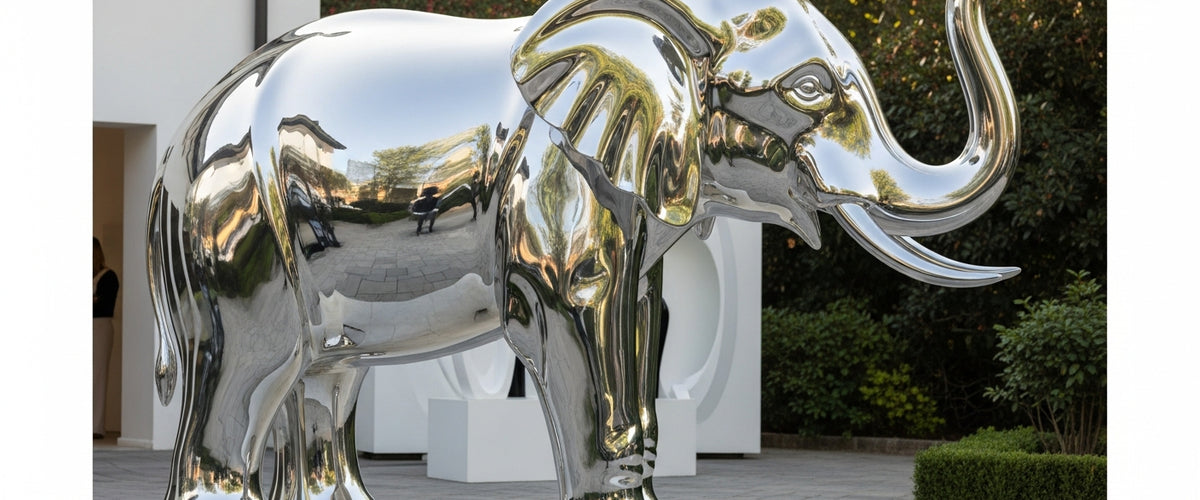

Walk into any large hotel lobby, theme park entrance or seasonal department store window and there's a good chance the show-stopping piece overhead is a fiberglass sculpture. It's the material that lets a designer hang a 14-foot (4.3 m) horse from a ceiling, drop a giant rabbit into a courtyard, or wheel a polar bear across a shop floor without a forklift. But fiberglass also gets oversold. It is not a like-for-like substitute for bronze, and it is not magic. This guide is the conversation we have with clients at Giant Sculptures before they commit, so they know exactly what fiberglass sculpture gets them and where it falls short.

Key takeaways at a glance
- Best for: very large scale, complex shapes, lightweight installation, retail, events, interiors and sheltered exteriors.
- Weaker for: heirloom outdoor pieces in harsh climates, high-traffic public sites prone to knocks, and buyers who want the deep patina life of bronze.
- Lifespan reality: excellent indoors; outdoors expect to refinish gelcoat or repaint every several years depending on UV exposure.
- Budget driver: mould-making and finishing, not the laminate itself. Repeats from an existing mould cost less than originals.
- Bespoke route: custom fiberglass sculptures are commissioned from sculpts or 3D models, then moulded, laid up, finished and painted to brief.

Why fiberglass became the go-to for big, bold, lightweight sculpture
Fiberglass, technically glass-fibre reinforced plastic (GRP), is what you choose when scale would otherwise be impractical. A bronze elephant at life size is a structural, logistical and financial undertaking that takes months and a crane. The same elephant in fiberglass can be installed by a small team, shipped in a single crate and mounted on a timber deck. That single fact, weight per square foot of surface, is why fiberglass dominates the world of large display sculpture, parade floats, themed environments and trade-show centerpieces.
It is also the reason fiberglass sculpture artists tend to work big. Anish Kapoor's mirrored and pigmented fiberglass works, for example, exploit the material's ability to take huge, seamless curves that would crack in plaster and weigh tons in metal. At a more commercial level, fiberglass animal sculptures, fiberglass Christmas sculptures, oversized fruit, fashion mannequins and themed mascots all rely on the same trick: a thin, strong shell that reads as solid mass.
How a fiberglass piece is actually built
Understanding the process helps you ask the right questions when commissioning. People often ask how to make fiberglass sculpture, or specifically how to make a large fiberglass sculpture, expecting a single answer. In practice, a studio workflow looks like this:
- The sculpt. A full-size master is built in clay, foam, or carved from a CNC-milled block based on a 3D model. This is the artistic stage, and it sets the quality ceiling for everything that follows.
- The mould. A multi-part silicone or fiberglass mould is taken from the sculpt. For very large pieces, the mould is split into manageable sections so the final piece can be demoulded cleanly.
- The layup. Gelcoat (a pigmented resin) is brushed into the mould first to form the outer skin. Then layers of glass fibre matting are laid in and saturated with polyester or epoxy resin. For larger sculptures, internal steel armatures and ribs are bonded in for rigidity.
- Assembly. Sections are joined, seams are filled and faired, and the surface is sanded back to a smooth or textured finish to brief.
- Finishing. The piece is primed and painted in automotive-grade two-pack polyurethane, faux-bronze, faux-stone, or high-gloss color, then clear-coated for UV protection.
For anyone wondering how to make large fiberglass sculptures specifically, the honest answer is that scale changes everything. Once a piece passes around 8 feet (2.4 m), you need engineered armatures, professional moulding bays, lifting points designed into the build, and a finishing team that can spray panels evenly. It is not a garage project at that point, and it is one of the reasons custom fiberglass sculptures are best left to a specialist studio.
Indoor versus outdoor: the long-term reality
This is the section most articles skip. Fiberglass sculpture indoors is genuinely low-maintenance. A dust, an occasional wipe, and the piece looks the same in year ten as in year one. A fiberglass garden sculpture is a different conversation.
Outdoors, two things attack the surface: ultraviolet light and water. UV gradually degrades resin and fades pigments. Water finds any pinhole in the gelcoat, seeps into the laminate, and over freeze-thaw cycles can cause blistering or stress cracks at thin sections. The Getty Conservation Institute and other conservation bodies have published extensively on the photodegradation of polymer composites, and the message is consistent: GRP outdoors needs a maintenance regime, not a one-time install.
What that looks like in practice for a serious buyer:
- Wash twice a year with mild soap and soft water.
- Inspect for hairline cracks at stress points, mounting bolts and thin extremities (ears, tails, fingers).
- Refresh the clear coat every 3 to 5 years in strong sun.
- Plan a full repaint at around 7 to 10 years, depending on climate and exposure.
A fiberglass piece sited in a covered loggia in Napa will outlast one baking on an exposed Texas patio. For unsheltered Aspen winters or salt-air Hamptons coastlines, we usually steer clients toward bronze or Corten steel for the hero piece, and reserve fiberglass for seasonal or interior installations.
Fiberglass vs bronze vs resin: the honest trade-offs
Buyers often ask us to compare these three head-to-head. The differences come down to weight, lifespan, surface and intent.
Fiberglass
Light, scalable, fast to produce in repeats, and visually convincing once finished by a skilled paint team. Best for theatrical impact, retail, events, branded installations and large indoor statement pieces. Browse our fiberglass sculptures to see how varied the finishes can be, from faux-bronze to high-gloss color.
Bronze
The traditional choice for outdoor permanence and collectible value. Heavy, slow to produce, and the most expensive route, but a properly cast bronze with a hand-applied patina is a multi-generational object. If a client wants a sculpture to outlive them in a garden, this is the answer.
Fiberglass resin sculpture and pure resin
Cold-cast resin (often with bronze, stone or marble powder mixed in) sits between the two. It is heavier and feels more solid than hollow fiberglass, often used for tabletop and mid-scale pieces. Our resin sculptures collection shows where this material shines: detailed figurative work at a manageable size. Resin is not the right call for the truly oversized work where fiberglass dominates.
The honest budget answer: at small scale, resin and bronze can be comparable; at very large scale, fiberglass is the only practical route for many designs, and bronze becomes a serious commission. We don't quote price bands here because the real cost depends on size, complexity, engineering, mould count, finish quality and installation. Ask for a tailored quote.
Repair, repaint and refurbish: the lifespan nobody mentions
One advantage fiberglass has over almost any other sculpture material is repairability. A bronze with a deep scratch is a conservation job. A fiberglass piece with a cracked ear or chipped paint can be filled, sanded and resprayed, often back to better-than-new condition. This matters for high-traffic settings: hotel lobbies, retail floors, restaurant entrances, themed venues.
If you are commissioning a fiberglass piece for a commercial site, build a refurbishment plan into the asset from day one. That includes:
- Keeping the original paint codes and clear-coat specification on file.
- Photographing the finished piece from multiple angles for color-matching later.
- Storing any leftover gelcoat or pigment batches with the maintenance team.
- Identifying a local body shop or composites specialist who can handle touch-ups between major refits.
On the question of how to paint fiberglass sculpture properly: it is a two-pack polyurethane system over a sound, keyed and primed substrate, ideally sprayed in a clean booth. Brush-painted repairs on a sprayed piece will always show. For valuable work, send it back to the studio that built it, or to a vehicle-paint specialist who understands composite substrates.
Buying checklist for a serious fiberglass commission
- Define the site first. Indoor, sheltered outdoor, or fully exposed? This decides the gelcoat spec and clear-coat system.
- Confirm the armature. Ask about internal steel reinforcement, mounting points and wind loading for outdoor pieces.
- Approve the sculpt before moulding. Changes are cheap in clay and expensive after the mould is taken.
- Specify the finish in writing. Faux-bronze, high-gloss, matte, metallic, textured. Reference real samples, not screen images.
- Plan delivery and installation. Crate size, access route, lifting equipment, anchor design.
- Agree the maintenance schedule. Who washes it, who inspects it, who repaints it, and when.
Used the right way, fiberglass sculpture is one of the most flexible tools in a designer's kit. It lets you place a 12-foot (3.7 m) animal in a courtyard, swap a seasonal centerpiece into a flagship store, or fill an atrium with a piece that genuinely commands the space. Used wrongly, as a cheap substitute for bronze in a hostile environment, it disappoints. The trick, as with any commissioned work, is matching the material to the brief. At Giant Sculptures we build both routes, fiberglass and metal, and we are happy to tell a client when fiberglass is the right answer and when it is not.
For wider placement ideas, 10 Stunning Animal Sculptures to Buy for Your Home or Office is useful companion reading before finalising the setting and sightlines.
For general conservation principles, Canadian Conservation Institute outdoor object care is a useful external reference, though the final care routine should always follow the material and finish specified for the individual commission.