
The best sculptures for gardens are weather-resistant pieces scaled to the space they sit in: polished stainless steel abstracts, corten steel geometrics, stone and marble classics, organic forms, and animal or wildlife figures. Everything else is a matter of matching the style to your planting and putting the piece where the light and sightlines do the work for you.
This guide covers the six styles that hold up best outdoors, how to size them, which materials survive year-round weather, and where to place them so they read as a feature rather than an afterthought.

Best Sculptures for Gardens at a Glance
- Modern abstract in stainless steel: best for contemporary gardens, courtyards and anywhere you want reflected light.
- Geometric in corten or steel: best for urban plots, gravel gardens and modern architecture.
- Stone and marble classics: best for formal layouts, long avenues and traditional country gardens.
- Organic and pebble forms: best for Zen gardens, ponds and quiet corners.
- Animal sculptures: best for family gardens and planted borders that need a focal point.
- Wildlife sculptures: best for open lawns and large estates where a piece needs to carry from a distance.
The 6 Best Garden Sculpture Styles
1. Modern Abstract Sculptures
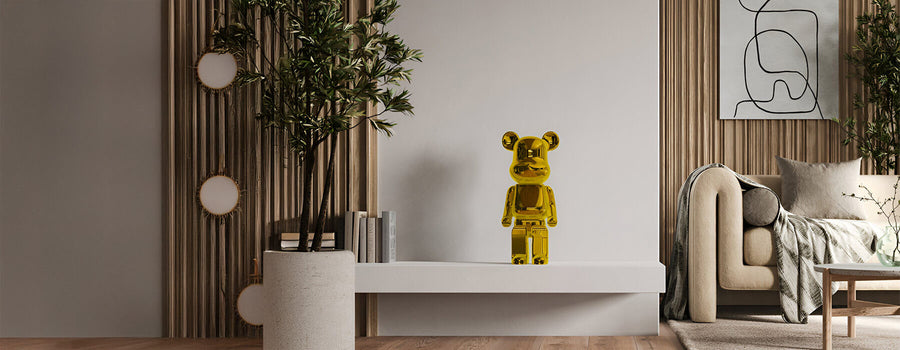
Abstract sculptures in mirror-polished stainless steel are the easiest style to place, because they borrow their color from whatever surrounds them. Green in summer, bronze in autumn, grey under winter cloud. That is why they hold interest in a garden that changes every month.
Explore our Abstract Sculptures collection for pieces built around this effect. In minimalist gardens they work best against a single-tone backdrop such as a clipped hedge, a rendered wall or a lawn, where clean lines are not competing with busy planting.

Tip: Site polished pieces where they catch low morning or evening sun. Next to water, the reflection doubles the piece and the movement of the surface animates it.
2. Animal Sculptures
Animal sculptures give a planted border a subject. A form that suggests movement reads well when it is partly screened by grasses or shrubs, because the viewer discovers it as they walk rather than seeing it all at once.
Our Garden Sculptures collection includes stylized animal forms in stainless steel that suit contemporary planting as readily as traditional beds.

Tip: Set water-themed animal pieces at pond level rather than on a tall plinth. The lower the base, the more the sculpture belongs to the water instead of hovering above it.
3. Stone and Marble Sculptures
Stone and marble suit formal gardens where symmetry and permanence matter. Their muted tones sit quietly against greenery, and the surface picks up shadow detail that steel does not, so carved pieces reward close viewing.
The Classic Sculptures collection covers traditional figures and animal forms in this vein. Marble is heavy, so plan the base before the purchase: a compacted, level footing or a poured pad keeps a large piece from settling unevenly over a few wet seasons.

Tip: Classical pieces work in pairs. Flanking an entrance, steps or the head of a path is the placement they were designed for.
4. Geometric Sculptures
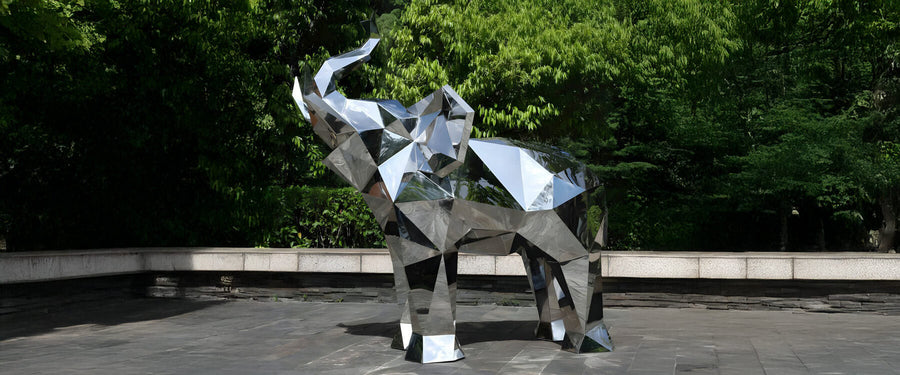
Geometric sculptures give a modern garden the structure that planting alone cannot hold in winter. Angular forms in steel or corten echo the lines of contemporary buildings, paving and raised beds, so they read as part of the architecture rather than an ornament placed on top of it.
Browse the Geometric Sculptures collection for open-form and faceted designs. Corten develops a stable rust-toned patina outdoors, which sits well with gravel, grasses and timber.

Tip: Keep the planting around geometric pieces low and simple. Succulents, gravel and clipped mounds let the silhouette stay legible.
5. Organic Shapes
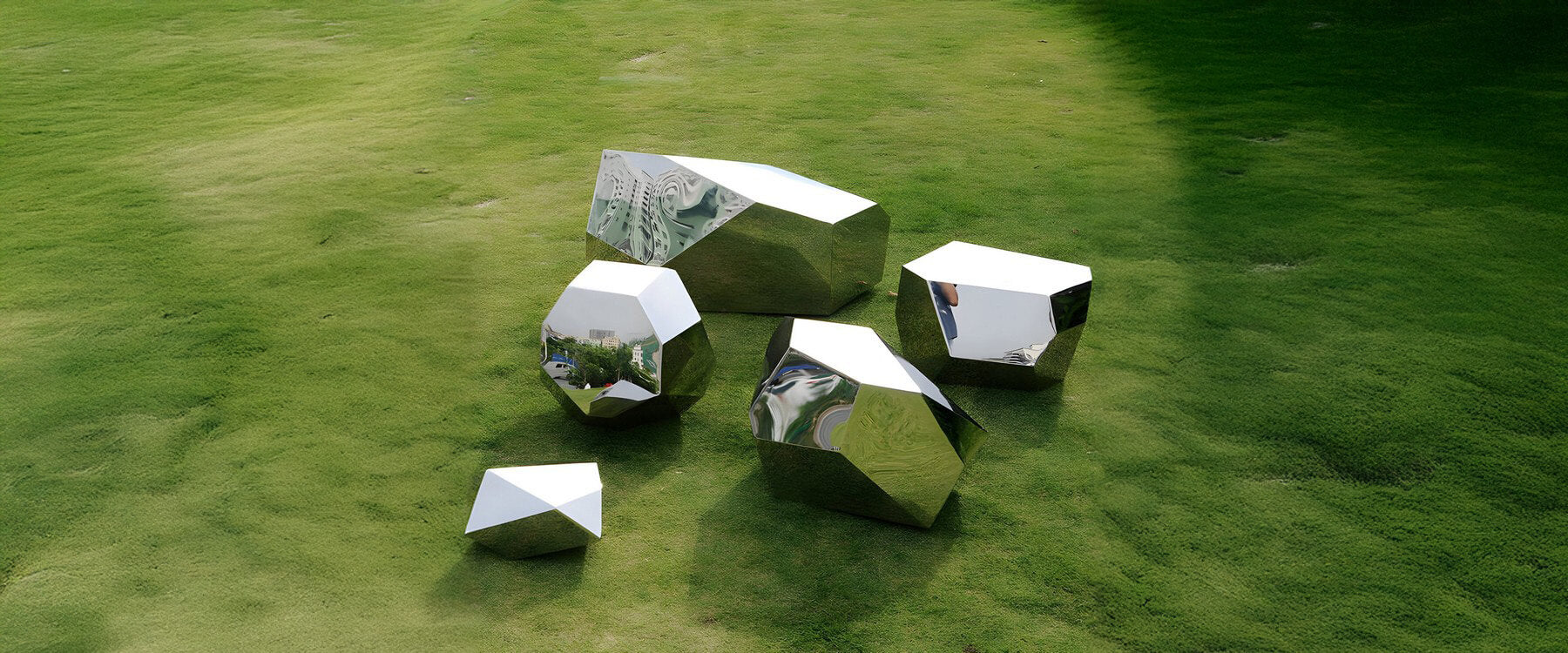
Organic sculptures borrow their forms from pebbles, waves and seed pods. The curves have no hard edges to fight with planting, which makes them the safest choice if you are unsure whether a modern piece will suit a soft, informal garden.
Our Garden Sculptures collection includes pebble and flowing forms that work in groups. Three pieces of differing heights placed at uneven intervals look more natural than a matched pair.

Tip: Half-set a pebble form into gravel or planting so it appears to emerge from the ground. It removes the ornament look immediately.
6. Wildlife Sculptures
Wildlife pieces are the style to choose when a sculpture has to carry across distance. A stag, eagle or horse on open lawn holds a sightline from the house in a way that a small abstract cannot.
The Wildlife Sculptures collection ranges from eagles to deer, including LED-lit designs that keep the piece visible after dark.

Tip: Face wildlife figures slightly across the view rather than straight at the house. A three-quarter angle shows the profile and reads as movement.
Which Materials Last Best Outdoors
Material decides how much attention a garden sculpture needs over the next decade, so choose it before you choose the design.
- Stainless steel: resists rust and holds a polished or brushed finish outdoors. Coastal and pool-side sites are the harshest test, so check the grade specified for salt air.
- Corten steel: forms a protective rust patina that stabilizes over time. Expect run-off to stain pale paving during the first weathering period, so set it on gravel, grass or dark stone.
- Stone and marble: long-lived and heavy. In freeze-thaw climates keep the base off standing water so moisture is not drawn into the stone.
- Resin and fiberglass: light enough for roof terraces, balconies and decking where load matters. Look for a UV-stable finish.
- Bronze: weathers to a green patina over the years and needs no structural upkeep.
How to Choose the Best Sculpture for Your Garden
Four checks, in this order, will get the decision right more often than browsing on looks alone.
- Scale: measure the backdrop first. As a working rule, a piece around a third of the height of the hedge, wall or building behind it reads as deliberate. Undersized sculptures are the single most common mistake in large gardens.
- Viewing distance: detailed carved work rewards close viewing near a seating area, while bold silhouettes suit long views across a lawn.
- Material: match it to your climate, exposure and how much maintenance you want.
- Style: follow the hard landscaping rather than the planting. Paving, walls and building lines stay the same all year; the borders do not.
Where to Place a Garden Sculpture
The strongest positions are the ones your eye already travels to: the end of a path, the far side of a pond, the center of a lawn seen from the main window, or a gap in a hedge that frames the piece like a doorway.
Before fixing anything, stand a cardboard box or stake of the same height in the spot and view it from the house, the terrace and the entrance. Check the piece against the sun path too, since a polished sculpture positioned against morning light behaves very differently at 4pm. Finally, confirm the ground: a level, compacted base or a concrete pad keeps tall pieces stable and stops slow settling in wet soil.
Bring Your Garden Vision to Life
The best sculpture for your garden is the one sized to its setting, made from a material suited to your weather, and placed where the light and the sightlines work in its favor. Get those three right and the style choice takes care of itself.
Browse the full range at Giant Sculptures to find a piece that suits your space, from abstract steel to classical marble.