




























































































A ten-foot fiberglass figure that thrills in a workshop can look oddly small in a double-height lobby, and slightly awkward on a lawn that runs for half an acre. Getting the object right is only half the work. To make large fiberglass sculptures that genuinely hold a space, you have to think about how the piece is built and where it will finally stand, because those two decisions pull on each other more than most buyers expect.
We build and ship large-scale work in bronze, stainless steel, stone, and engineered fiberglass, and when clients ask us to make large fiberglass sculptures the job almost always comes down to the same questions: how big, how high, how lit, and against what. This piece walks through the making and the siting together, because that is how the studio actually approaches it.
Layering glass matting and resin into the mold in the studio.

Key Takeaways
Fiberglass suits large sculpture because it is light for its size, which changes what is possible on rooftops, mezzanines, and soft ground.
Scale reads relative to the space, not the tape measure. A sculpture needs breathing room proportional to its height.
Pedestal height and sightlines change a piece more than an extra foot of sculpture ever will.
Large fiberglass sculptures outdoors need a proper gelcoat and UV-stable finish; indoor work opens up finishes that would fade outside.
Budget depends on scale, mold complexity, finish, and installation, so ask for a tailored quote rather than guessing.

How to Make Large Fiberglass Sculptures: The Build in Plain Terms
To make large fiberglass sculptures, you work with what is properly called glass-reinforced plastic, built as a shell rather than cast solid. A sculptor creates the original form in clay, foam, or a digital model, then a mold is taken from that master. Layers of glass fiber matting are laid into the mold and saturated with resin, building thickness in stages so the wall is strong without being heavy. Once cured and released, the pieces are joined, seams are filled and faired, and the surface is refined before finishing.
That layering is the reason large fiberglass sculptures work at scale. A large bronze can weigh well over a ton; the same form in resin and glass might come in at a few hundred pounds (a couple of hundred kilos) depending on wall thickness and internal armature. That difference decides whether a piece can sit on a mezzanine, a green roof, or ground that will not take a concrete footing.
The internal armature matters as much as the shell. When we make large fiberglass sculptures that are tall or cantilevered, we build a steel or aluminum frame inside the piece so it resists wind load and its own weight over decades. This is where cheap castings and commissioned work part ways. Skip the engineering and a big figure will flex, crack at the seams, and craze in the sun.

Scale, Sightlines, and Pedestal Height
Here is the lesson we relearn on nearly every commission: people specify a height, then discover the piece reads completely differently once it is placed. Scale is relative. A seven-foot sculpture feels commanding in a domestic garden and almost shy in a corporate atrium with 25-foot ceilings.
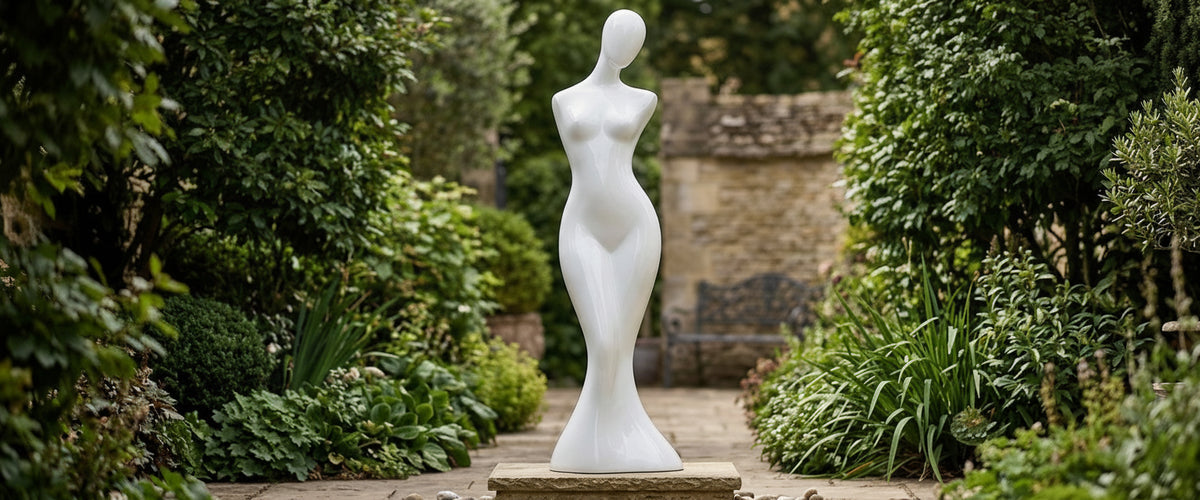
A rough working rule from the studio: give a freestanding sculpture clear space around it equal to at least its own height, more if viewers approach from one side. This holds for large fiberglass sculptures as much as for stone or bronze. Crowd it and the eye cannot resolve the whole form. On one garden commission we placed a large abstract piece with a full sweep of lawn in front of it, and the client later said the empty space was what made it look expensive.
Pedestal height is the quiet lever. Raise a figure so its focal point sits near eye level for the main viewing distance and it gains authority; set it too high and viewers stare up its underside. For a piece seen mostly from a seated position, on a terrace or in a lounge, drop the base accordingly. We often mock this up with height markers on site before finalizing the plinth, because an extra foot of pedestal changes the read more cheaply than an extra foot of sculpture.
Breathing room around a garden piece lets the eye resolve the whole form.

Indoor Versus Outdoor: When Each Wins
A large fiberglass garden sculpture earns its place because the material shrugs off frost, damp, and temperature swings that would trouble some stone, and it does so at a fraction of bronze's weight. For a lawn edge, a pool surround, or a garden that needs a strong silhouette against sky, large fiberglass sculptures let you go big without a heavy foundation.
Outdoors, the finish does the protecting. A quality automotive-grade gelcoat and UV-stable topcoat are what keep color from chalking and the surface from crazing. UV exposure is the main driver of coating degradation on exterior surfaces, a point backed by the National Institute of Standards and Technology's research on the service life of polymeric materials, which is exactly why we specify marine or automotive systems rather than decorative paint for anything living outside. Ask any supplier what finish system they use outdoors; a vague answer is a warning.
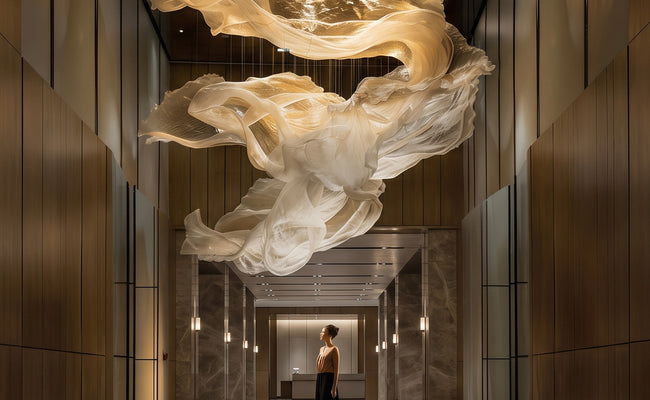
Indoors, the calculus shifts. Lobbies, stairwells, and open-plan homes let you use metallic leaf, high-gloss lacquer, or matte pigmented finishes that would fade in full sun. A large fiberglass sculpture indoors can also be more adventurous in pose, because it does not have to survive gale-force wind load. If you want a bold suspended or reaching form, an interior setting removes a constraint.
You can browse the range on our fiberglass sculptures collection to see how different scales and finishes behave in each setting before you brief a commission.
Light, Backdrop, and Contrast
Impact is mostly light and contrast, not size. A pale sculpture against a pale wall vanishes at midday. Set the same piece against a dark hedge, a slate wall, or a stand of trees and the silhouette snaps into focus. Large fiberglass sculptures live or die on this.
Think about how light travels across the piece through the day. Raking light in early morning and late afternoon carves out form and shows every curve; flat overhead light at noon flattens everything. For interiors, a single directional wash reveals shape far better than even ceiling light. If you are working with a lighting designer, the short version is that a focused beam at a moderate angle does more than raising overall brightness.
Backdrop also sets the mood. A glossy white figure reads clean and contemporary against exposed concrete; a bronze-effect finish warms up against greenery or timber. Decide the backdrop before the finish, not after, because the two work as a pair.
Common Placement Mistakes We See
For wider placement ideas, A Placement Guide for Large 3D Metal Wall Art Panels is useful companion reading before finalizing the setting and sightlines.
Under-scaling for the space. Buyers measure the sculpture and forget to measure the void it sits in. Big rooms and big gardens swallow modest pieces, and even large fiberglass sculptures can look lost when the surround is huge.
Pushing a piece into a corner. A freestanding sculpture wants to be walked around. Flatten it against a wall and you lose half its geometry.
Ignoring the sightline from the front door or gate. The most important view is often the approach, not the close-up. Site for the arrival.
Matching sculpture to wall color. Tonal harmony sounds sophisticated and usually erases the piece. Aim for contrast.
Skipping the base engineering outdoors. A tall form needs anchoring and, often, an internal frame. No fixing plan means a windy night becomes an expensive one.
Commissioning a Large Fiberglass Sculpture
A commission to make large fiberglass sculptures usually starts with a reference, a rough size, and a location. From there we discuss the master model, mold approach, internal armature, finish system, and how the piece will be delivered and installed. These pieces ship in fewer sections than bronze because of the weight, but access still matters; we always ask about gates, doorways, elevators, and crane access early.
On budget, be wary of anyone quoting a firm figure before the form and finish are settled. Cost is driven by scale, mold complexity, the finish specification, internal engineering, and installation. A simple matte figure and a mirror-gloss metallic piece of the same height sit far apart on price. The honest answer is to send us the brief and get a tailored quote rather than work from a guess.
If you are weighing this material against metal for a permanent outdoor centerpiece, it is also worth looking at our stainless steel sculptures, which suit exposed coastal and rooftop sites where longevity is the priority. Large fiberglass sculptures win on weight and finish variety; stainless wins on lifespan in punishing conditions. Which is right depends on the site.
Whether you want a sleek abstract for a gallery entrance or a large animal figure to anchor a farm-shop courtyard, the making and the siting of your large fiberglass sculptures should be planned together. When we make large fiberglass sculptures, Giant Sculptures builds bespoke large-scale work to order, and the placement conversation is part of that from the first sketch.