














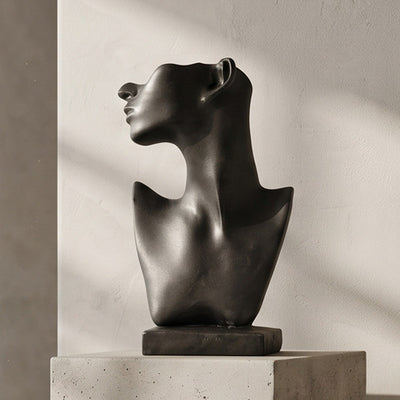

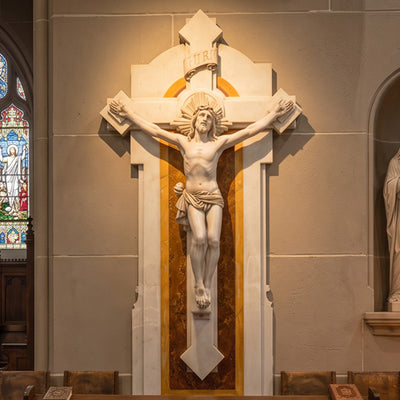


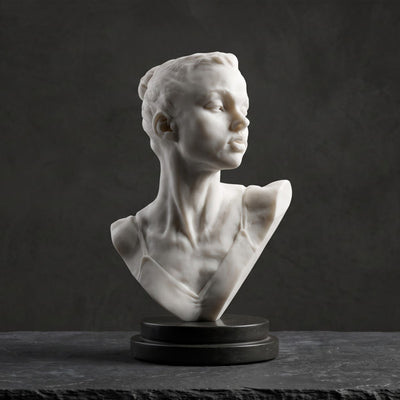

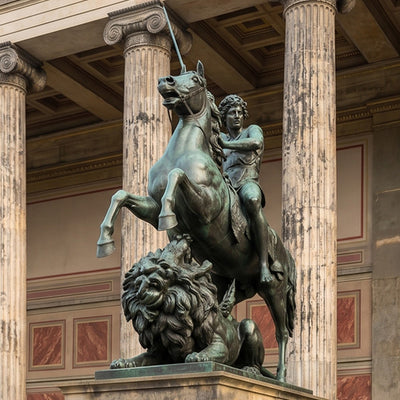






































































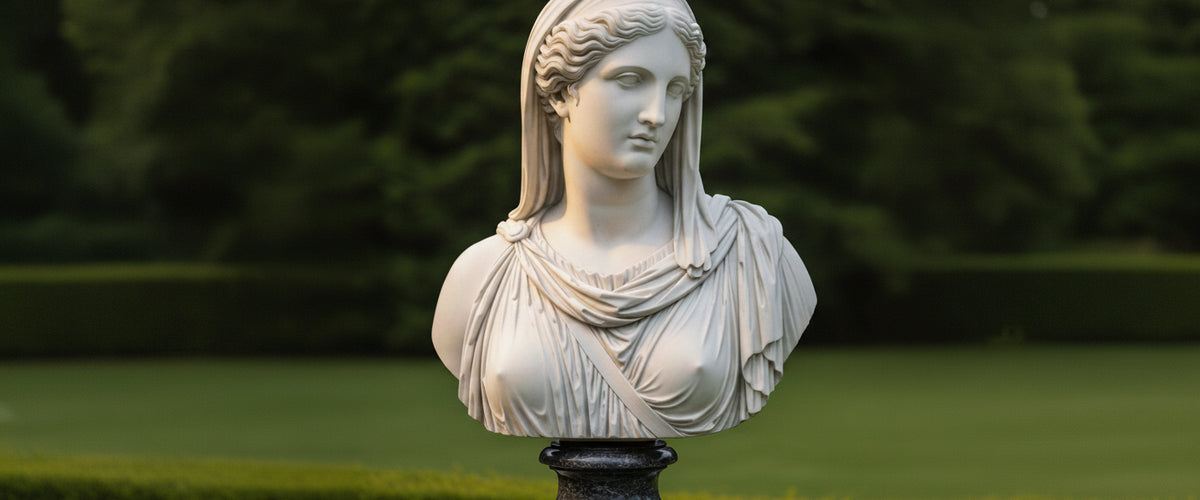

A marble sculpture bust placed badly looks like a trophy on a shelf. The same piece, set at the right height against the right wall, can hold an entire room. The difference is rarely the carving. It is almost always the decisions made around it: pedestal, sightline, backdrop, and how light falls across the cheekbone at 4 p.m.
At Giant Sculptures we ship marble sculpture busts into private homes, hotel lobbies, law firms, and walled gardens from California to upstate New York. The carving quality matters, of course. But the questions clients should be asking before they buy are about where the piece will live and who will see it from which angle.

Quick Answer: What Decides Whether a Marble Bust Works
Eye line: The subject's eyes should sit at or just above a standing adult's eye level, roughly 5 ft to 5 ft 6 in (152 to 168 cm) from the floor.
Pedestal mass: A heavy marble sculpture bust on a thin column looks anxious. Match the visual weight.
Backdrop: Plain, matte, and a shade or two darker than the marble. Busy wallpaper kills carving detail.
Light: Raking side light reveals form. Flat overhead light flattens it.
Breathing room: Allow at least 18 in (46 cm) of empty space around the piece on every side.

What a Marble Sculpture Bust Actually Looks Like in Different Settings
A 24 in (60 cm) classical maiden marble sculpture bust in a Park Avenue entry hall reads as polite, refined, almost domestic. The same maiden on a 4 ft (122 cm) pedestal at the end of a 40 ft loggia in Napa reads as architectural punctuation. The carving did not change. The relationship to the room did.
Indoors, an italian marble bust sculpture tends to work hardest in transitional spaces: the turn of a staircase, a library alcove, the wall opposite a fireplace, the end of a corridor that needs a destination. These are spots where the eye naturally pauses. A portrait in stone gives that pause something to land on.
Outdoors, the rules shift. A marble sculpture bust on a terrace in Aspen needs to hold its own against open sky and mountain. Scale up. A 30 to 36 in (76 to 91 cm) piece on a 4 ft (122 cm) plinth is usually the minimum that registers from across a garden. Anything smaller disappears into the planting.
Scale, Sightlines, and Pedestal Height
The most common mistake we see in client photos is a marble sculpture bust set too low. People instinctively want to display a sculpture the way they display a vase, on a console or sideboard around 30 in (76 cm) high. At that height the viewer looks down on the subject. The carving was almost certainly designed to be read from below or at level, so you lose the lift in the chin, the line of the throat, the shadow under the brow.
Our working rule: measure from base to crown, then aim to set the subject's eyes at 60 to 66 in (152 to 168 cm) off the floor. For a 30 in (76 cm) tall piece, that means a pedestal around 36 to 40 in (91 to 102 cm). For a smaller 20 in (50 cm) carving, push the pedestal closer to 46 in (117 cm). At the smaller end, a piece like the Apollo Marble Bust Sculpture - 50cm needs more pedestal underneath it than people expect; the carving is intimate, but the sightline still has to be adult-eye height.
Pedestal mass matters as much as height. A solid marble or limestone column, a heavy oak plinth, or a square poured-concrete block all carry the visual weight a heavy marble sculpture bust demands. Tall, narrow metal stands meant for vases look apologetic under stone. For a larger torso such as the Hercules Marble Torso Bust Sculpture - 95cm, the base needs real mass; a torso of that scale wants a plinth it cannot bully, and a thin column will read as structurally nervous even when it is not.
Indoor Versus Outdoor: When Each Wins
Indoor placement gives you control. Stable temperature, no rain, no UV, and you can light the piece precisely. White Carrara and statuario in particular reward indoor display because their translucency only shows when light passes through the surface layer rather than washing across it. Carving that depends on subtle surface play, such as the Veiled Madonna Marble Bust Sculpture - 90cm, needs a quiet interior to read the drapery under the veil. Put that outside and the effect is lost within a season.
Outdoor placement gives you drama and a weather story. Marble does age outside. Acid rain, freeze-thaw cycles, and biological growth all leave traces. An outdoor marble sculpture bust in temperate climates can develop sugaring and surface loss over decades if left unsealed and uncovered, a pattern documented by the Getty Conservation Institute. For clients in the Hamptons or coastal Florida, we usually recommend bronze busts outdoors and reserve marble for sheltered loggias, covered terraces, or interior atria. If you want stone outside, plan for winter covers and a yearly clean.
For garden centerpieces that need to live outside year-round, browse the broader garden statues collection, which includes pieces engineered for exposure.
Light, Backdrop, and Contrast
Carving lives or dies by shadow. A marble bust sculpture in flat, even light looks like a photograph of itself, all the form pressed into the same plane. Side light at roughly 30 to 45 degrees off vertical brings the cheekbones, lips, and drapery folds forward.
For interiors, a single warm directional source (2700K to 3000K) on a dimmer beats a row of downlights every time. Picture lights mounted above work for wall niches. Floor-mounted uplights work for freestanding pedestals but read theatrical, so use them deliberately.
Backdrop is the other half of contrast. An aesthetic marble sculpture bust in white stone against a white wall vanishes. The piece needs a darker, matte field behind it. Deep green, plaster pink, smoked oak paneling, aged brass, raw plaster, all work. An Aphrodite Marble Bust Sculpture - 65cm against a navy library wall reads completely differently from the same carving against builder-white drywall. Test with a fabric swatch before committing to paint.
Common Placement Mistakes
For wider placement ideas, Beyond the Vein: Marble Sculptures That Redefine Art and Elegance is useful companion reading before finalising the setting and sightlines.
We have seen these enough times to call them patterns:
The trophy shelf: Marble sculpture bust placed on top of a bookcase, head nearly touching the ceiling. The viewer cannot see the face. Move it down and forward.
The hallway crush: A 36 in (91 cm) piece in a 32 in (81 cm) wide passage. People brush past it. Damage is inevitable.
The pair problem: Two busts flanking a doorway, identical pedestals, perfect symmetry. It reads as a hotel lobby cliche unless the architecture genuinely calls for it.
The wrong eye line: Mounted too high, you stare up the nostrils. Too low, you crown the head. Test with a cardboard mock-up at the intended height first.
Ignoring the back: A piece in the round needs space behind it too. If it is shoved against a wall, you have bought a relief at full bust prices.
Buyer's Checklist Before You Commission
Photograph the intended spot at three times of day. Note where light falls.
Measure the eye line you want and work backwards to pedestal height.
Confirm the floor can carry the load. A 36 in (91 cm) carving plus pedestal can run 400 to 600 lb (180 to 270 kg).
Decide on backdrop color and finish before the marble sculpture bust arrives, not after.
For outdoor placement, ask about sealing, drainage at the base, and winter protection.
If commissioning a portrait marble sculpture bust or custom subject, supply reference photos from multiple angles and agree the sightline early with the carver.
Antique Versus New Carved Busts
An antique marble bust sculpture brings provenance, patina, and often a softer surface that reads as warm under interior light. The trade-off is condition risk: old repairs, salt damage from previous outdoor display, hairline cracks that only show under raking light. Have any antique piece inspected before purchase.
New carved work, including the Italian-tradition pieces we commission, gives you control over subject, scale, stone type, and finish. For a hallway portrait of a founder or a historical figure, a newly carved marble sculpture bust sized to the architecture will almost always sit better than a repurposed antique in the wrong scale. Where the brief calls for a named historical subject at a specific scale, the George Washington Marble Bust Sculpture - 75cm is a useful reference for how a 75 cm portrait reads on a standard library pedestal.
How Giant Sculptures Approaches Bespoke Bust Commissions
Most of our marble sculpture bust commissions begin with a single photograph of the room or garden. We work back from sightline and scale, then discuss stone (Carrara, statuario, Bianco P, or colored marbles for accent), finish (polished, honed, or aged), and base. Lead times run several months for hand-carved work; we quote against the brief rather than from a catalog price, because pedestal, plinth, crating, and white-glove installation all change the figure. To explore subjects and scale, the full marble sculptures collection is the best starting point.
Place a marble sculpture bust well and it becomes the quiet anchor of a room for fifty years. Place it badly and it becomes furniture. The carving deserves the first kind of life.