





































































































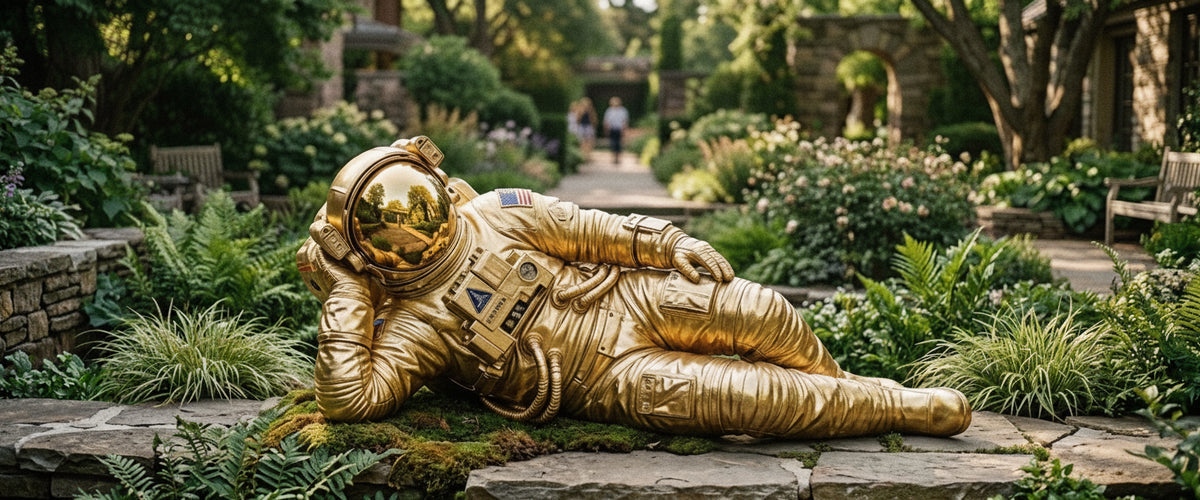

A fallen astronaut sculpture is one of the few space figures that can carry real emotional weight, and one of the easiest to get wrong. Put a slumped or reclining spaceman in the wrong corner and it reads like a dropped prop. Give it height, breathing room and the right backdrop and it becomes the piece everyone photographs. The difference is almost never the sculpture itself. It is placement.
We ship large astronaut pieces to homes, hotels, galleries and event spaces, and the same questions come up every time about where a fallen astronaut sculpture should live. How big should it be for the room? Should it sit on the floor or a plinth? Indoors or in the garden? Below is the practical thinking we walk clients through before a single crate leaves the studio.

Key Takeaways for Placing a Fallen Astronaut Sculpture
Scale to the sightline, not the floor plan. A piece that looks huge in a photo can vanish in a double-height lobby.
Pedestal height changes the whole story. Low reads as vulnerable and human; raised reads as monument.
Indoor and outdoor placement reward different materials and finishes. Weather and UV are the deciding factors.
Contrast is everything. A gold or reflective figure needs a matte, darker backdrop to hold its shape.
Leave a clear approach. A fallen astronaut sculpture is read in the round, so people need to walk around it.

What a Fallen Astronaut Sculpture Actually Looks Like in a Real Space
The phrase covers a wide spread of poses. Some pieces show a figure collapsed or reclining, referencing the original Fallen Astronaut tribute left on the Moon in 1971 to honor the astronauts and cosmonauts who died before their missions could fly. That famous work is really an ancient astronaut sculpture of the space age, a small memorial cast in aluminium. Others read as a resting spaceman, a floating figure, or a seated ranger caught mid-thought. Some collectors even ask for a deliberately headless astronaut sculpture to lean into the abstract, missing-figure mood. The pose sets the tone before anyone reads any meaning into it.
In a residential setting, a reclining fallen astronaut sculpture works best where a person would naturally slow down: the end of a hallway, a landing at the top of a staircase, a window seat with strong daylight. In a great room with a lot of glass, a reflective gold finish picks up the sky and the pool outside and keeps changing through the day. In a darker, panelled study or a ranch entry, the same figure reads quieter and more sculptural.
Commercial spaces are more forgiving of scale but less forgiving of clutter. A hotel lobby or a members' club can carry a large seated astronaut, but only if the surrounding floor is kept clear. For a relaxed, characterful corner where guests linger rather than a formal reception desk where it competes with signage, a seated figure like the Celestial Gold Astronaut Beats Sculpture - 100cm sits more comfortably than an upright hero piece.

Scale, Sightlines and Pedestal Height
Scale is where most placement decisions for a fallen astronaut sculpture are won or lost. A figure around 3 to 4 feet (100 to 120 cm) feels intimate and human at close range; it rewards a room you actually stand in. Push past 5 feet (roughly 160 cm) and the piece starts to command a larger volume and needs distance to be read properly. If your ceiling is double height, the floor is deceptive: the eye measures the sculpture against the wall above it, so a piece that felt big on delivery can look modest once it is in place.
Pedestal height then rewrites the meaning of a fallen astronaut sculpture. Set the spaceman low, near floor level, and the pose leans into vulnerability and stillness. Lift it onto a plinth at chest height and the same body language reads as a memorial or a monument. There is no correct answer, only intent. For a piece that references loss, we usually keep the base low and let people look slightly down at the figure. For a collector who wants presence and drama, we raise it.
A quick working rule from the studio: the top of the sculpture, plus pedestal, should either sit comfortably below eye line so people look down into it, or clearly above so they look up. The awkward zone is dead centre at eye height, where the piece feels stranded between the two readings.

Indoor Versus Outdoor: When Each Wins
Indoor placement gives you control. Stable temperature, no UV bleaching, no wind loading, and you can use finishes that would struggle outside. A polished or gold astronaut wall sculpture, for example, keeps its shine indoors for years with almost no intervention. This is where lighter figures and reflective finishes belong, and where astronaut sculpture art tends to hold its detail longest.
Outdoor placement asks harder questions of a fallen astronaut sculpture. A piece in a mountain garden or a coastal terrace faces UV, freeze-thaw and moisture, and the finish has to be specified for it. For genuinely permanent exterior work we steer clients toward engineered metals: bronze, stainless steel, or Corten steel, all of which age predictably outdoors. Stainless steel in particular holds a bright surface and resists corrosion, which is why it dominates serious public art commissions; the material's corrosion behavior is well documented by metallurgical bodies such as the Nickel Institute. If you love a specific decorative finish that was designed for interiors, keep it indoors or commission an outdoor version in a weather-rated material rather than gambling on it.
One lesson learned the hard way: a client once placed a lightweight decorative figure on an exposed deck facing the ocean. Salt air and full sun are brutal. We ended up rebuilding the piece in stainless steel with a specified finish, and it has sat there happily since. If the site is coastal or high-altitude, tell us early so we can commission your fallen astronaut sculpture accordingly.

Light, Backdrop and Contrast
A reflective fallen astronaut sculpture lives or dies on contrast. Against a pale wall, a gold or mirror-finish piece disappears into its own reflections and loses its silhouette. Put the same figure in front of a charcoal wall, dark planting, or a slab of dark stone, and the outline snaps into focus. Backdrop is the cheapest upgrade you can make to a sculpture you already own.
Directional light does the rest. A single raking light from the side carves out the helmet, the folds of the suit and the pose far better than flat overhead lighting, which flattens everything. Outdoors, plan for the sun's arc: a figure that reads beautifully at 10am can go flat and shadowless at noon. We often recommend a low, warm spot for evening viewing so the piece keeps working after dark, which matters for event spaces and hotels.
For a floor-standing hero piece with strong reflective character, a full-height fallen astronaut sculpture such as the Celestial Gold Astronaut Moon Balloon Sculpture needs both room and a considered backdrop to hold its shape. Crowd it against busy wallpaper and it fights the wall instead of owning the space.
Common Placement Mistakes We See
For wider placement ideas, Luxury Launch: Gold-Plated Astronaut Sculptures for High-End Collectors is useful companion reading before finalising the setting and sightlines.
Pushing it into a corner. A fallen or seated astronaut is read in the round. Give it enough clearance to walk around, even if that means it sits further into the room than feels natural.
Matching the finish to the wall. Gold on cream, chrome on white. The sculpture needs contrast to have an outline.
Under-scaling for a big volume. In lobbies and double-height rooms, buyers routinely go one size too small. When in doubt, size up.
Ignoring the approach. Where do people first see the fallen astronaut sculpture from? The best viewing angle should be the one they meet as they enter.
Outdoor placement with an indoor finish. The single most expensive mistake, because it usually means recommissioning.
Buyer Decision Criteria: Choosing the Right Piece
Work through these before you commit to a fallen astronaut sculpture:
Meaning. Do you want the poignant, memorial reading of a true fallen astronaut, or a lighter, playful space figure? The pose decides this.
Location. Indoor, outdoor, or coastal or high-altitude exterior? This dictates material more than budget does.
Scale and sightline. Measure the viewing distance and the wall behind, not just the floor.
Finish and backdrop. Confirm you have a contrasting background before you fall for a reflective finish.
Bespoke or catalog. If your site has specific constraints, a commission solves them cleanly.
If you are weighing options, the wider astronaut sculptures and space art collection is a good place to see how pose and scale change the feel, and the large astronaut sculptures range shows what genuine statement scale looks like in the metal.
Commissioning a Bespoke Astronaut Sculpture
Catalog pieces cover most rooms, but plenty of the astronaut work we ship is bespoke, including a good number of fallen astronaut sculpture projects. Buyers come to us with a specific pose in mind, an exact height dictated by a ceiling or a plinth, or an exterior site that demands stainless steel or bronze rather than a decorative finish. Some want an astronaut wall sculpture rather than a freestanding figure, which changes the engineering entirely because of fixing loads. Every astronaut sculpture artist on our team works from the site outward.
As a bespoke sculpture supplier, Giant Sculptures builds each fallen astronaut sculpture to the site and the intended lifespan. Budget depends on material, scale, complexity, engineering, installation and finishing, so we quote each commission individually rather than quoting a band that would not mean anything. If you send us the room dimensions, a photo of the intended spot, and whether it is indoor or outdoor, we can tell you very quickly whether a catalog piece fits or whether a fallen astronaut sculpture commission makes more sense.