

























































































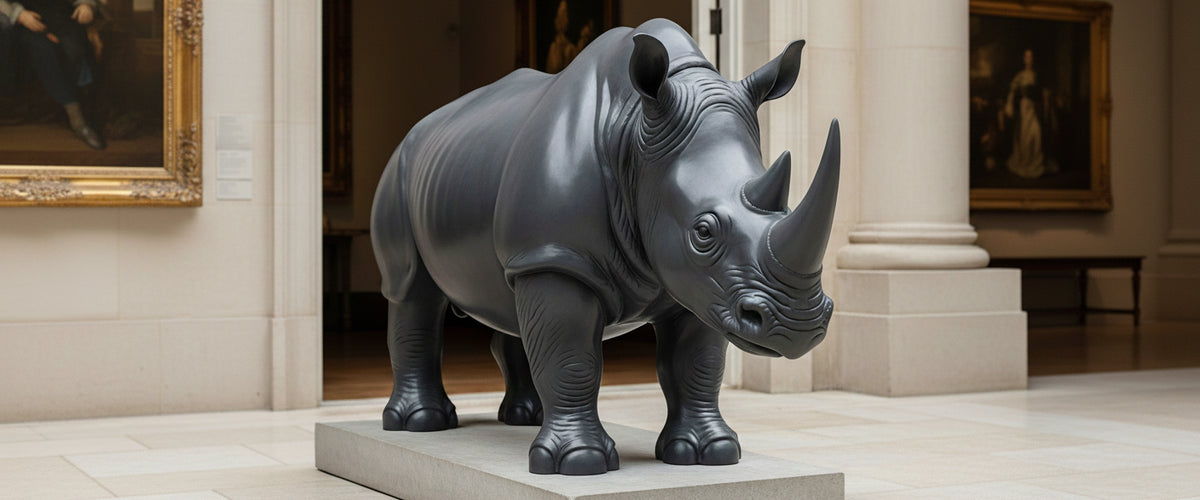

A six-foot fiberglass gorilla looks like serious art in one room and a theme-park leftover in another, and the price tag has almost nothing to do with which way it lands. Cheap fiberglass animal sculptures live or die by placement. Get the scale, sightline and backdrop right and a lightweight resin lion can hold a hotel lobby as confidently as a cast bronze. Get them wrong and even a beautifully finished piece reads as filler.
This is a working placement guide written from the studio side of the conversation. We commission, finish and ship large-format animals worldwide at Giant Sculptures, and the same questions come up whether a client is dressing a Napa tasting room, a Dallas showroom, or a private garden in the Hamptons: where does it go, how big should it be, and how do I stop it looking cheap?

Key Takeaways
- Fiberglass is a finish-led material; the paint system and surface prep matter more than the raw shell.
- Scale and pedestal height change the read of a piece more than any other single decision.
- Indoors, fiberglass animals work hardest as focal points with breathing room around them.
- Outdoors, expect to refresh the topcoat every few years and to anchor the piece against wind load.
- Most "cheap" looking installations are placement failures, not material failures.

What Cheap Fiberglass Animal Sculptures Actually Look Like in a Room
Fiberglass (glass reinforced plastic) lets you build a life-size elephant that two people can carry. That weight advantage is the whole reason the category exists, and it is why these pieces end up in mezzanines, rooftop terraces, retail interiors and event spaces where bronze would be a structural problem. A good shell, properly primed and finished in automotive-grade paint, can pass as cast metal from six feet away.
The honest version: a budget piece pulled straight from a generic catalog usually shows three tells. Seams that have not been dressed back. A flat, slightly chalky paint job with no depth. And a base that looks like a packing pallet. None of those are expensive to fix at the commissioning stage, but they are very hard to fix once the piece is on site. This is where buying from a studio that finishes in-house, rather than drop-shipping from a generic fiberglass animal sculptures factory, pays back quickly.
Inside a double-height lobby, a 7 ft (2.1 m) giraffe head or a standing bear works because the ceiling gives it room to breathe. Drop the same piece into a standard 8 ft (2.4 m) residential ceiling and it suddenly looks crowded, regardless of cost. In a garden, a fiberglass stag under a mature tree reads as sculpture; the same stag on an open lawn with no backdrop reads as a lawn ornament. The piece has not changed. The context has.

Scale, Sightlines and Pedestal Height
Scale is the lever most buyers underuse. A common instinct is to size the animal to the room, when in reality you should size it to the viewer's eye line at the distance they will normally see it from.
A simple rule we use in the studio: identify the primary viewing position (the seat in the lounge, the spot guests stand when they walk in, the bench at the end of the garden path). Measure the distance. Aim for the sculpture's visual mass to fill roughly the middle third of the viewer's field at that distance. Smaller than that and it reads as a curio. Larger and it dominates uncomfortably.
Pedestal height shifts the read more than people expect. A life-size leopard at floor level feels like a prowling presence. The same leopard on a 24 in (61 cm) plinth becomes a museum object. On a 48 in (122 cm) plinth it becomes a trophy, which can be the wrong tone for an animal piece. For most fiberglass animals indoors, a low plinth of 4 to 8 in (10 to 20 cm) gives just enough lift to protect the base from foot traffic and vacuum cleaners without changing the species reading of the piece.
Outdoors, raise the plinth enough to clear mower height and seasonal planting. A 12 in (30 cm) stone or Corten plinth keeps the sculpture clean and lets it sit above ground cover without floating.

Indoor Versus Outdoor: When Each Wins
Fiberglass is genuinely versatile, but each setting asks different things of the finish.
Indoor wins. Climate-controlled interiors are kind to fiberglass. UV exposure is minimal, temperature swings are small, and the paint system will hold its depth for years with nothing more than a soft dust. This is where cheap fiberglass animal sculptures punch hardest above their weight: a properly finished piece in a hotel bar, a brand flagship, or a private games room can sit next to bronze and stone without flinching. Browse the animal sculptures collection for a sense of how the same species reads at different scales.
Outdoor wins. Outdoors, the material earns its keep through weight, not finish. A life-size rhino in bronze is a crane job. The same rhino in fiberglass can be installed by two people with a hand truck. That matters on rooftop gardens, balconies, mezzanines with weight limits, and any site where access is restricted. The trade-off is maintenance: expect to inspect the topcoat annually and refresh it every three to five years depending on sun exposure. The Smithsonian's conservation guidance on outdoor sculpture coatings is a useful primer on why UV is the real enemy of any painted exterior piece (Smithsonian Museum Conservation Institute).
If a client wants the look of a large animal outdoors with minimal long-term upkeep, we usually steer them toward bronze or stainless steel. If the brief is interior, or outdoor with hard scale and access constraints, fiberglass is often the right answer.
Light, Backdrop and Contrast
The cheapest way to make a fiberglass piece look expensive is to light it properly. The most expensive way to make it look cheap is to light it badly.
Three light habits change everything. First, use a single directional source as the dominant key light, not flat overhead downlighting. Raking light at roughly 30 to 45 degrees pulls modeling out of the surface and gives muscle and fur texture somewhere to live. Second, give the piece a darker backdrop than its own midtone. A pale elephant against a pale wall disappears; the same elephant against a deep plaster or timber-clad wall gains volume immediately. Third, avoid colored LED wash. It flattens the paintwork and makes even a high-end finish look like event hire.
Outdoors, the same principles apply with the sun doing the work. East and west placements give you sidelight at the start and end of the day, which is when most owners actually look at their gardens. North-facing placements stay in soft shadow and need a strong backdrop (a hedge, a wall, a planted bed) to stop the piece looking washed out. South-facing placements get the harshest UV; plan the maintenance cycle accordingly.
Common Placement Mistakes We See
For wider placement ideas, Sculpting Nature’s Icons: Top Wildlife Sculptures Celebrating Iconic Animal Species is useful companion reading before finalising the setting and sightlines.
Across commissions and resales, the same handful of mistakes turn good pieces into apologetic ones.
- Center of the room syndrome. Animals almost never read well marooned in the middle of a floor. They want a backdrop, a wall, a planted bed, or a corner that anchors them.
- Wrong species for the space. A galloping horse in a low-ceiling hallway has nowhere to move. A sitting bulldog in a cathedral-ceiling lobby looks lost. Match the energy of the pose to the volume of the room.
- Eye contact with the wrong seat. If the animal is staring directly at the dining chair, every meal becomes a confrontation. Angle the head a few degrees off-axis from the primary seating.
- Under-specified base. The plywood crate base that arrives with many import pieces is not a finished plinth. Budget for a stone, timber or steel base from the start.
- Wind load ignored. Fiberglass is light, which means it moves. Outdoor pieces need to be bolted through the base into a concrete pad or a weighted plinth. We have shipped enough replacement antlers to take this seriously.
- Buying on photo alone. Generic supplier photos flatten finish quality. Ask for raking-light shots of the actual unit, not catalog renders.
Buying Without the Cheap Look
If you want a fiberglass animal that holds its own next to better materials, a few decisions at order stage do most of the work.
Ask who finishes the piece. A manufacturer that ships raw shells to a separate paint house tends to produce inconsistent results. Studios that finish in-house, or work with a long-term finishing partner, hold tighter color and seam control.
Ask for the paint system by name. Two-pack polyurethane (the same family used on cars and yachts) outlasts single-pack acrylics by a wide margin outdoors and holds depth better indoors. The price difference at order stage is small; the difference in year five is enormous.
Ask about the armature. Larger fiberglass animals need an internal steel armature to keep limbs and tails stable. A piece priced suspiciously low for its size has often skipped this step.
Budget honestly. Bespoke commissions vary widely depending on size, pose complexity, finish, base, crating and freight, so we quote each project individually rather than publishing bands that would mislead. If you are weighing fiberglass against metal, our fiberglass sculptures collection and the broader wildlife sculptures range are useful starting points for scale references before requesting a tailored quote.
Cheap, in the useful sense, is not about the lowest invoice. It is about the lowest cost per year of looking right on site. Well-placed, well-finished cheap fiberglass animal sculptures can deliver that for a decade or more. A badly placed one stops earning its keep before the crate is even recycled.