






















































































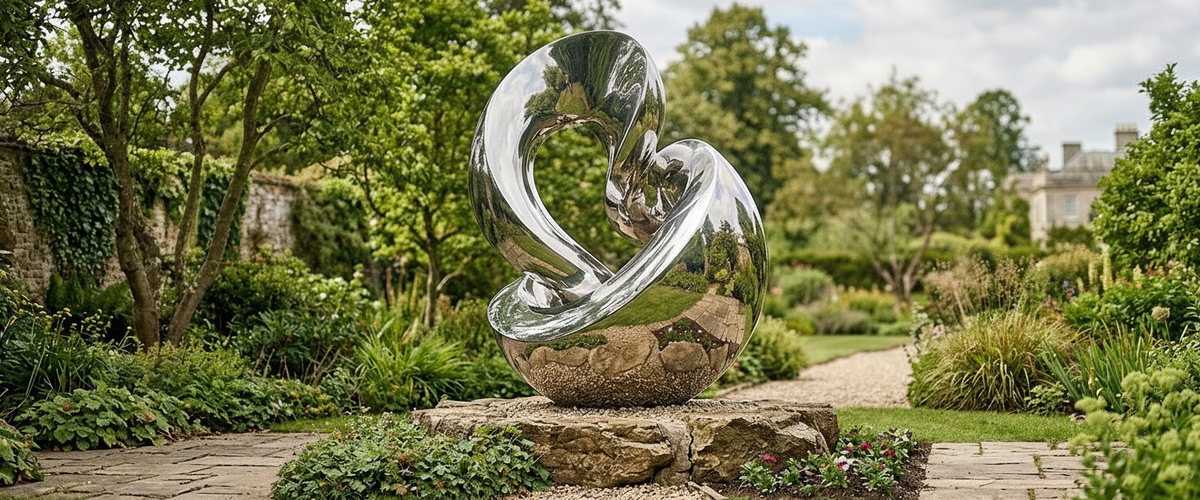

Ask a collector about their favorite commissioned piece and they rarely start with the material or the maker. They start with where it sits. The bronze that greets guests in a Napa entrance hall, the stainless steel form that catches afternoon light across a Hamptons lawn, the marble figure framed by a stairwell in a Manhattan townhouse. Listen to enough collectors opinions custom-commissioned sculptures and a pattern shows up fast: the people who are happiest are the ones who thought hard about placement before they thought about anything else.
We hear this constantly at Giant Sculptures. Buyers who commission large-scale bespoke work tend to remember two things clearly a year later: whether the scale was right, and whether the light does the piece justice. Everything else fades into ownership. So this is a placement guide built from real collectors opinions custom-commissioned sculptures, not a catalog of poses.

Key Takeaways on Collectors' Opinions
- Scale regret is the most common complaint. Almost nobody wishes they had gone smaller.
- Sightlines matter more than the sculpture's front. Collectors judge a piece by how it reads on approach, not head-on.
- Light is the deciding factor outdoors. A well-placed piece in poor light disappoints; a modest piece in good light sings.
- Pedestal height is underrated. Small changes in base height change the whole read.
- Material choice tracks placement, not the other way around. Decide where it lives, then choose bronze, stainless, Corten, or stone.

What Collectors Opinions Custom-Commissioned Sculptures Look Like in Real Rooms
The most useful feedback we get is specific. One collector in Texas commissioned a tall abstract form for a double-height living room and told us the piece only came alive once it was tall enough to hold that vertical space. His first instinct had been a smaller work. The room would have swallowed it. Stories like this shape the collectors opinions custom-commissioned sculptures we trust most.
Indoor commissions live or die on proportion to the wall behind them and the ceiling above them. A figure that looks generous in the studio can shrink against a 20 foot (6 m) wall. Collectors who get this right talk about their pieces as anchors: the sculpture sets the scale for the sofa, the art, the whole room.
Outdoors, the story flips. Gardens have no ceiling and no walls, so a piece competes with trees, sky, and distance. Collectors with Aspen and Napa gardens almost always report the same thing: they wish they had asked how the sculpture reads from the house, not just up close. A stainless steel or Corten form that holds its own across a lawn needs real presence. Browse our stainless steel sculptures and you will see why mirror-polished surfaces work so well in open settings; they pull the sky and surrounding color into the piece.

Scale, Sightlines, and Pedestal Height
The single choice that changes how a commissioned sculpture reads is not the pose. It is the height it presents at, and where you approach it from.
Collectors consistently underestimate scale, and their opinions on custom-commissioned sculptures often circle back to this point. In an open studio a life-size figure looks large. Set it in a 40 foot (12 m) entrance hall and it can look apologetic. Our honest advice, echoed by nearly every repeat buyer we work with, is to test scale physically before you commit. Cut a cardboard silhouette to the proposed height. Stand it where the sculpture will live. Walk toward it from the door. That five-minute exercise has saved more commissions than any rendering.
Sightlines decide how a piece is experienced. A sculpture seen first from 30 feet (9 m) away, then approached, needs a strong silhouette; detail is wasted at that distance. A piece encountered in a tight corridor rewards fine surface work because people see it up close. Think about the sequence of views, not the single hero shot.
Pedestal height is the quiet lever collectors wish they had understood earlier. Raise a figurative bronze by 12 inches (30 cm) and its gaze meets an adult's eyeline, which changes the emotional read entirely. Drop it and the piece feels grounded and monumental. For abstract work, a low plinth can make a form feel like it grew from the ground; a tall one makes it float. We often prototype base heights during a sculpture commission for exactly this reason.

Indoor Versus Outdoor Placement: When Each Wins
For wider placement ideas, Buying Abstract Art Sculptures on Sale: A Collector's Field Guide is useful companion reading before finalizing the setting and sightlines.
Collectors who own both indoor and outdoor commissions describe the two experiences differently, and their opinions on custom-commissioned sculptures split cleanly along that line. Indoor pieces become part of daily life. You pass them, live around them, notice them in changing interior light. Outdoor pieces are events. You look up and see them against weather, seasons, and distance.
Indoor placement wins when the work has fine detail, a delicate patina, or a material you want to keep in stable conditions. Marble and highly finished bronze reward interior placement because you control the light and the piece stays clean.
Outdoor placement wins when you want scale and drama, and when the material is built for it. Bronze weathers beautifully with proper patina and wax care. Corten is designed to develop a stable oxide surface; the American Institute for Conservation offers useful background on how outdoor metal sculpture ages and is cared for. Stainless steel resists corrosion and holds a mirror or brushed finish for decades with minimal work. If you are weighing a large garden piece, our bronze sculptures show how patina and scale combine for landscape work.
One lesson from the studio: a client in California originally planned an interior placement for a large figurative bronze, then moved it to a courtyard once they saw how morning light raked across the surface. The piece gained real visual reach across the space. That kind of decision is easier to make when you have handled the material and understood how it behaves outside.
Light, Backdrop, and Contrast
Light is where collectors get the most passionate, and it colors nearly every set of collectors opinions custom-commissioned sculptures we collect. The happiest owners talk about their sculpture at a specific time of day: the way low winter sun sets a bronze glowing, or how a polished steel form throws reflections at dusk.
Backdrop is the other half of this. A dark bronze against a dark hedge disappears. Set the same piece against a pale stone wall or open sky and it reads instantly. Collectors who place a mirror-polished stainless steel piece in front of greenery get a work that changes hour to hour as it borrows the setting's color.
Contrast is what you are really designing for. Light material on dark ground, dark material on light ground, or a reflective surface that turns the whole scene into part of the sculpture. Before finalizing a commission, we ask clients to photograph the intended spot at different times of day. It settles most finish debates in one conversation.
Common Placement Mistakes We See in Commissions
The same avoidable errors turn up again and again across the collectors opinions custom-commissioned sculptures we hear. Here is what to watch for.
- Going too small. The most frequent regret by a wide margin. When in doubt, size up. Empty space around a piece reads as timidity.
- Ignoring the approach. People plan the front elevation and forget the sculpture is seen from behind, from the side, from a window upstairs. Commission for the round.
- Fighting the light. Placing a detailed piece where it is backlit all day flattens it into a silhouette. Note where the sun sits.
- Weak foundations. Large outdoor sculpture needs proper footings. A piece that leans or settles after the first wet season is a placement failure, not a manufacturing one. Ask about weight (often several hundred to a few thousand pounds, or hundreds to thousands of kilograms) and base engineering early.
- Matching instead of contrasting. Choosing a finish that blends into the backdrop. Sculpture should register against its setting, not camouflage.
- Forgetting maintenance access. A bronze wedged against a wall is hard to wax; a fountain in an awkward corner is hard to service.
Commissioning With Placement in Mind
When you gather collectors opinions on custom-commissioned sculptures, the buyers who come back to commission a second and third piece tend to share a habit: they involve the maker in placement from the start. They send site photos, dimensions, and honest notes about how the space is used. That is how a bespoke sculpture commission should work.
At Giant Sculptures we build large-scale and bespoke work in bronze, stainless steel, Corten, stone, and engineered metalwork, and we would rather talk about your site before we talk about the piece. The most grounded collectors opinions custom-commissioned sculptures all point the same way. Budget depends on material, scale, complexity, engineering, installation, and finishing, so the sensible next step is a tailored quote rather than a number pulled from the air. Tell us where it will live and how you will see it, and the rest of the conversation gets much easier.