




































































































How to Preserve Outdoor Sculptures: The Short Answer
To preserve outdoor sculptures, wash them twice a year with clean water and a soft natural-bristle brush, then protect the surface with the right product for the material: microcrystalline wax on bronze annually, a breathable impregnating sealer on marble every two to three years, a stainless-specific cleaner on polished steel, and a UV-stable wax on fibreglass. Inspect plinths and fixings every spring for rust bleed and hairline cracks, keep a dated photographic condition report, and never pressure wash, sandblast or repatinate without speaking to a conservator or the original studio first.
Wash twice a year with clean water and a soft brush, spring and autumn.
Wax bronze annually with microcrystalline wax, not furniture polish or car wax.
Seal marble with a breathable impregnator, never a film-forming sealer.
Inspect mounts and fixings every spring for rust bleed, hairline cracks and movement.
Keep a condition report with dated photos. Your insurer and your future self will thank you.
Never sandblast, pressure wash, or repatinate without talking to a conservator or the original studio.
Most outdoor sculpture damage is not dramatic. It is slow, quiet, and almost always preventable. A bronze that looks healthy in May can lose its patina by November because a lawn sprinkler hits it twice a day. A white marble angel in a Hamptons garden goes gray inside two seasons because nobody removed the leaf litter pooling at the base. If you want to preserve outdoor sculptures properly, the work starts with understanding what is attacking them, not buying a tub of generic wax and hoping for the best.
This guide is written from the studio side of the conversation. We commission, ship and install large bronze, marble, stainless steel and Corten pieces for private gardens, hotels and sculpture parks, and we see the same care mistakes repeatedly. Get the basics right and a serious outdoor sculpture will outlive everyone reading this. Get the routine wrong and you can strip decades off a piece in a single weekend.

What Actually Attacks Outdoor Sculpture
Six things do almost all the damage when you try to preserve outdoor sculptures: salt, sun, frost, biological growth, pollution and human contact. Coastal homes in Malibu, Montauk or the Florida Keys deal with chloride-laden air that pits bronze and eats stainless fixings. High-altitude properties in Aspen or Park City face brutal UV and freeze-thaw cycles that work moisture into every micro-crack. City courtyards in NYC, Chicago and LA take a steady dose of sulfur and nitrogen compounds from traffic, which turn into mild acids whenever it rains.
Then there is the biological layer. Lichen, algae and moss look romantic on a weathered stone urn and disastrous on a polished marble figure. Lichen in particular secretes acids that etch calcium carbonate. The Smithsonian's conservation guidance on outdoor sculpture (Smithsonian Museum Conservation Institute) is blunt about this: biological growth is not a patina, it is active deterioration.
Hands are the last category, and the one buyers underestimate. Visitors touch sculpture. They lean on it, sit on it, photograph their children next to it. Hand oils transfer to bronze and pull wax off in the exact spots people grip. If a piece sits near a pool, a bar or a wedding venue terrace, plan for that contact rather than pretending it will not happen.

Four Materials, Four Completely Different Care Calendars
Bronze
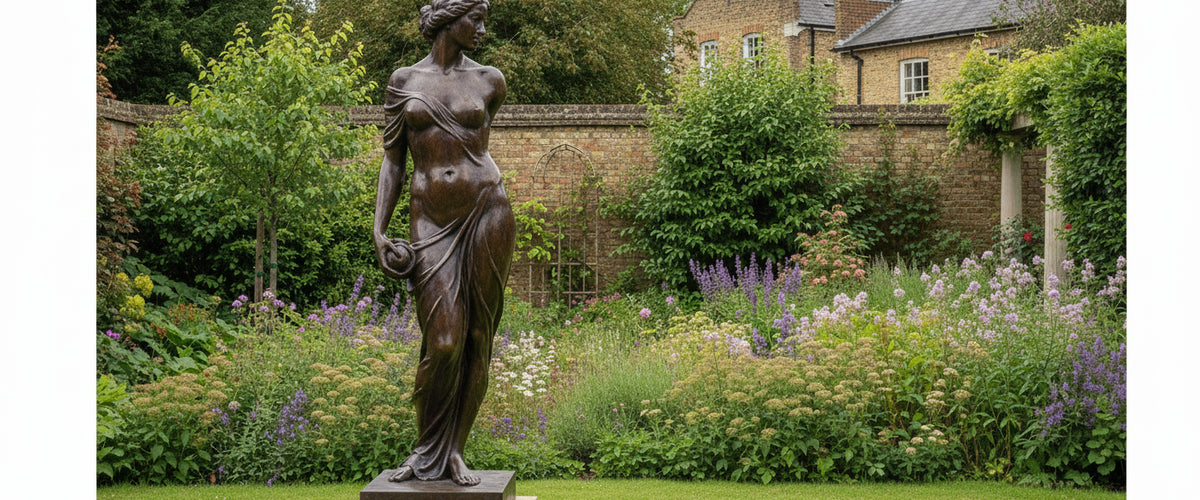
Bronze is the workhorse of serious outdoor work for a reason. A properly cast and patinated bronze can sit outside for a century with light annual care. The standard professional approach to preserve outdoor sculptures in bronze is a warm-water wash with a non-ionic detergent, a soft natural-bristle brush, a thorough rinse, full drying, then a coat of microcrystalline wax applied warm and buffed cold. Once a year is enough for inland sites. Twice a year is sensible within a mile of the coast.
What ruins bronze: acidic cleaners, abrasive pads, pressure washers, irrigation overspray, and well-meaning owners who decide the patina looks tired and reach for a green-tinted product from the hardware store. If the patina genuinely needs work, that is a conservator job, not a Saturday project.
Marble and Limestone
Marble is the most misunderstood material if you want to preserve outdoor sculptures with carved detail. It is beautiful, it carves into extraordinary detail, and it is chemically vulnerable to anything acidic, including normal rain. Scale changes the care equation more than buyers expect. A near-life-size figure like the Protective Embrace Angel Marble Outdoor Sculpture - 180cm exposes a large surface area to rain runoff and needs careful base drainage, while a compact piece such as the Cherub Kneeling Angel Marble Outdoor Sculpture - 60cm is small enough to shelter under a portico or move into a loggia during the worst weeks of winter. Both live longest sited away from drip lines, tree sap and irrigation spray.
Care is gentle: rinse with clean water, brush soft growth off with a natural-bristle brush, never use vinegar, lemon, bleach or commercial "stone cleaners" without checking the label for acids. A breathable impregnating sealer, reapplied every two to three years, slows water ingress without trapping moisture inside the stone. Film-forming sealers are the enemy here. They look good for a season, then peel and leave the stone worse than before.
Stainless Steel and Corten
Polished stainless steel rewards regular washing. Fingerprints, bird droppings and pollen are mildly corrosive over time, and chloride exposure near coasts can cause tea-staining on lower grades. Use warm water, a soft cloth, and a stainless-specific cleaner aligned with the grain. For larger pieces, the metal sculptures collection shows the range of finishes we work in, each with its own washing rhythm to preserve outdoor sculptures in steel.
Corten is the opposite philosophy. The rust layer is the protective coat. You do not seal it, wax it, or scrub it. You do, however, manage the runoff, because Corten bleeds orange stains onto paving, concrete and pale stone for the first two to three years. Plan plinths, drip zones and surrounding materials accordingly.
Fibreglass and Resin Composites
For wider placement ideas, Angel Garden Statues: A Buyer's Guide to Scale, Stone and Placement is useful companion reading before finalising the setting and sightlines.
Fibreglass is light, weatherproof and good for rooftop or balcony placements where weight matters, but UV is its weakness. Pigments fade, gel coats chalk, and clear coats yellow. To preserve outdoor sculptures made in fibreglass, annual washing plus a UV-stable automotive-grade wax extends the surface life significantly. When the gel coat finally degrades, refinishing is a workshop job rather than something to attempt in the garden.
The Spring Wash That Prevents the Autumn Problem
If you only do one thing each year to preserve outdoor sculptures, do this. In early spring, before pollen and growth season, give every garden piece a full wash. Soft brush, clean water, mild non-ionic detergent only if needed, complete rinse, complete dry. While the piece is clean and bare, inspect it. Look for hairline cracks at stress points, rust bleed around steel pins or armatures, dark staining where water sits, loose fixings, movement at the plinth.
Most autumn and winter failures begin as something visible in March that nobody acted on. A pin head showing the first orange halo in spring will be a brown streak by September and a structural concern by the following spring. Wax or seal after the inspection, not before, so you are not locking in a problem.
Waxing, Sealing, Repatinating: When Each Is Right
These three words get used interchangeably and they should not be. Waxing is a sacrificial protective layer, usually microcrystalline, that takes the hit from rain, UV and handling so the underlying surface does not. Owners can do this with a little training and it is the cheapest way to preserve outdoor sculptures between professional visits.
Sealing is a chemistry decision. The right sealer for marble is wrong for bronze, and the right product for fibreglass will discolor stainless. Read the technical data sheet, not the marketing copy. The American Institute for Conservation (conservation-us.org) maintains a public Find a Conservator directory if you want a second opinion before committing to a product across a whole collection.
Repatinating is surgery. Stripping and reapplying a bronze patina changes the artwork. Done by the original foundry or a qualified conservator, it can rescue a neglected piece. Done by a handyman with a torch and ferric nitrate, it is vandalism that destroys resale value and the artist's intent. If a piece looks tired, photograph it, send the images to the studio that supplied it, and ask before anyone touches it.
Covering, Storing and the Indoor Debate
Should you bring garden sculpture indoors for winter to better preserve outdoor sculptures through frost? Usually no. Most pieces designed for outdoor placement are happier outside year-round, because moving them introduces handling risk and the indoor humidity swing can be worse than steady cold. Exceptions: small fibreglass pieces in freeze-thaw climates, delicate carved marble in sites prone to ice accumulation in undercuts, and anything with an internal armature you are not certain is fully sealed.
Covers cause more damage than they prevent in most cases. They trap moisture, abrade waxed surfaces in wind, and hide problems for months. If you must cover, use a breathable purpose-made cover raised off the surface, and remove it during dry spells.
Insurance, Documentation and Condition Reports
This is the unglamorous part that protects everything else and lets you preserve outdoor sculptures financially as well as physically. Every significant piece should have a file: high-resolution photos from all sides taken on installation day, the invoice, the material and finish specification, foundry or studio details, weight, dimensions including base, installation method, and a dated condition note refreshed annually.
When something goes wrong, whether that is storm damage, vandalism, or a contractor reversing a van into a plinth, the insurer's first question is what the piece looked like before. Without a baseline, you negotiate from a weak position. With one, claims move quickly. For bespoke outdoor sculpture uk clients and US collectors alike, we supply this documentation as standard with commissioned work, and we recommend owners update the photo record every spring at the same time as the inspection wash.
Buyer's Checklist Before You Commission
Site survey first. Sun, wind, salt, irrigation, foot traffic, drainage. Specify the piece for the site, not the other way round.
Material matched to climate. Bronze and Corten for harsh, coastal or high-UV sites. Marble for sheltered formal gardens. Stainless for clean modern settings with regular maintenance access.
Plinth and fixing engineered, not improvised. Most failures start at the base.
Care plan supplied with the piece. If a supplier cannot tell you how to preserve outdoor sculptures they sold you, that is a warning.
Access for future maintenance. Can a conservator reach all sides? Can a wax application be done without scaffolding every year?
The work needed to preserve outdoor sculptures is not complicated, but it is specific. The right wash, the right wax, the right sealer, the right time of year, and a willingness to call the studio before anyone reaches for a wire brush. Do that consistently and a serious outdoor metal sculpture or carved marble figure will hold its character, and its value, for generations.