
















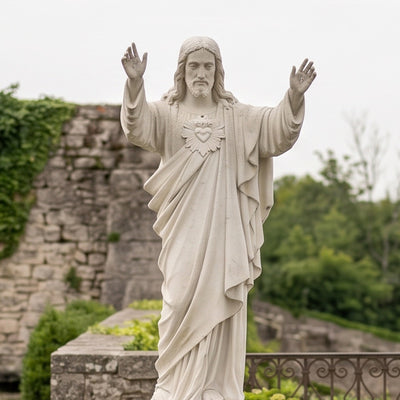








































































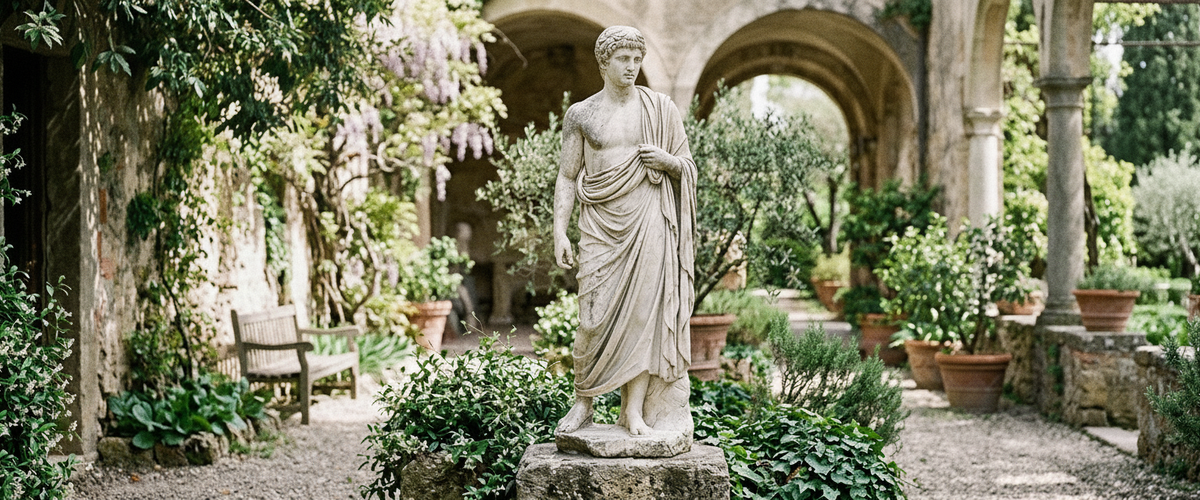

Most of the advice you will find on cleaning marble statues comes from people who have never had to explain a permanent stain to the person who paid for the piece. Bleach. White vinegar. A wire brush. A pressure washer on "the low setting, just to knock the green off." Every one of those takes surface away or drives contamination deeper, and marble keeps the receipt. Calcite is soft, porous and chemically reactive, which is exactly why it carves so beautifully and exactly why it punishes shortcuts.

Key Takeaways
Start with the gentlest method that works: clean water, a pH-neutral soap and a soft natural-bristle brush handle the majority of routine dirt.
Never use acid or alkali: vinegar, lemon, descaler and bleach all etch or bleach calcite. Damage is not reversible.
Skip the pressure washer. High pressure opens the grain and forces water into joints and dowel holes.
Biological growth comes off slowly. Wet, brush, rinse, repeat over weeks rather than blasting it in an afternoon.
Stains rise from within. Iron, oil and rust need a drawing poultice, not more scrubbing.
Antique and carved detail is a conservation job. If tool marks, gilding or old repairs are present, get professional advice first.
Marble Stains from the Inside Out
Understand one thing about cleaning marble statues and the rest of this guide follows. Marble is an open stone; water travels through it, carrying dissolved iron, tannins, fertilizer salts and oil. When that water evaporates at the surface, the contamination stays behind just below it, so scrubbing harder does nothing except polish away the top layer of stone. A brown drip line under a bolt fixing, a rust bloom near an iron dowel, an olive-toned patch where irrigation overspray hits the same shoulder every morning: those are internal problems showing through.
We saw a textbook version of this on a Napa Valley terrace, where well water with a high iron content had been hitting one flank of a white marble figure twice a day for two summers. The stone was clean. The stain sat under it. The fix was a poultice and a repositioned sprinkler head, not a cleaner.

Cleaning Marble Statues: The Routine That Solves Most of It
The base method for cleaning marble statues has not changed in decades because it works. Rinse the whole piece with clean water first so loose grit does not get dragged across the surface. Mix a small amount of pH-neutral soap into warm water, work in sections from the bottom upward (dirty water running down over a dry surface leaves tide marks), and use a soft natural-bristle brush for detail and a sponge for broad forms. Rinse thoroughly. Blot with clean white cloths rather than leaving pooled water in recesses.
Two details separate a good wash from a mediocre one. Keep the stone wet throughout, because a partially wetted surface absorbs the cleaning solution unevenly and can dry patchy. And test any marble statue cleaner, even a mild one, on a low hidden area first. The US National Park Service Preservation Briefs on masonry cleaning are the clearest public guidance on this principle: choose the gentlest effective method and prove it on a test patch before committing to the whole surface.
For cleaning outdoor marble statues in urban air, expect to wash more often. Carbon deposits and traffic film build fastest on the sheltered undersides where rain never reaches, which is why a piece can look clean from the driveway and gray under the chin.
Green Film, Lichen and Algae After a Wet Winter
Coastal Maine, the Pacific Northwest, the Hudson Valley, and plenty of English gardens all produce the same result: a green bloom by March. Algae is the easy part and often lifts with water and a brush. Lichen is the patient one. It grips into the surface, and pulling it off mechanically takes stone with it.
Cleaning marble statues that carry lichen is a job for repetition rather than chemistry. Wet the growth thoroughly, leave it to soften, brush lightly, rinse, and come back in a week or two. Over several rounds it releases. If you need more help, a proprietary biocide formulated for natural stone (never a household bleach solution) applied at the manufacturer's dilution is acceptable on non-antique marble, but treat it as a slow-acting treatment rather than an instant marble statue cleaning solution. Growth dies back over weeks, then rinses off.
Placement matters more than any product. Cleaning marble garden statues gets easier when the piece sits where air moves and morning sun reaches it. A white marble figure tucked under a dense yew hedge will always be a maintenance problem. Where the position is shaded or damp, a compact pale carving on an open plinth is a safer choice than a full-height figure set into planting: the Graceful Horse Head in white marble at 60cm works that way, raised into the light so the carving reads and the stone dries out after rain.

Poultices for Iron Bleed and Old Oil
Poultices are the part of cleaning marble statues that rewards patience twice over. A poultice is an absorbent paste, usually a fine clay or cellulose powder mixed with water or a specified solvent, applied over the stain and covered so it dries slowly. As it dries it pulls the contamination up out of the pores. Iron staining generally needs a poultice with a chelating agent; oil and grease need a solvent carrier. Applications are cumulative, so three moderate rounds beat one aggressive one.
Stop and call a conservator when the stain sits over carved detail, when there is any sign of previous restoration, when the marble is sugaring or flaking, or when you have already tried something acidic. The Getty Conservation Institute publishes accessible material on stone deterioration that makes the case plainly: once the crystalline structure starts breaking down, cleaning is no longer the priority. Stabilization is.
Three Ways to Ruin Marble Permanently
Most of the damage we are asked to assess came from someone cleaning marble statues in a hurry, with the wrong tool.
Pressure washing. Even moderate pressure erodes the softer crystal boundaries, blurs fine carving, and drives water into fixing holes where it freezes and splits the stone. There is no low setting that makes it safe.
Wire brushes and abrasive pads. They scratch the surface and, worse, leave steel fragments behind that rust into fresh orange spots within a season.
Acids and bleach. Vinegar, lemon juice, patio cleaner and household bleach etch calcite on contact, leaving dull white patches that no amount of later polishing recovers.
Cleaning Antique Marble Statues Means Protecting the Tool Marks
On a historic piece the value sits in the surface itself: the sculptor's chisel and rasp marks, the original polish, the way age has settled into the stone. Cleaning antique marble statues too thoroughly can strip that evidence and leave a piece looking oddly new and slightly characterless. Aim to reduce disfiguring soiling, not to return the marble to white. Leave old repairs, iron cramps and previous consolidation alone until someone qualified has looked at them.
This is worth thinking about at the buying stage. Work carved from fresh stone, such as the Apollo Marble Sculpture - 180cm (roughly 71 inches), begins with a known surface and no inherited restoration history, so cleaning marble statues in your care starts on a clean record rather than with a previous owner's decisions. Stone choice changes the routine too. Darker, denser marble at scale, of the kind used for the Majestic Horse black marble sculpture at 220cm (about 87 inches), holds water spotting and soap residue far more visibly than white marble, so rinsing discipline and drying off with clean cloths matter more from the first wash onward.

The Annual Care Calendar We Give Owners
Spread across the year, cleaning marble statues stays a short seasonal job rather than a rescue mission.
Early spring: full pH-neutral wash. Check joints, dowels and plinth fixings for rust weep and standing water.
Late spring: first pass on biological growth. Wet, soften, brush, rinse.
Summer: spot clean bird fouling and sap promptly (both are acidic). Adjust any irrigation hitting the stone.
Late summer: address stains with a poultice while the stone is warm and drying conditions are reliable.
Fall: clear leaf litter from the base, where tannin staining starts. Re-check drainage at the plinth.
Before hard frost: in freeze-thaw climates, a breathable cover on exposed carving and a raised base to keep the stone off wet ground.
As needed: reapply a breathable, vapor-permeable stone treatment if the piece was previously treated. Never use a film-forming sealer that traps moisture inside the marble.
Longevity is a design decision as much as a maintenance one. When we quote bespoke commissions we discuss stone selection, orientation, drainage and fixing metals up front, because those choices decide how much work cleaning marble statues demands every March. Cost tracks scale, stone type, carving complexity, engineering, installation and finish, so a tailored quote will tell you more than any published range. The marble sculptures and statues collection shows the range of stone and scale we work with, and the wider sculptures and statues catalog is the place to start if you are still weighing material options.
For wider placement ideas, Large Abstract Garden Sculptures: A Buyer's Guide to Scale, Metal, and Placement is useful companion reading before finalising the setting and sightlines.