
































































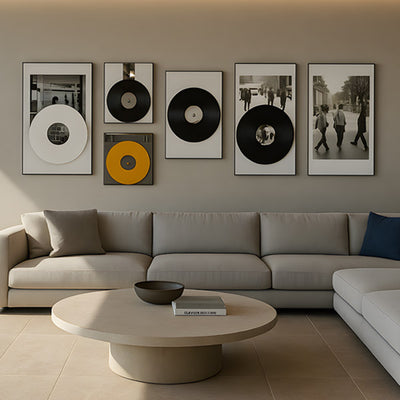
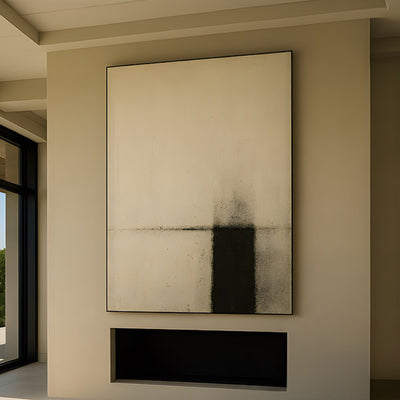
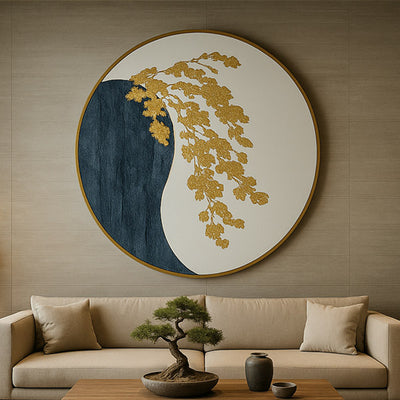



























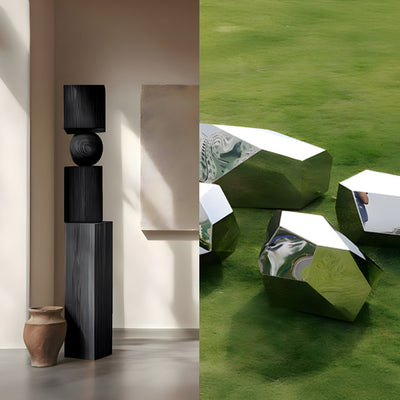


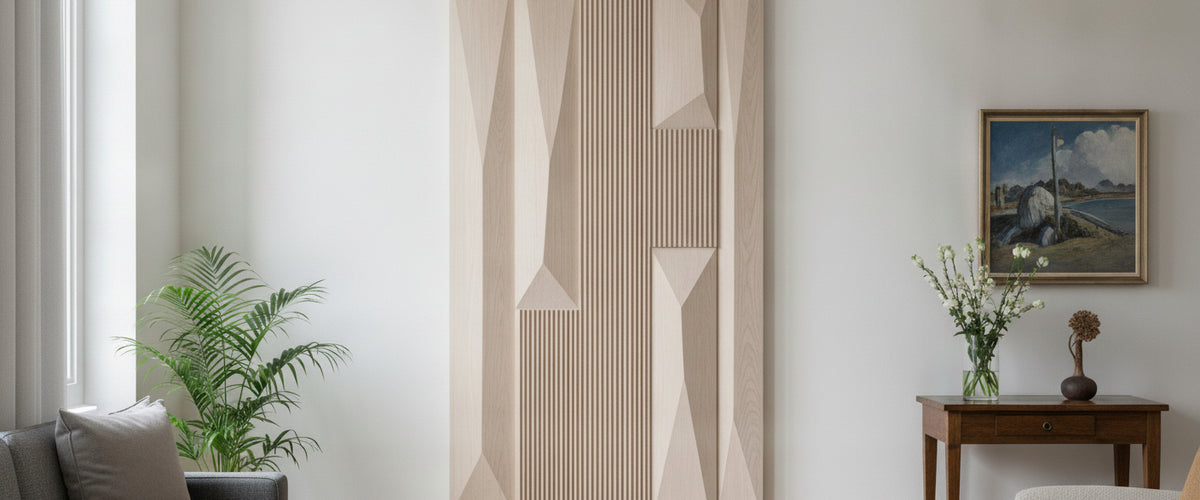

Most wood wall art fails for the same reason: it is too small for the wall, too thin in relief, or finished in a tone that fights the room. A good piece does the opposite. It reads from across the room, casts real shadow, and ages into the architecture instead of looking like an afterthought above the sofa. This guide is for buyers who want timber wall pieces that behave like sculpture, not like a poster with grain.
At Giant Sculptures we build large-scale and bespoke work, so most of the conversations we have about wooden wall art are about presence. A 24 inch panel (about 60 cm) above a 10 foot console will always look stranded. Get the proportions right and even a quiet, monochrome carved wood wall art panel can carry a 20 foot wall.

At a Glance: Wood Wall Art in 60 Seconds
- Best for: entryways, stairwells, double-height living rooms, hospitality lobbies, boardrooms, primary bedrooms.
- Strongest formats: carved relief panels, geometric wood wall art, reclaimed wood wall art assemblages, sculptural slatted screens.
- Scale rule of thumb: the piece should occupy roughly two-thirds of the furniture or feature wall it sits above.
- Weight to plan for: solid hardwood reliefs can run 40 to 150 pounds (18 to 68 kg) for a single panel; engineered or hollow-back pieces are lighter.
- Budget driver: not size alone. Species, carving depth, joinery, finishing and crating drive the quote more than square footage.

What This Category Actually Means
The category is broader than most search results suggest. Under this umbrella you will find carved relief work (traditional carving, often in walnut, oak, lime or teak), geometric panels (CNC-cut or hand-assembled tessellations, parquetry, slatted patterns), reclaimed timber assemblages (barn boards, boat wood, salvaged industrial stock), and sculptural installations that read as standalone sculpture mounted vertically.
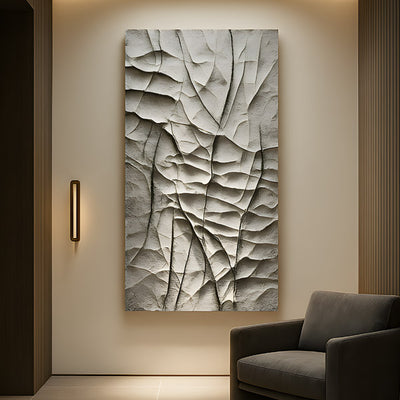
Each behaves differently in a room. Carved relief reads best with directional light from above. Geometric wood wall art decor needs a clean background so the pattern can speak. Reclaimed pieces want texture and patina nearby (brick, concrete, linen) or they look orphaned against a flat painted wall.

How to Compare Wooden Wall Art Options Before Buying
When clients come to us comparing two or three wooden wall art decor options, we ask the same questions in the same order. They are worth running yourself before you commit.
1. What is the viewing distance?
Under 6 feet (1.8 m), fine carving and inlay reward the viewer. Beyond 12 feet (3.7 m), detail disappears and silhouette takes over. For long sightlines, choose deeper relief, bolder geometry, or a piece broken into a multi-panel composition.
2. How does light hit the wall?
Timber pieces live or die on raking light. A carving on a north wall in a Manhattan apartment with no direct sun needs either internal contrast (two-tone finish, mixed species) or dedicated picture lighting. South-facing rooms in California or Texas give you free shadow play all day; you can let the carving do the work.
3. Is it solid, veneered, or engineered?
Solid hardwood carries weight and gravitas but moves with humidity. Engineered substrates with hardwood facings hold dimensional stability across climates, which matters if you ship to a dry Aspen home in winter and a humid Florida one in summer. Ask any maker, including us, exactly what is underneath the surface.
4. What is the finish doing?
Oil and wax finishes feel honest and age beautifully but need occasional refeeding. Lacquer and conversion varnish are tougher and better for hospitality. Limed, ebonized, scorched (shou sugi ban) and bleached finishes all change how the grain reads at distance. Ask for a finish sample on the actual species, not a swatch card.
Materials, Finishes and Scale Decisions
Species matters more than buyers expect. Walnut carries depth and warmth and takes carving cleanly. White oak is the current default in US interiors because it pairs with almost any palette and accepts limed or fumed finishes well. Teak and iroko handle covered outdoor positions. Lime and basswood are the traditional choice for fine relief carving because they cut without tearing.
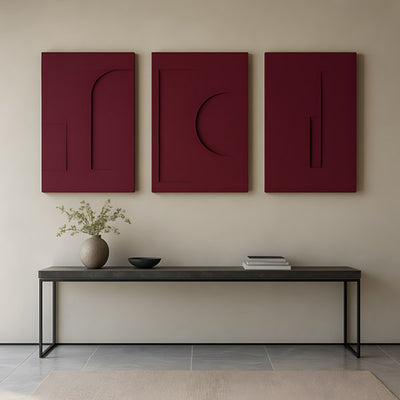
For geometric pieces, the construction method changes the look more than the species. Hand-assembled parquetry with mixed tones reads as craft. CNC-routed single-species panels read as architecture. Slatted vertical screens, often in white oak or walnut, sit between the two and work especially well behind a stair or as a headboard wall. Where a client wants the geometric language without committing to timber, a layered metal panel such as the Waverno Blue & Green Flow Metal 3D Wall Art is a useful comparison point for how depth and shadow translate across materials.
On scale, our standing advice for residential clients is to size the piece to the architecture, not the furniture. A 7 foot (2.1 m) tall carved panel beside a fireplace will outlive three sofas. A piece sized to the current console becomes a problem the next time the room is restyled. For hospitality lobbies, we routinely build 10 to 16 foot (3 to 5 m) installations in modules so they can be shipped flat and assembled on site.
Where to Place a Wood Art Wall for Real Impact
For wider placement ideas, Bring the Outdoors In: Transform Your Walls with Nature-Inspired 3D Art is useful companion reading before finalising the setting and sightlines.
The strongest positions in a home are almost always the ones people walk toward, not the ones they sit facing. A timber piece over a sofa is the expected move. The same work at the end of a hallway, on the landing wall of a staircase, or as the first thing seen from the front door does more for the room.
A few placements we keep coming back to:
- Entry walls: a single tall carved or slatted panel that establishes the material story of the whole house.
- Stair landings: double-height walls need pieces in the 6 to 12 foot (1.8 to 3.7 m) range; smaller work looks lost.
- Behind the bed: a wide, low-relief timber decor panel functions as both headboard and sculpture.
- Dining rooms: textured timber absorbs sound and softens hard-surfaced rooms with stone or concrete floors.
- Boardrooms and lobbies: handmade wood wall art signals investment in craft without the maintenance demands of a freestanding sculpture.
If you are mixing timber with other wall pieces, vary the depth. A flat painting next to a deep-relief carved panel reads as a curated wall. Two flat pieces and one carved panel reads as accident. Our wider wall art and wall decor selection includes metal and mixed-media work that pairs cleanly with timber without competing.
Hanging Heavy Panels Without Drama
Most wooden panels that arrive damaged were hung wrong, not built wrong. A few rules from the studio:
- Know the weight before you order. Anything over 30 pounds (13.6 kg) needs to land on framing, not drywall alone.
- Use a French cleat for anything over 40 pounds (18 kg). A properly sized hardwood or aluminum cleat distributes load along the full top edge and lets you level the piece by sliding.
- Hit studs or use proper anchors. For masonry, sleeve anchors. For drywall without studs in the right place, toggle bolts rated well above the piece's weight, ideally doubled.
- Leave a breathing gap. Solid timber expands and contracts. A 1/8 inch (3 mm) gap behind the panel prevents bowing in humid rooms.
- Two people, always. Anything over 4 feet (1.2 m) wide needs a second pair of hands and a laser level.
For very large or layered pieces we ship with a custom cleat system and a hanging diagram. Conservation guidance from the American Institute for Conservation on wood objects is also worth a read if you are placing valuable carved work in a climate-controlled room.
Budget, Commissioning and Delivery
Budget depends on species, scale, depth of carving or relief, finishing complexity, engineering for hanging, and crated shipping. A modest hand-finished panel and a 12 foot bespoke installation in figured walnut are not the same conversation. Rather than quote ranges that will not apply to your project, we prefer to scope the piece first (size, species, finish, site) and return a tailored quote with a build timeline.
For bespoke commissions, expect a typical timeline of several months from approved design to delivery. Carving, drying, finishing and crating each take real time, and rushing any stage shows in the final piece. International freight to the US East and West coasts is routine for us; we crate to museum standard and coordinate with white-glove installers where the site needs it.
How Giant Sculptures Approaches Bespoke Commissions
Most of our wall commissions start with a photograph of the wall, a rough dimension, and a conversation about what the room is missing. From there we work up scaled drawings, propose two or three material directions, and produce finish samples on the actual species before any carving begins. Because we build at architectural scale, we think about hanging hardware, wall construction and access from the first sketch, not at the end.
We also build wall pieces in materials beyond timber when the brief calls for it. A client recently asked for a reclaimed wood wall art installation for a Napa tasting room; after a site visit and a humidity reading, we proposed a mixed piece pairing white oak with patinated metal so the wall could handle the seasonal swing without checking. Where the brief leans warmer and more architectural, a darker metal panel like the Waverno Ember & Graphite Flow Metal 3D Wall Art sits closer to walnut in tonal weight while sidestepping the humidity question entirely.
To browse current work in the category, the wood wall art collection is the right starting point, and the broader wood art selection is worth a look if you are considering freestanding pieces alongside the wall installation. For covered terraces and shaded outdoor walls, the outdoor wall art and decor range covers materials that hold up to weather without sacrificing the sculptural read.