





































































































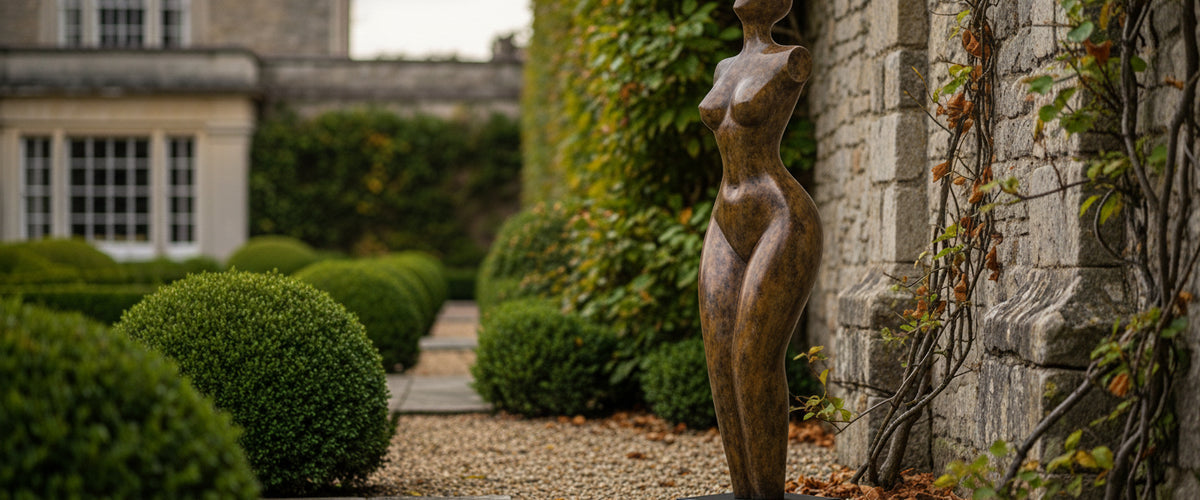

Resin sculpture has quietly become one of the most flexible ways to bring a major statement piece into a home, hotel lobby, or garden. It delivers scale that would be punishingly heavy in stone, detail that rivals cast bronze, and a color range that no traditional medium can match. The catch is that not all resin is created equal, and the gap between a showroom-grade piece and a disappointing import is wider than most buyers realize.
This guide is written for collectors, interior designers, and landscape architects choosing a resin sculpture for a real space, not a craft project. If you want a quick orientation before reading on, start here.

Key takeaways at a glance
- Resin is a category, not a single material. Polyester, polyurethane, and epoxy resin for sculpture each behave differently.
- Finish does the heavy lifting. A well-finished resin sculpture can convincingly read as bronze, marble, stone, or lacquered contemporary art.
- Scale is the point. Resin lets you go life-size or larger without structural drama.
- Placement matters. Resin garden sculptures need UV-stable formulations and proper anchoring.
- Bespoke is realistic. Commissioning a resin sculpture is faster and more flexible than commissioning bronze.

What resin sculpture actually means
When people say resin sculpture, they usually mean a piece cast from a liquid polymer that cures into a hard, stable solid. The most common types you will encounter as a buyer are polyester resin (economical, slightly brittle), polyurethane resin (tougher, takes fine detail), and epoxy resin sculpture work (clearest, most chemically stable, often used for art resin sculpture with pigment suspensions or layered transparency).
A serious resin sculpture is rarely just resin. Studio pieces are typically reinforced with fiberglass matting, internal armatures, or a cold-cast metal powder layer at the surface. Cold casting is what allows a resin sculpture to feel and patinate like bronze at a fraction of the weight. That matters when you are installing on a mezzanine, a roof terrace in NYC, or a timber deck in the Hamptons where load is a real constraint.
Resin sits naturally alongside other contemporary methods such as resin clay sculpture (used by makers for original sculpts before molding) and large studio casts. At Giant Sculptures we treat resin as one option within a broader bespoke practice that also covers bronze, stainless steel, Corten, and stone, so the recommendation always follows the project, not the other way around.
How to compare resin sculpture options before buying
Before you fall in love with a specific piece, work through these criteria. They separate a sculpture that will still look superb in a decade from one that yellows, chalks, or cracks within a season.
1. Resin type and reinforcement
Ask what resin system the piece is cast in and how it is reinforced. For exterior work or anything over roughly 4 ft (1.2 m), you want polyurethane or epoxy with fiberglass reinforcement, not unfilled polyester. For indoor art resin sculpture with translucent or pigmented effects, epoxy is usually the answer.
2. Finish quality
The finish is where cheap resin sculpture art falls apart. Look closely at edges, undercuts, and the back of the piece. A premium cold-cast bronze finish should show subtle tonal variation, a real patina, and crisp detail in the recesses. A flat, uniform brown is a warning sign.
3. UV and weather rating
If you are buying resin garden sculptures, confirm the piece is formulated for outdoor use with UV inhibitors and a sealed topcoat. Indoor-grade resin placed in direct sun behind glass will fade. The Getty Conservation Institute publishes useful general guidance on the behavior of modern polymers in light and humidity, and it is worth reading before placing any polymer-based artwork in a south-facing room.
4. Weight and mounting
Resin is light, but a 7 ft (2.1 m) figure still needs proper anchoring, especially outdoors. Ask for the finished weight, the base specification, and whether the piece is supplied with internal mounting points.
5. Provenance and maker
A resin sculpture should come with a clear story: who sculpted the original, how many casts exist, and what the finishing process involved. Mass-produced decor resin is a different product from studio sculpture, even if the silhouette looks similar.
Materials, finishes, and scale decisions
The most useful way to think about a resin sculpture is in three layers: the form, the surface, and the scale. The form is the original sculpt. The surface is everything that happens after casting: cold-cast bronze, faux marble, lacquer, gilding, or pigmented epoxy resin sculpture finishes that read as contemporary art objects in their own right.
Scale is where resin earns its place in serious projects. A bronze figure at 8 ft (2.4 m) can weigh hundreds of pounds and require crane installation. The same form in reinforced resin can often be installed by a small team and sited on surfaces that would never tolerate the bronze original. For browsing the range of forms available, our resin sculptures and statues collection is a good starting point, and the broader resin art collection shows where the medium moves into more contemporary, color-driven work.
For interior schemes, faux-marble and lacquered resin finishes pair well with stone floors and joinery. For garden and terrace projects, cold-cast bronze or stone-effect resin reads correctly against planting and hardscape. If the brief is more sculptural-contemporary, a saturated pigmented epoxy in a single bold color can carry a double-height entry hall the way no traditional patina can.
Where to place resin sculpture for maximum impact
For wider placement ideas, Resin Art for Every Room: Fun, Funky, and Full of Imagination is useful companion reading before finalising the setting and sightlines.
Resin gives you placement options that heavier materials simply do not. A few placements that consistently work:
- Double-height entry halls. A figurative or abstract resin sculpture at 6 to 8 ft (1.8 to 2.4 m) anchors the volume without overloading the floor structure.
- Hotel and restaurant lobbies. Resin allows oversized animal forms, mythological figures, or contemporary abstracts that survive constant footfall and cleaning.
- Garden focal points. Resin garden sculptures placed at the end of a sightline, framed by clipped hedging or grasses, deliver the same drama as stone for a fraction of the install cost. See our large garden statues for scale references.
- Pool surrounds and terraces. Lightweight resin avoids load issues on tiled or membrane-built terraces common in Aspen and Napa builds.
- Gallery walls and plinths. Smaller art resin sculpture pieces on dedicated plinths work beautifully in collectors' homes where rotation matters.
One rule that holds everywhere: give the piece breathing room. A resin sculpture crowded by furniture or planting loses its presence regardless of how good the casting is.
Budget, commissioning, and delivery
Resin sculpture pricing varies enormously with size, finish complexity, reinforcement, and whether the piece is from an existing mold or a fresh commission. Rather than guess at numbers, the honest answer is that budget depends on material specification, scale, finishing detail, engineering of the base, and crating and freight. Request a tailored quote once you have a clear sense of size and placement.
What you can plan around is process. A commissioned resin sculpture typically moves through concept sketches, a maquette or digital model, the full-scale sculpt, mold-making, casting, finishing, and crated delivery. Lead times are generally shorter than bronze because there is no foundry pour, but finishing is still hand work and should not be rushed.
For international clients, resin has a logistical advantage: lower weight means lower freight, simpler customs handling, and easier on-site maneuvering. That makes it a strong choice for clients shipping into California, Texas, Florida, or remote mountain properties where access is tight.
How Giant Sculptures approaches bespoke resin projects
Giant Sculptures is a bespoke sculpture supplier working at architectural scale across bronze, stainless steel, stone, and resin. On the resin side, our role is to translate a brief, whether it is a specific figure, an abstract form, or a brand-defining centerpiece, into a piece that is correctly engineered for its environment. That means specifying the right resin system, the right reinforcement, the right finish, and the right base, then managing production and delivery end to end.
If you already have a sculpture in mind, send references. If you are still scoping, share the space, the sightlines, and the mood you want the piece to set. The conversation is more useful than a catalog browse, and it usually saves a buyer from ordering the wrong size, which is the most common and most expensive mistake we see.
Buyer checklist before you commit
- Confirm the resin system and whether it suits indoor or outdoor placement.
- Ask for finished weight, dimensions, and base specification.
- Request close-up images of the finish, including the reverse of the piece.
- Verify UV and weather rating for any exterior resin sculpture.
- Confirm crating, freight, and installation responsibilities in writing.
- Agree maintenance guidance for the specific finish you have chosen.
Get those six points right and a resin sculpture will hold its own against any material in the room or garden.
For general conservation principles, Canadian Conservation Institute outdoor object care is a useful external reference, though the final care routine should always follow the material and finish specified for the individual commission.