

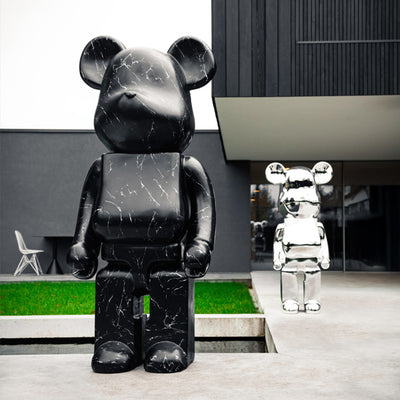

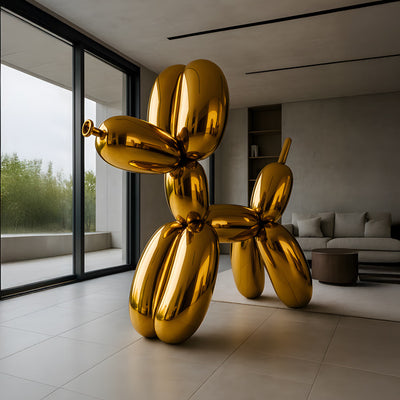
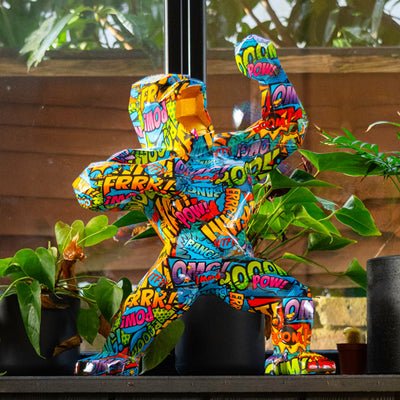
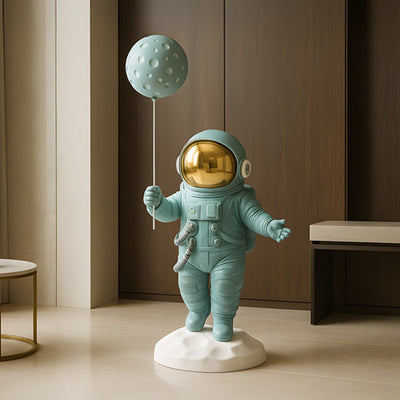

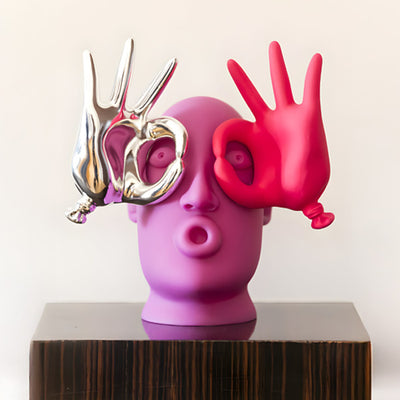


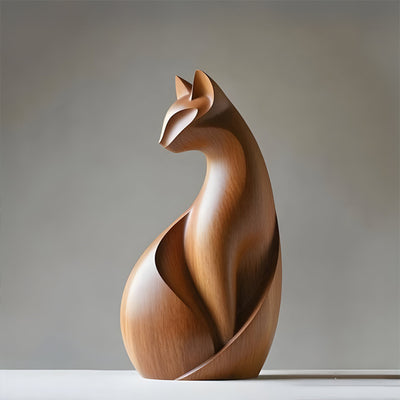



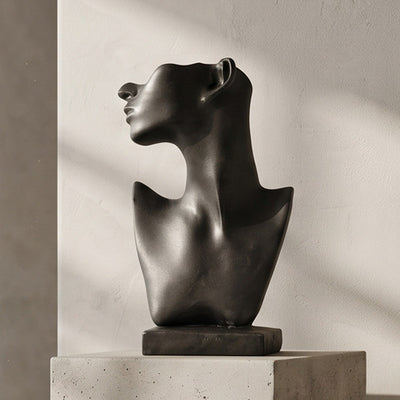






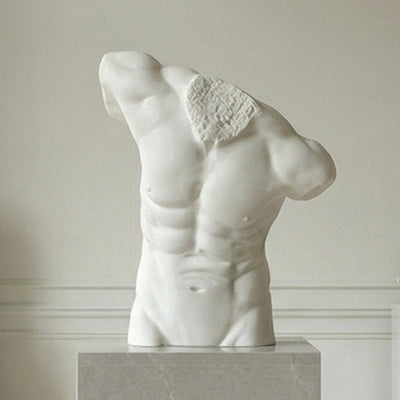
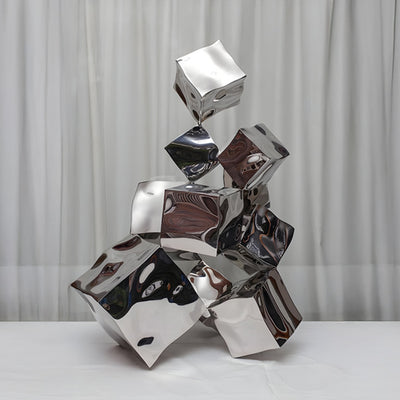


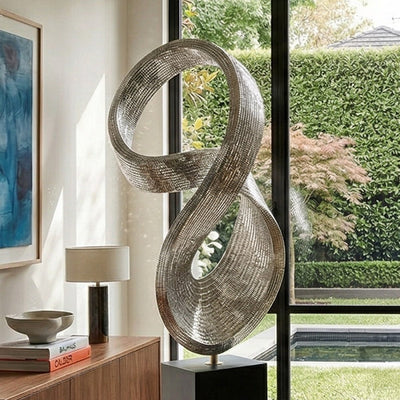

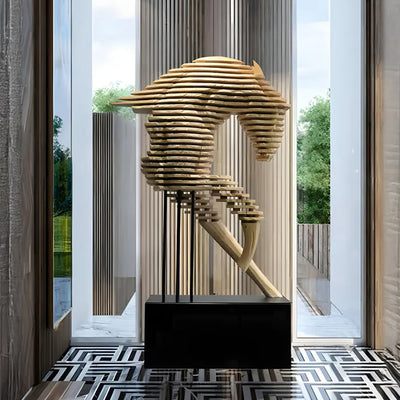
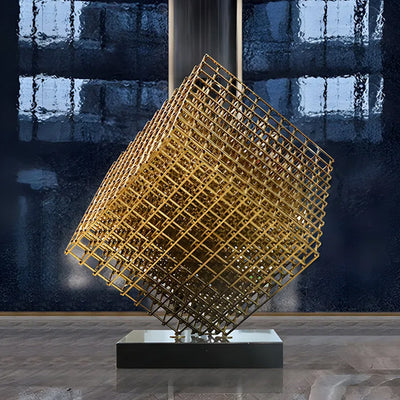
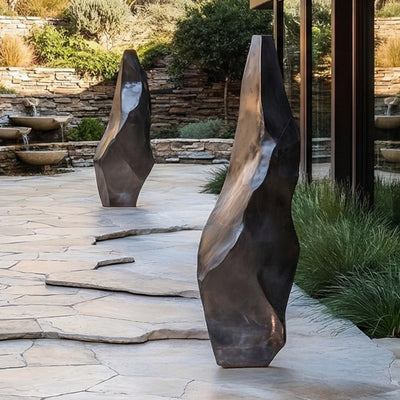

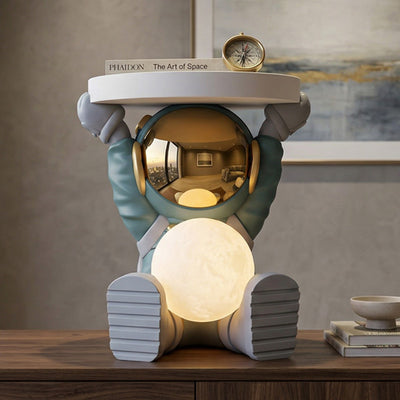









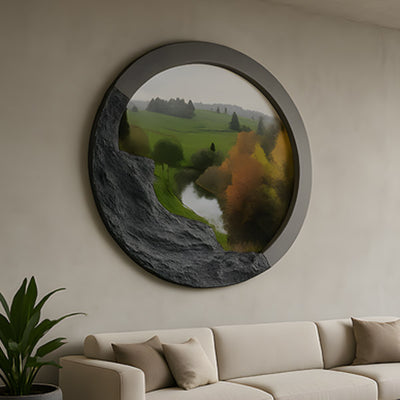

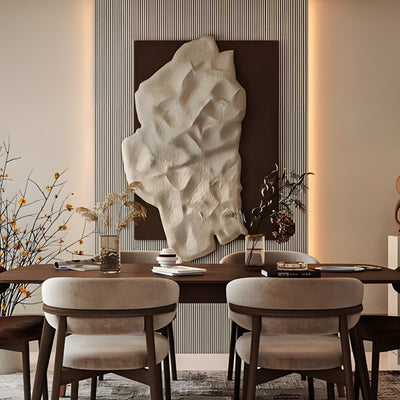
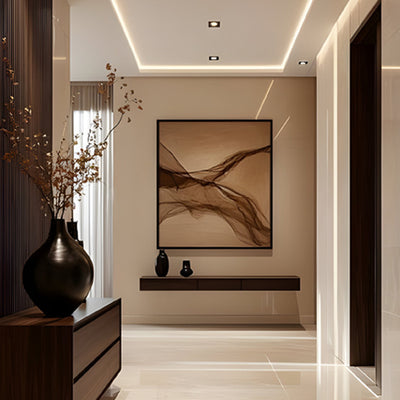
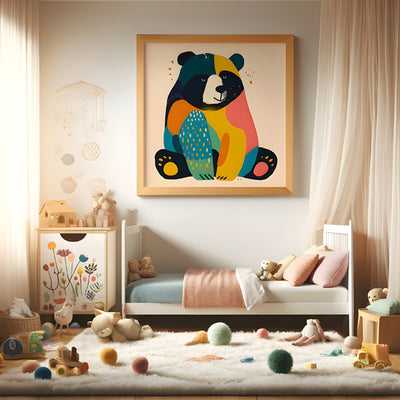











A nine-foot gorilla in a Miami lobby weighs less than the planter next to it. That is the trick fiberglass animal sculptures pull off, and it is why interior designers, retail visual teams, theme venues and private collectors keep specifying them over bronze or stone. You get the visual weight of a monumental animal without the structural headaches, the freight bill of a small car, or the six-month foundry queue.
Done well, a fiberglass piece reads as confident sculpture. Done badly, it reads as a parade float. The difference sits in the mold quality, the laminate schedule, the paint system and the maker behind it. Here is how to tell the two apart before you commit.

Quick Answer: Are Fiberglass Animal Sculptures Right for You?
- Best for: oversized indoor pieces, rooftop installations, retail and hospitality, traveling displays, suspended works, anywhere weight is the enemy.
- Less suited to: permanent unsheltered outdoor placement in harsh climates without a marine-grade paint system, or buyers who specifically want patinated metal as a material statement.
- Typical scale: from tabletop up to 15 ft (4.6 m) and beyond, often a fraction of the weight of an equivalent bronze.
- Finish range: automotive paint, faux bronze, faux stone, high-gloss color, hand-painted realism, metallic leaf.
- Lead time: usually shorter than cast bronze; bespoke pieces still need design, mold, lay-up and finishing time.

What Fiberglass Animal Sculptures Actually Are
Fiberglass animal sculptures are hollow shells built from glass-reinforced plastic (GRP), a composite of woven or chopped glass fiber bonded with polyester or epoxy resin. The form is sculpted first in clay, foam or 3D-printed sections, a mold is taken, and the resin and glass are laid up inside that mold by hand. Once cured and demolded, the shell is seamed, filled, sanded smooth, primed and finished. The American Composites Manufacturers Association has useful background on how GRP behaves as a structural material (acmanet.org).
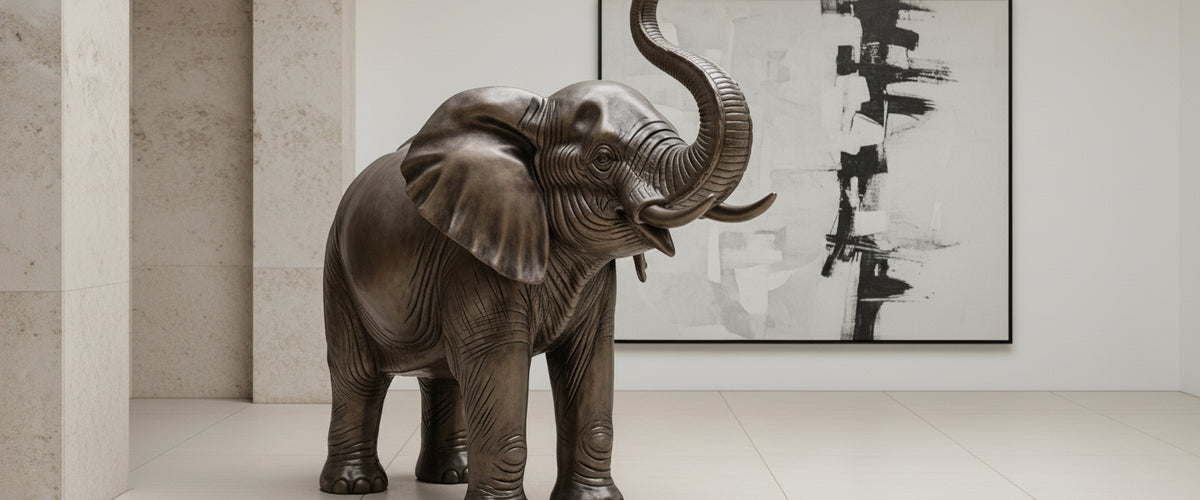
The result is a sculpture that feels rigid and solid but can often be lifted by two people at sizes where bronze would need a forklift. That single property changes what is possible. You can mount a leaping marlin on a wall. You can rig a flock of cranes from a ceiling. You can ship a life-size elephant inside a single crate rather than across three pallets.
At Giant Sculptures we work across bronze, stainless steel, Corten and stone for permanent landmark commissions, and recommend fiberglass when the brief genuinely calls for it: lightweight scale, indoor drama, color-led design, or budgets where cast metal is not the right tool. It is a material choice, not a compromise.

Who Buys Them, and Why
The buyer mix is wider than people assume. Resort groups in Florida and California use fiberglass animals as photo moments. Shopping centers in Texas commission seasonal herds. Private collectors in the Hamptons and Aspen specify oversized pieces for pool houses and entry halls where a bronze of the same scale would crack the floor. Restaurants, golf clubs, children's hospitals and event production companies all sit in the same buyer pool.
What unites them is a need for presence at scale without engineering a plinth strong enough to hold a small car. If your brief is a 12 ft (3.7 m) bear inside a lobby, fiberglass is usually the honest answer.

Materials, Layups and Finishes That Matter
Not all fiberglass animal sculptures are built the same, and the spec sheet is where cheap and considered pull apart.
Laminate Schedule
Ask how many layers of glass mat and woven roving are used, and where. A thin two-layer shell will flex and crack at stress points. A properly engineered piece uses extra layers at the feet, joins, mounting points and any thin extremities (ears, tails, antlers, raised limbs). Internal steel armatures or plywood bulkheads are common for larger animals and any piece intended to be climbed near, leaned on, or rigged.
Gelcoat vs. Painted Finish
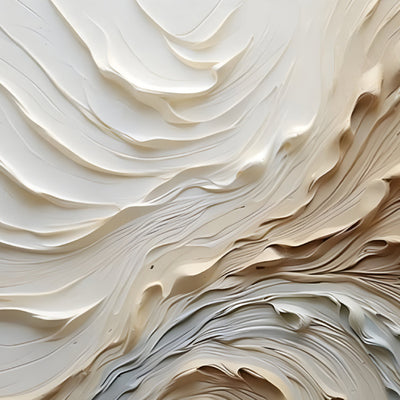
A pigmented gelcoat lives in the mold and gives a tough integral color, good for solid hues and simple finishes. For realistic animals, faux bronze, faux stone or fine artwork you want a primed and painted finish, typically two-pack automotive paint with a UV-stable clearcoat. The Getty Conservation Institute publishes useful general guidance on how modern paint systems weather over time (getty.edu/conservation); the short version is that a good clearcoat is what buys you years of outdoor life.
Finish Options Worth Knowing
- Faux bronze: cold-cast bronze powder in the gelcoat, then hand-patinated. Reads as metal at three paces.
- Faux stone: marble, sandstone or concrete look without the weight.
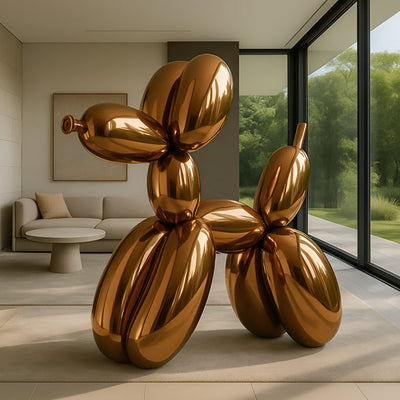
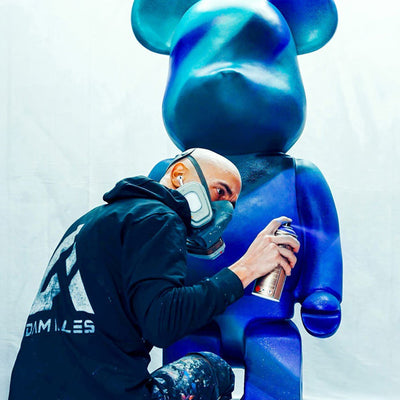
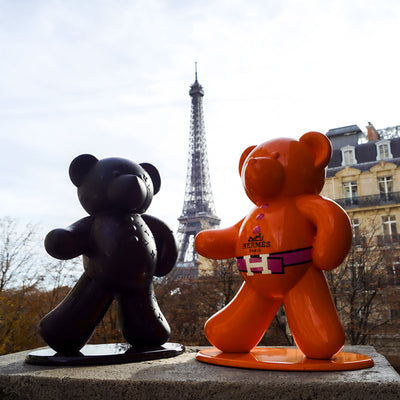
- High-gloss color: the Jeff Koons school of finish, demanding flawless prep.
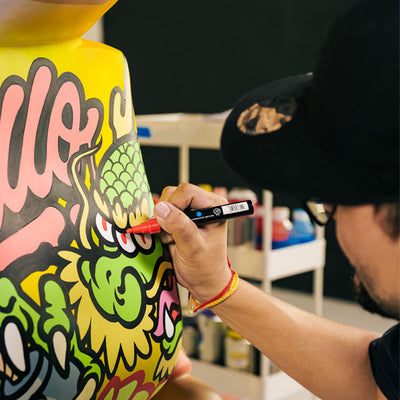
- Hand-painted realism: the most expensive option per square foot, and the one that fools people most.
- Metal leaf: gold, silver or copper leaf over a sealed base for a luxury retail look.
Choosing the Right Scale
Scale is where buyers most often misjudge. A piece that looks huge in a workshop photo can look modest in a double-height lobby. As a rough rule, animal sculptures should occupy at least one third of the visual height of their primary backdrop to register as intentional rather than accidental.
For a residential entry hall with 10 ft (3 m) ceilings, a 5 to 6 ft (1.5 to 1.8 m) seated animal usually anchors the space. For a hotel lobby at 20 ft (6 m), you want 9 to 12 ft (2.7 to 3.7 m). Outdoor garden settings forgive larger pieces; the sky is the backdrop, and animals that look enormous indoors often look correct outside. Browse our animal sculptures catalog to calibrate your eye before locking a size.
Placement: Where Fiberglass Outperforms Metal
For wider placement ideas, Sculpting Nature’s Icons: Top Wildlife Sculptures Celebrating Iconic Animal Species is useful companion reading before finalising the setting and sightlines.
Because the pieces are light, placement options open up that a foundry-cast equivalent would close down.
- Upper floors and rooftops: mezzanines, terraces and roof gardens that cannot carry bronze loads.
- Suspended installations: flying birds, leaping fish, hanging primates in atrium voids.
- Wall-mounted animals: heads, half-bodies and trophy-style pieces with hidden steel cleats.
- Traveling exhibits: trade shows, pop-ups and seasonal merchandising where the same piece moves five times a year.
- Wet zones: pool surrounds, spa gardens and water features where bronze would patinate unpredictably.
For permanent, exposed outdoor settings (Aspen winters, coastal Florida, Texas sun), specify a marine-grade paint system, UV clearcoat, stainless internal armature and sealed drainage holes. Plan to refresh the clearcoat every few years rather than treating the piece as zero-maintenance. If the brief is genuinely a 50-year landmark in open weather, we will usually steer you toward bronze or stainless steel from our wildlife sculptures range instead.
Sourcing: Factories, Manufacturers and What You Are Really Paying For
Search results for fiberglass animal sculptures will quickly surface a wall of listings: china fiberglass animal sculptures, cheap fiberglass animal sculptures, fiberglass animal sculptures factory and fiberglass animal sculptures manufacturer pages from a dozen suppliers. Most of those listings point at the same handful of production zones. The differences that matter are not in the country of origin but in the studio behind the order.
When you compare a fiberglass animal sculptures supplier, ask:
- Who sculpts the master? A stock catalog of 200 animals usually means molds bought or copied, with no original sculpting capability. That is fine for a budget retail prop. It is not fine for a signature lobby piece.
- What is the laminate spec, in writing? Layer count, resin type, armature material, mounting hardware. Vague answers mean a thin shell.
- What paint system is used? Two-pack automotive with UV clearcoat is the floor for any premium piece. Decorative spray paint is not.
- How is it crated and shipped? Large fiberglass animals need custom crates with internal bracing. Damage in transit is the most common complaint with cheap fiberglass animal sculptures bought direct.
- Who handles installation? Anchoring, rigging and on-site touch-up matter as much as the build.
Giant Sculptures works with vetted fiberglass animal sculptures factories alongside our metal foundries and stone studios. We manage the spec, the finish standard, the crating and the delivery into your site rather than handing you a tracking number and wishing you luck. For projects where fiberglass is not the right answer, we will say so and propose the alternative from our broader fiberglass sculptures or metal catalogs.
Budget and Commissioning
Pricing on fiberglass animal sculptures depends on size, complexity of the form, finish, internal engineering, crating and installation. A stock 6 ft (1.8 m) animal in a standard finish sits at one end. A bespoke 15 ft (4.6 m) hand-painted hyperreal piece with a steel armature and a custom plinth sits a long way at the other. Rather than quote a number that will not match your brief, we build a tailored quote against your drawings, site and finish requirements.
A realistic commission timeline looks like this:
- Brief and concept (1 to 2 weeks): references, site, scale, finish direction.
- Maquette or 3D model approval (2 to 4 weeks): you sign off on form and proportion before any full-size work begins.
- Full-size sculpt and mold (4 to 10 weeks depending on size).
- Lay-up, finishing and paint (3 to 6 weeks).
- Crating, shipping and installation.
Care Checklist for Long-Term Ownership
- Dust indoor pieces with a soft microfiber cloth; avoid solvent cleaners on painted surfaces.
- Wash outdoor pieces twice a year with mild soap and water, rinse fully.
- Inspect mounting bolts, armature points and seams annually.
- Refresh UV clearcoat every 3 to 5 years on exposed outdoor pieces; sooner in coastal or high-altitude sun.
- Touch up chips promptly to stop water tracking under the paint film.
- Keep landscape irrigation from spraying directly onto the sculpture; mineral deposits etch clearcoats over time.
How Giant Sculptures Approaches Bespoke Fiberglass Work
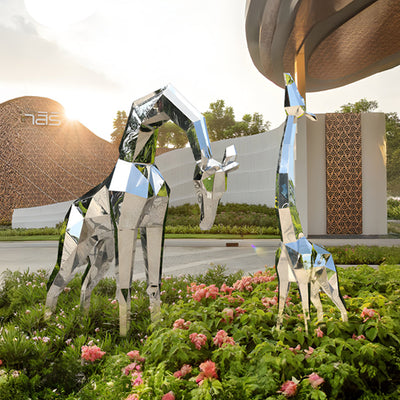
Most bespoke briefs that land with us start the same way: a designer or owner has a space, a story and a scale problem. They want a 14 ft (4.3 m) giraffe in an atrium, a pair of leaping dolphins over a pool, a herd of geese suspended above a restaurant bar. Bronze is too heavy or too slow. Resin alone is too brittle at that size. Fiberglass, properly engineered and properly finished, is the right tool.
We take the brief, develop the form in maquette or digital model, agree finish samples on physical swatches (not screen images), and then run the build through a studio we trust to hit the spec. The piece ships in a purpose-built crate, and where the install is complex, we coordinate rigging on site. That end-to-end ownership is the difference between a sculpture that lands as planned and one that arrives in three pieces with no one answering the phone.
If you are weighing fiberglass against bronze, stone or stainless steel for an upcoming project, send us the room, the scale and the brief. We will tell you honestly which material earns its place, and quote accordingly.