




























































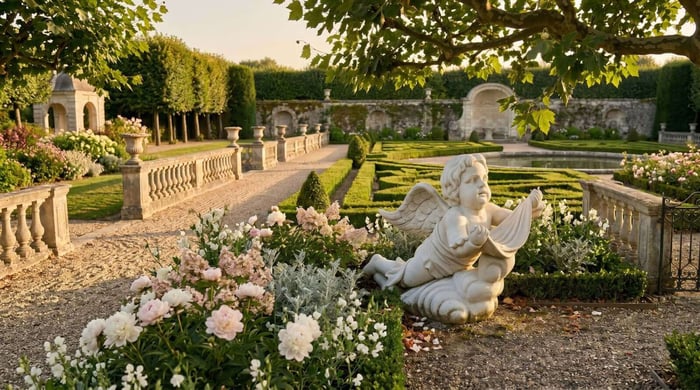

Choosing the Right Material for Your Garden Sculpture
The material you choose for a garden sculpture matters more than most buyers realise. It determines how long the piece will last, how it weathers the seasons, how much maintenance it needs, whether it cracks in frost or fades in sun, and how much the sculpture will cost both upfront and over its lifetime. A poorly chosen material means a sculpture that ages badly — cracking, fading, staining, or deteriorating within a few years. A well-chosen material means a sculpture that looks beautiful for decades.
This guide covers every major material used in garden sculpture — resin, stone, bronze, metal (including stainless steel), marble, ceramic, concrete, and fibreglass. For each, we'll cover the strengths, the weaknesses, the cost range, how it weathers in UK outdoor conditions, and what kind of buyer and garden it suits. By the end, you'll know exactly which material is right for your specific situation.
We'll also cover the nine most important considerations when choosing material (beyond just cost and aesthetics), and we'll finish with honest answers to the most common questions about garden sculpture materials.
At Giant Sculptures, we specialise in designer sculptures across multiple materials — but our outdoor range is dominated by high-quality resin for one simple reason: it offers the best balance of durability, design flexibility, and cost for modern gardens. This guide explains why, and when you might want something different.
Table of Contents
- Choosing the Right Material for Your Garden Sculpture
- The 9 Things That Matter When Choosing Material
- Resin — The Modern Default for Garden Sculpture
- Natural Stone — Granite, Sandstone, Limestone
- Bronze — The Ancient Classic
- Stainless Steel — Contemporary Statement
- Marble — Luxury and Heritage
- Ceramic and Terracotta
- Concrete and Reconstituted Stone
- Fibreglass — The Lightweight Option
- Cast Iron and Wrought Iron
- Aluminium
- Wood
- Material Comparison Table
- How Each Material Ages in UK Weather
- Best Material for Each Type of Garden
- Making the Right Choice
- FAQs
The 9 Things That Matter When Choosing Material
Before diving into specific materials, here are the considerations that should drive your decision — beyond just 'what looks nice.'
1. Weather Resistance
UK weather is brutal for outdoor sculpture. Freeze-thaw cycles split porous materials. Acid rain eats at stone and metal. UV fades pigments. Prolonged damp encourages algae and moss. Some materials handle this beautifully for decades; others start deteriorating within months. This is the single most important consideration for UK gardens.
2. Weight
A life-size marble figure weighs 800-1,500kg. The same piece in resin weighs 40-80kg. Weight affects: delivery cost, installation requirements (foundations, lifting equipment), placement flexibility, and security (heavier pieces are harder to steal but also harder to reposition).
3. Durability Over Decades
A well-chosen material lasts generations. A poorly chosen material needs replacement within 5-15 years. Calculate cost per year of use, not just sticker price — a £2,000 bronze that lasts 200 years is cheaper long-term than a £500 terracotta that lasts 10.
4. Maintenance Requirements
Some materials require annual maintenance (sealing stone, waxing bronze, treating wood). Others need almost nothing (high-quality resin, stainless steel). If you want a set-and-forget sculpture, avoid high-maintenance materials.
5. Colour and Finish Options
Resin can be finished in virtually any colour or texture — glossy white, matte black, marble-effect, bronze-effect, vibrant pop colours. Stone, bronze, and metal are essentially colour-fixed. If you want a specific aesthetic, material choice constrains your options.
6. Cost
Cost varies enormously. A medium garden sculpture can range from £150 (decorative ceramic) to £50,000+ (serious bronze or marble). Budget is a real consideration that rules out many options instantly.
7. Installation Complexity
Heavy sculptures need proper foundations — reinforced concrete pads, frost-line footings, professional mounting. Lighter sculptures can be placed directly on level ground. This affects both initial cost and what's actually practical for your garden.
8. Security and Theft Risk
Garden sculpture theft is a real problem — particularly bronze (high scrap value), smaller stone pieces (portable), and valuable named works. Consider: how visible is the piece from the road? How heavy is it? Is it mounted securely?
9. Design Flexibility
Some materials excel at specific forms and struggle with others. Bronze handles complex detailed sculpture brilliantly but isn't practical for huge simple forms. Marble suits classical figurative work. Resin can produce virtually any form at scale. The sculpture you want determines viable materials.
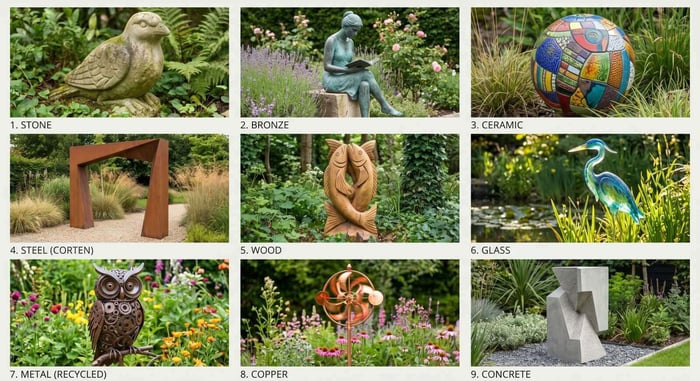
Resin — The Modern Default for Garden Sculpture
Resin has quietly become the dominant material for contemporary garden sculpture, and for good reasons. Modern high-quality resin combines exceptional durability with design flexibility that no traditional material can match. If you're buying a garden sculpture in 2026, resin should be your starting point — and you need a strong reason to choose otherwise.
What Is Resin?
Garden sculpture resin is typically polyester resin or polyurethane resin — synthetic polymers mixed with fillers, pigments, and often fibreglass reinforcement. Quality varies dramatically between manufacturers. High-quality resin (from serious sculpture brands) is durable, UV-stable, and weather-resistant for decades. Low-quality resin (from discount retailers) can fade, crack, and deteriorate within years.
Strengths of Resin
- Extraordinary design flexibility — virtually any form, any finish, any scale
- Weatherproof when properly manufactured — handles UK climate for 30-50+ years
- Lightweight (10-20% the weight of stone or metal equivalents) — simpler installation and delivery
- Cost-effective — delivers sculpture-grade presence at accessible prices
- Holds fine detail extraordinarily well
- Available in marble-effect, bronze-effect, stone-effect finishes alongside contemporary colours
- Doesn't corrode, rust, rot, or crack under normal conditions
- UV-stable formulations don't fade noticeably
- Easy to clean — a damp cloth and mild soap maintains the finish for years
Weaknesses of Resin
- Doesn't have the centuries-of-tradition prestige of bronze or marble
- Low-quality resin can degrade — so choose carefully
- Not a traditional art-collector category (though this is changing)
- Some purists consider it 'not real art' (though this view is diminishing)
Best For
- Contemporary gardens
- Buyers who want serious sculpture without extreme cost
- Gardens where weight and installation matter
- Pieces that need specific colour finishes
- Pop-art, figurative, and abstract designer sculptures
Resin Price Range
- Small resin sculptures (30-60cm): £100-£500
- Medium resin sculptures (60-120cm): £300-£1,500
- Large resin sculptures (120-180cm): £800-£3,500
- Life-size and giant resin sculptures (180cm+): £2,000-£12,000
See our resin sculptures for designer resin pieces across every scale and finish.
Natural Stone — Granite, Sandstone, Limestone
Natural stone has been used for garden sculpture for thousands of years. Its appeal is timeless: the weight, the texture, the way it weathers and develops patina, the sense of permanence. Different stones suit different aesthetics and uses.
Granite
The most durable natural stone for sculpture. Nearly impervious to weather, extremely hard to carve (hence expensive), and develops almost no weathering patina — granite pieces look essentially identical after 200 years as they did on day one. Typical cost: £3,000-£30,000+ for garden-scale pieces.
Sandstone
Popular for traditional gardens, sandstone has softer, warmer tones than granite and carves more easily. However, it's porous — absorbs water, subject to frost damage, and develops significant weathering patina (which many buyers love, but which degrades detail over decades). Cost: £1,500-£8,000+ for garden pieces.
Limestone
Classical European sculpture stone — used for much of the sculpture in historic European gardens. Beautiful patina as it weathers, but more vulnerable to acid rain than granite. Best for sheltered positions. Cost: £1,200-£10,000+ for garden pieces.
Strengths of Natural Stone
- Centuries-old tradition — carries instant gravitas
- Weathers beautifully over decades (for appropriate stones)
- Extraordinary durability (particularly granite)
- Material itself is part of the aesthetic
- Holds value indefinitely
- Suits traditional, classical, and heritage gardens perfectly
Weaknesses of Natural Stone
- Expensive — particularly granite and fine limestone
- Extremely heavy — typical garden piece weighs 300-1,500kg
- Professional installation usually required
- Porous stones need annual sealing in UK climate
- Design options limited to what's achievable in stone (typically classical/figurative)
- Moss and algae accumulation requires periodic cleaning
Best For
- Classical and heritage gardens
- Formal English garden aesthetics
- Traditional figurative sculpture (cherubs, classical figures, architectural pieces)
- Buyers prioritising permanence over contemporary design
Bronze — The Ancient Classic
Bronze sculpture has a history stretching back over 5,000 years. The Benin bronzes, the Greek Charioteer of Delphi, Rodin's Thinker — some of the most important sculptures in human history are bronze. For garden use, bronze offers unmatched durability, exceptional design capability, and significant prestige.
What Is Bronze?
Bronze is an alloy of primarily copper and tin, often with small amounts of other metals. Sculpture bronze is typically poured into moulds (lost-wax casting process) rather than carved. This allows extraordinary detail and complexity — the casting process can capture textures, expressions, and forms impossible in carved materials.
Strengths of Bronze
- Literally lasts thousands of years — unrivalled durability
- Develops beautiful patina over decades (verdigris, rich browns, blue-greens)
- Handles extraordinary detail and complex forms
- Significant investment value — quality bronze appreciates over decades
- Deep artistic tradition and provenance
- Weatherproof without any maintenance
- Heavy enough to be theft-resistant for larger pieces
Weaknesses of Bronze
- Expensive — serious bronze garden pieces run £5,000-£100,000+
- Very heavy — 300-1,000kg for garden-scale pieces
- Theft risk for smaller pieces (scrap value)
- Limited colour palette — bronze naturally, with patina variations
- Installation requires proper foundations
- Over decades, can require professional patina maintenance for high-value pieces
Best For
- Serious sculpture collectors
- Heritage properties and traditional gardens
- Life-size figurative or complex detailed work
- Investment pieces meant to appreciate
- Public gardens and institutional settings
Stainless Steel — Contemporary Statement
Stainless steel has emerged as the defining material for contemporary sculpture over the past 50 years. Anish Kapoor's work, Jeff Koons' Balloon Dogs, Richard Serra's massive installations — stainless steel dominates the contemporary sculpture landscape. For modern gardens, it offers striking visual impact and exceptional durability.
Strengths of Stainless Steel
- Completely corrosion-resistant — won't rust in any climate
- Contemporary aesthetic — mirrored or polished finishes suit modern gardens
- Dramatic visual impact — reflects light and surroundings dynamically
- Extremely durable — 100+ year lifespan with zero maintenance
- Doesn't weather or patina
- Strong structural capability — allows dramatic forms
Weaknesses of Stainless Steel
- Expensive — quality stainless pieces run £3,000-£50,000+
- Doesn't suit traditional or heritage gardens
- Shows water spots and fingerprints on polished finishes
- Reflection quality can look institutional in the wrong setting
- Heavy — though lighter than bronze for equivalent size
- Theft risk for smaller pieces (scrap value)
Best For
- Contemporary and minimalist gardens
- Modern architecture and landscape design
- Reflective or mirror-finish statement pieces
- Commercial and corporate spaces
- Large-scale contemporary work
Marble — Luxury and Heritage
Marble has been the material of the most prestigious sculpture for over 2,500 years. For garden use, marble brings the weight of art history, the luminous surface quality, and significant expense. Not a beginner material.
Strengths of Marble
- Unmatched prestige and tradition
- Luminous translucent quality impossible to replicate
- Carved form has extraordinary depth and presence
- Holds value indefinitely
- Becomes more beautiful over decades of gentle patina
Weaknesses of Marble
- Extremely expensive — garden-scale marble runs £5,000-£200,000+
- Very heavy — typically 500-1,500kg for life-size pieces
- Porous and chemically sensitive — acid rain damage is real
- Requires annual sealing for outdoor use
- Can crack or chip if impacted
- Stains permanently from many substances
- Professional installation essential
Best For
- Heritage properties and classical gardens
- Sheltered outdoor positions (porticos, enclosed courtyards)
- Serious collectors investing in figurative sculpture
- Focal points in formal garden design
See our marble sculpture collection for both genuine marble pieces and premium marble-effect designs.
Ceramic and Terracotta
Ceramic and terracotta have ancient sculpture traditions (Chinese Terracotta Warriors, Italian Renaissance garden pieces). For contemporary gardens, ceramic offers warmth and character but requires more care than modern alternatives.
Strengths of Ceramic/Terracotta
- Warm, organic character
- Traditional Mediterranean and cottage garden aesthetic
- Generally more affordable than stone or bronze
- Wide variety of colours and finishes available
- Lighter than stone
- Can handle good levels of detail
Weaknesses of Ceramic/Terracotta
- Vulnerable to frost damage — water penetrates, freezes, cracks the piece
- Can chip or break on impact
- Limited to small-to-medium sizes (firing constraints)
- Colour fading over decades in strong UV
- Moss and algae accumulation on porous surfaces
- Often need winter protection in UK climate
Best For
- Cottage gardens and Mediterranean-style planting
- Small-to-medium sized decorative pieces
- Sheltered garden positions
- Buyers seeking handmade character over mass-produced perfection
Concrete and Reconstituted Stone
Concrete and reconstituted stone (cement-based material designed to mimic natural stone) have become popular for garden sculpture. Quality varies enormously.
Strengths
- Affordable — much cheaper than natural stone
- Heavy and stable
- Weathers reasonably well
- Wide design flexibility (mould-cast)
- Can be coloured and textured at manufacture
Weaknesses
- Lower-quality concrete can crack and crumble within years
- Surface texture often reveals the casting process up close
- Heavy — complicates delivery and installation
- Lower perceived quality than stone or bronze
- Colour can fade over decades
- Needs sealing for best longevity
Best For
- Budget-conscious buyers wanting stone aesthetic
- Large pieces where stone would be prohibitively expensive
- Traditional garden feature pieces
- Situations where theft risk means you don't want expensive materials
Fibreglass — The Lightweight Option
Fibreglass (glass-reinforced plastic, or GRP) has been used for garden sculpture for decades, particularly for larger pieces where weight is critical. It overlaps significantly with resin — many 'resin' pieces are actually resin with fibreglass reinforcement.
Strengths
- Extremely lightweight — allows huge pieces with manageable weight
- Weatherproof when properly sealed
- Holds detail well
- Cost-effective for large pieces
- Won't crack from frost (non-porous)
Weaknesses
- Lower prestige than traditional materials
- Surface can become dull over decades
- Can show hairline cracks in surface gelcoat over time
- Not suitable for very fine detailed work (the gelcoat reduces sharpness)
- Being lightweight, can topple in high winds without secure mounting
Best For
- Very large sculpture where weight matters
- Commercial and public installations
- Budget-conscious buyers wanting stone or bronze appearance at much lower cost
- Pieces that may need to be moved occasionally
See our fibreglass sculptures for lightweight large-scale pieces.
Cast Iron and Wrought Iron
Iron has a strong garden sculpture tradition — Victorian ironwork, classical iron urns and benches, contemporary ironwork by artists working in industrial aesthetics.
Strengths
- Extremely durable — lasts centuries with care
- Traditional Victorian and heritage appeal
- Suits cottage, traditional, and industrial gardens
- Takes rich dark patina that many buyers love
- Affordable compared to bronze
Weaknesses
- Rusts aggressively if protective coating fails
- Needs periodic repainting or rust treatment
- Heavy — typical pieces 100-500kg
- Limited colour options (traditionally black or dark green)
- Theft risk (scrap iron has value)
Best For
- Victorian-style gardens
- Traditional English cottage gardens
- Industrial or contemporary-rustic aesthetics
- Architectural garden pieces (urns, gates, screens)
Aluminium
Aluminium has become increasingly popular for contemporary garden sculpture. Modern aluminium sculpture typically uses cast aluminium or welded sheet aluminium with powder-coated finishes.
Strengths
- Lightweight (one-third the weight of steel)
- Completely rust-resistant
- Takes vibrant powder-coat finishes
- Suits contemporary architectural aesthetics
- More affordable than bronze or stainless steel
Weaknesses
- Less prestige than traditional sculpture materials
- Powder coating can chip or scratch over decades
- Can look less substantial than heavier metals
- Limited to specific aesthetic territory
Best For
- Modern and contemporary gardens
- Commercial and corporate settings
- Brightly coloured or graphic sculpture
- Pieces that need to be structurally robust but not impossibly heavy
Wood
Wood for outdoor sculpture is a specialist category — wonderful for the right setting but challenging in UK climate.
Strengths
- Warm, organic character impossible to replicate
- Traditional craft tradition in many cultures
- Develops beautiful weathered patina
- Sustainable choice when using appropriate timber
- Lighter than stone or metal
Weaknesses
- Rots without proper treatment — UK climate is particularly harsh on wood
- Needs annual or bi-annual treatment for outdoor use
- Vulnerable to insect damage
- Splits and cracks over years of freeze-thaw cycles
- Lifespan typically 20-40 years (vs centuries for stone/bronze)
- Most woods fade significantly in UV
Best Woods for Outdoor Sculpture
- Oak — most durable common timber
- Teak — extremely weather-resistant, expensive
- Iroko — African hardwood, good durability
- Cedar — naturally weather-resistant, lighter
- Chestnut — traditional choice, good durability
Best For
- Woodland gardens and naturalistic settings
- Celtic, Norse, or tribal aesthetic pieces
- Short-to-medium term installations
- Buyers valuing natural materials over permanence
Material Comparison Table
Here's how the major materials compare across the factors that matter most:
Durability (UK outdoor, years of good condition):
- Granite: 500+
- Bronze: 500+
- Stainless Steel: 100+
- Quality Resin: 30-50
- Marble: 100+ (with maintenance)
- Concrete/Reconstituted Stone: 30-50
- Fibreglass: 25-40
- Cast Iron: 100+ (with maintenance)
- Sandstone/Limestone: 100+ (with patina/erosion)
- Ceramic/Terracotta: 20-40 (with winter protection)
- Aluminium: 50+
- Wood (treated hardwood): 20-40
Weight (life-size equivalent):
- Marble: 500-1,500kg
- Granite: 500-1,500kg
- Bronze: 300-800kg
- Cast Iron: 200-600kg
- Concrete: 300-800kg
- Stainless Steel: 200-500kg
- Ceramic: 50-200kg
- Aluminium: 80-200kg
- Wood: 80-300kg
- Quality Resin: 40-100kg
- Fibreglass: 30-80kg
Cost (medium garden piece, approximately 80-120cm):
- Ceramic/Terracotta: £150-£800
- Concrete: £200-£1,200
- Fibreglass: £300-£1,500
- Quality Resin: £300-£1,500
- Aluminium: £500-£2,500
- Cast Iron: £600-£3,000
- Wood: £500-£3,000
- Sandstone/Limestone: £1,500-£8,000
- Stainless Steel: £3,000-£15,000
- Bronze: £5,000-£30,000
- Granite: £3,000-£30,000
- Marble: £5,000-£50,000
Maintenance Requirements:
- Minimal: Quality Resin, Stainless Steel, Bronze (after initial patina), Granite
- Low: Fibreglass, Aluminium, Concrete (occasional sealing)
- Medium: Marble (sealing), Limestone/Sandstone (sealing), Cast Iron (painting)
- High: Ceramic/Terracotta (winter protection), Wood (annual treatment)
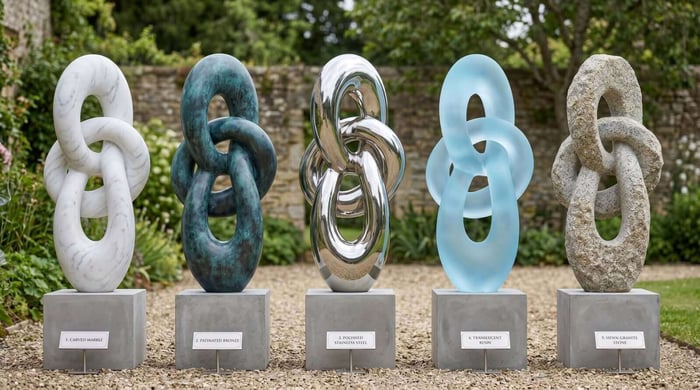
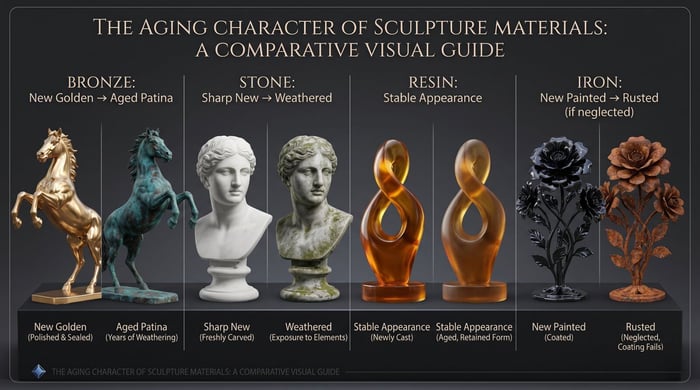
How Each Material Ages in UK Weather
Granite
Essentially doesn't change. A granite piece looks virtually identical after 200 years as it did on day one. Slight surface darkening and very gentle weathering of edges over centuries.
Bronze
Develops increasingly beautiful patina over decades. Initial 2-5 years: darkening from golden to brown. 5-30 years: rich deep brown with green highlights. 30+ years: classic verdigris (blue-green) in sheltered areas, rich bronze elsewhere. Many collectors consider old bronze more beautiful than new.
Quality Resin
A well-made resin sculpture retains its appearance for 30-50+ years with minimal change. Might develop very subtle UV-related fade after 20-30 years in direct sun. Otherwise, essentially unchanged.
Stainless Steel
Doesn't weather at all. 100 years in and a stainless steel piece still looks brand new. Water spots and fingerprints may accumulate but clean off easily.
Marble
Classical marbles weather beautifully over decades — developing a gentle creamy patina, slightly softening sharp edges. Less-sheltered marble can suffer acid rain damage (pitting, surface erosion). Well-maintained marble at 100 years looks essentially fine; poorly maintained marble at 30-50 years can show significant degradation.
Sandstone
Weathers faster than granite or limestone. Sharp detail softens over 50 years. Surface develops significant texture and character. Many buyers prefer the weathered appearance, but fine detail is gradually lost.
Ceramic/Terracotta
Frost is the enemy. Well-made, properly fired ceramic can last 30+ years with winter protection. Unprotected ceramic typically shows damage within 3-10 years — cracks, spalling, piece loss.
Concrete
Lower-quality concrete can show surface degradation within 5-15 years — crumbling edges, hairline cracking, surface erosion. Quality concrete lasts 50+ years but rarely looks as sharp at 50 as at 5.
Cast Iron
Rusts aggressively if protective coating fails. Painted iron at 50 years: either still pristine (if regularly repainted) or visibly rusted (if neglected). Quality powder-coated iron can look near-new for 50+ years.
Wood
Without treatment: deterioration begins within 5 years, significant damage by 15. With regular treatment (annual oil or preservative): 30-40 years for quality hardwoods. Natural silvering patina is beautiful but represents progressive degradation.
Best Material for Each Type of Garden
Contemporary / Modern Garden
First choice:
High-quality resin with contemporary finishes, stainless steel, or aluminium.
Why:
These materials suit clean contemporary aesthetics. Traditional materials (stone, bronze) can look incongruous in minimalist modern gardens. Resin offers the best balance of design flexibility and cost.
Traditional English Cottage Garden
First choice:
Natural stone (sandstone, limestone), terracotta, or cast iron.
Why:
Cottage gardens benefit from materials with traditional character and natural patina. Aged stone and terracotta integrate beautifully with mature planting.
Formal Heritage Garden
First choice:
Bronze, marble, or fine stone (limestone, Portland stone).
Why:
Formal heritage gardens reference classical sculpture traditions. Bronze and marble carry the appropriate gravitas. Invest in quality — cheap materials will look wrong in these settings.
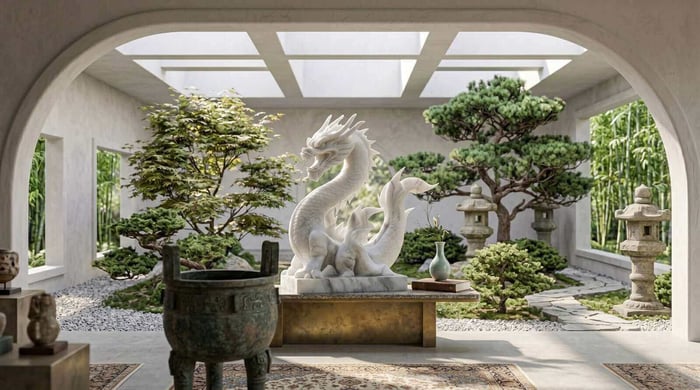
Japanese / Zen Garden
First choice:
Natural stone (particularly granite), weathered bronze, or appropriate ceramics.
Why:
Japanese garden aesthetics value material authenticity and natural patina. Stone and aged bronze integrate with the meditative quality of the space.
Commercial / Corporate Garden
First choice:
Stainless steel, bronze, or aluminium with durable finishes.
Why:
Commercial spaces need materials that look professional for decades with minimal maintenance budget. Also benefit from theft-resistant weight and secure mounting.
Coastal Garden
First choice:
Stainless steel (marine grade), granite, quality resin, or aluminium.
Why:
Salt air is brutal for many materials — corrodes regular metals, erodes soft stones, degrades standard resins. Choose materials specifically rated for marine/coastal environments.
Budget Garden
First choice:
Quality resin, concrete, or fibreglass.
Why:
These materials deliver serious sculptural presence at affordable prices. A £400 quality resin sculpture looks and performs dramatically better than a £400 small bronze or stone piece.
For the full outdoor range, see our garden statues collection or for specific materials, browse outdoor sculptures.
Making the Right Choice
The best material for your garden sculpture depends on your specific circumstances — the garden's aesthetic, your climate exposure, your budget, and how long you plan to keep the piece. There's no universally 'best' material.
That said, for most contemporary buyers, high-quality resin represents the best balance: design flexibility that matches traditional materials, durability that handles UK weather for decades, and costs that make sculpture accessible without compromising quality. For serious collectors and heritage settings, bronze, marble and quality stone remain unmatched. For contemporary statement pieces, stainless steel can't be beaten.
At Giant Sculptures, we offer sculptures across multiple materials — browse our full outdoor sculpture range, or narrow by specific material through our resin, marble, and fibreglass, collections.
FAQs
What is the best material for outdoor garden sculptures?
For most contemporary buyers, high-quality resin offers the best balance — design flexibility, 30-50+ year durability in UK weather, and accessible pricing. For serious collectors or heritage gardens, bronze and marble remain unmatched for prestige and longevity (100-500+ years). For contemporary minimalist gardens, stainless steel is the contemporary standard. The 'best' material depends entirely on your aesthetic, budget, and longevity requirements.
What are garden statues made of?
Garden statues are made from a wide range of materials: high-quality resin (the modern default), natural stone (granite, sandstone, limestone), bronze, stainless steel, marble, ceramic/terracotta, concrete/reconstituted stone, fibreglass, cast iron, aluminium, and treated wood. Each material has distinct strengths in terms of durability, cost, design flexibility, and weathering behaviour.
What is the most durable material for garden sculptures?
Granite and bronze are the most durable materials, lasting 500+ years with minimal degradation. Stainless steel (100+ years), quality marble with maintenance (100+ years), and quality resin (30-50 years) are also excellent. Less durable options include ceramic/terracotta (20-40 years with winter protection) and wood (20-40 years with regular treatment).
What is the cheapest material for garden sculptures?
Ceramic and terracotta start lowest (£150-£800 for a medium piece), followed by concrete/reconstituted stone (£200-£1,200), quality resin (£300-£1,500), and fibreglass (£300-£1,500). However, cheaper materials generally have shorter lifespans — calculating cost per year of use often favours slightly more expensive options like quality resin over cheaper ceramic or concrete.
How long do resin garden sculptures last?
High-quality resin garden sculptures last 30-50+ years in UK outdoor conditions with minimal maintenance. Lower-quality resin (from discount retailers) can degrade within 5-10 years. The difference is significant — when buying resin, quality matters enormously. Look for UV-stable resin, fibreglass reinforcement, and proven brands with warranties.
Is resin better than stone for garden statues?
It depends. Quality resin is lighter, more design-flexible, weather-resistant, and significantly cheaper than equivalent stone. Natural stone has greater prestige, longer lifespan (centuries vs decades), and develops character as it weathers. For contemporary gardens and buyers prioritising design flexibility: resin. For heritage gardens and collectors prioritising prestige and multi-generational permanence: stone.
What material doesn't crack in frost?
Non-porous materials handle frost well: high-quality resin, fibreglass, bronze, stainless steel, aluminium, and granite. Porous materials are vulnerable: sandstone, limestone, concrete, terracotta, and ceramic all risk frost damage because water penetrates, expands on freezing, and cracks the material. For UK gardens with regular frost, non-porous materials are significantly lower-risk.
What material is best for coastal gardens?
Coastal gardens need materials rated for salt exposure: marine-grade stainless steel, quality resin, granite, and aluminium all handle salt air well. Avoid: standard steel and iron (corrodes rapidly), most untreated stones (salt erosion accelerates), and lower-grade resins (coatings degrade). For coastal installations, ask suppliers specifically about marine/coastal ratings.
Do bronze statues rust?
No — bronze doesn't rust in the traditional sense. Bronze is a copper alloy, not iron, so it doesn't develop iron oxide (rust). Instead, bronze develops patina — initially darkening, then over decades developing rich brown, green (verdigris), or blue-green tones. This patina is generally desirable and is part of bronze's appeal. It's also protective, preventing further corrosion.
What is reconstituted stone?
Reconstituted stone (also called cast stone) is a concrete-based material designed to mimic natural stone. It's made from cement, stone aggregates, and pigments, cast in moulds to produce stone-appearance sculptures at significantly lower cost than natural stone. Quality varies enormously — premium reconstituted stone can last 50+ years and closely resembles natural stone; budget versions can degrade within a decade.