










































































Table of Contents
- Why Expensive Bear Statues & Figurines Hold Their Value
- Why Bear Statues & Figurines Have Become Investment-Grade Art
- The Most Expensive Bear Statues & Figurines in the World
- KAWS 'The KAWS Album' (2005)
- Antique German Steiff Bears (early 1900s)
- Rare Meissen Porcelain Bears (1700s-1800s)
- 1000% Bearbrick Rare Collaborations
- KAWS Companion Sculptures (Various Sizes)
- Rare Labubu Pieces
- Daniel Arsham Bronze Bears
- Richard Orlinski Bear Sculptures
- Takashi Murakami Bear-Adjacent Pieces
- Understanding the Market: Why Prices Have Exploded
- Top Expensive Bear Statue & Figurine Brands & Artists
- Designer Bear Statues vs Traditional Bear Figurines
- What Makes a Bear Statue 'Expensive'
- Are Expensive Bear Statues a Good Investment?
- How to Buy Expensive Bear Statues Safely
- The Giant Sculptures Designer Bear Range
- Collecting Expensive Bear Statues in 2026
- FAQs
Why Expensive Bear Statues & Figurines Hold Their Value
A bear statue can cost £200. A bear statue can cost £200,000. The difference isn't just size or materials — it's artistic signature, scarcity, cultural significance, and the trajectory of a collectible market that has transformed over the past two decades. Understanding why expensive bear statues and designer figurines command the prices they do is the first step to collecting intelligently.
If you're drawn to expensive bear statues, you're in good company. Bear figurines and statues have become some of the most-collected — and most-appreciating — pieces in the contemporary art world. KAWS 'Companion' bear sculptures have sold for over £1 million at auction. A rare Bearbrick collaboration can command £20,000+ on the secondary market. Traditional porcelain bear figurines from Meissen or Royal Doulton routinely sell for thousands, with exceptional pieces fetching five figures.
This guide takes you through the world of expensive bear statues and collectible figurines — why they're valuable, who's making the most sought-after pieces today, how investment-grade bear art has evolved, and what to look for if you're building a collection at the premium end of the market.
At Giant Sculptures, we create designer bear sculptures that sit at the intersection of fine art and collectible — hand-finished in the UK, produced in limited quantities, and built to hold value over decades. We see the expensive bear statue world up close, and this guide reflects that.
Why Bear Statues & Figurines Have Become Investment-Grade Art
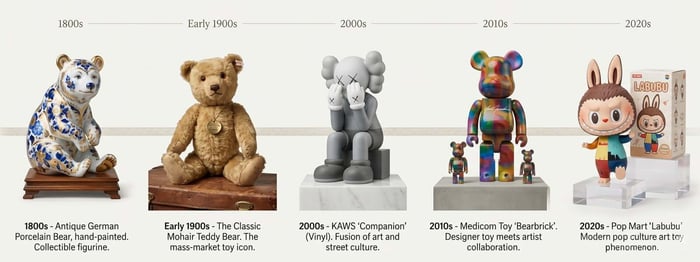
For most of the 20th century, collectible bears meant one of two things: a traditional porcelain bear figurine from a heritage brand, or a plush teddy bear. The first had modest collector value. The second had sentimental value only. Neither was serious investment territory.
Then, over the past 25 years, bears became art.
The KAWS Effect
Brian Donnelly — the artist known as KAWS — began producing Companion sculptures in 1999. His bear-adjacent figures (the Companion has elements of bear, cartoon character, and designer toy) started appearing at £40 retail. By the 2010s, large KAWS sculptures were selling at Sotheby's for hundreds of thousands of pounds. In 2019, a 3.5m KAWS 'The KAWS Album' sold at Sotheby's Hong Kong for £11.3m. KAWS established that designer toy-descended bear art could be serious, expensive, investment-grade art.
The Bearbrick Phenomenon
Medicom Toy's Bearbrick, launched in 2001, democratised designer bear art at smaller scales. Standard Bearbricks retail for £40-£200. But rare collaborations — a Chanel x Bearbrick, a 1000% Louis Vuitton Bearbrick, limited art-world collabs with KAWS, Basquiat estates, or Daniel Arsham — trade hands for £5,000, £20,000, even £50,000+. Bearbricks have transformed from collectible toys into liquid secondary-market assets, with prices tracked like stocks.
The Labubu Boom
Hong Kong artist Kasing Lung's Labubu, produced by Pop Mart since 2019, has gone through waves of explosive appreciation. Certain rare Labubu colourways and collaboration pieces have sold for £10,000+. The 'blind box' element creates scarcity; the viral cultural moment of 2023-2025 (with Labubu appearing on Blackpink's Lisa, Rihanna, and countless celebrities) sent prices into the stratosphere.
Traditional Expensive Bear Figurines
At the same time, traditional bear figurines have continued to appreciate at the top end. Rare Meissen bears from the 1700s-1800s can sell for tens of thousands at auction. Royal Doulton bears in retired designs appreciate steadily. Antique German Steiff bears from the early 1900s — the original teddy bears — are among the most valuable collectible bears of all, with exceptional pieces selling for over £100,000.
The Designer Statue Market
Running alongside all of this is a thriving market for designer bear statues — larger-scale pieces that bridge figurine collecting and fine art sculpture. Contemporary artists and sculptural brands produce limited-edition designer bears, often 50cm-2m tall, finished in resin, stainless steel or mixed media. These pieces occupy a space between the £200 Bearbrick and the £1m KAWS — generally £1,000-£25,000 — and are the most accessible 'serious' collectible bear category.
The Most Expensive Bear Statues & Figurines in the World
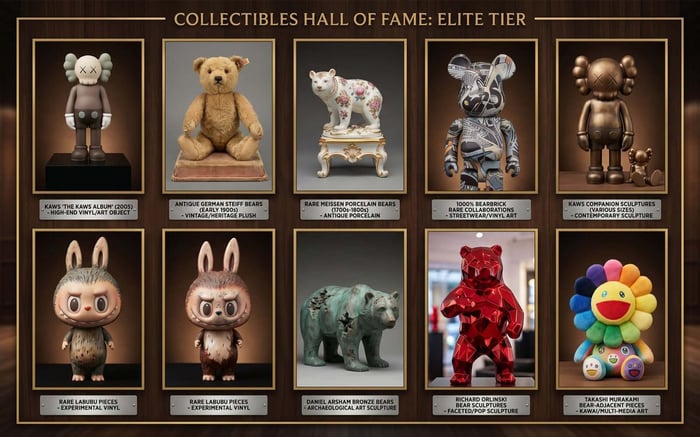
Here are some of the most valuable bear-related sculptural pieces ever sold or currently in the market. Prices are approximate based on publicly reported auction results and secondary market data.
KAWS 'The KAWS Album' (2005)
Sold: £11.3 million / HK$115.9m (Sotheby's Hong Kong, 2019)
Not strictly a bear — but a bear-adjacent Companion character. Still one of the most expensive contemporary sculptures/figurines ever sold, and the record that transformed the serious-collectible-toy market.
Antique German Steiff Bears (early 1900s)
Typical range: £20,000 - £100,000+
The original teddy bears from the early 20th century, made by Steiff in Germany. Rare pieces in excellent condition with original trademarks (the 'button in ear') have sold for over £150,000. A 1904 Steiff 'Happy' teddy bear set a record at Sotheby's for £55,000 in 1989 — in today's money that's over £150,000.
Rare Meissen Porcelain Bears (1700s-1800s)
Typical range: £5,000 - £50,000+
Antique Meissen bear figurines from the 18th and 19th centuries are among the most valuable traditional porcelain collectibles. Condition and provenance drive prices, with exceptional pieces fetching far above the typical range.
1000% Bearbrick Rare Collaborations
Typical range: £5,000 - £50,000+
Bearbrick at 1000% scale (71cm) in rare collaboration colourways — Chanel, Louis Vuitton, Fendi, Dior, KAWS, Basquiat — regularly sells for five figures. The 1000% Chanel Bearbrick from 2006 is among the most coveted; when examples come to market they routinely sell for £30,000+.
KAWS Companion Sculptures (Various Sizes)
Typical range: £5,000 - £500,000+
Standard retail KAWS Companions start around £300-£600. Large-scale editions and early pieces have sold for hundreds of thousands. Rare colourways and limited edition sizes have established a secondary market that rivals fine art.
Rare Labubu Pieces
Typical range: £500 - £15,000+
Most Labubu pieces retail for £15-£60. But sought-after rare colourways, limited edition collaboration pieces, and early Labubu releases now sell for thousands on the secondary market. A rare Labubu x adidas from 2024 sold for £8,500 on StockX.
Daniel Arsham Bronze Bears
Typical range: £8,000 - £80,000+
American artist Daniel Arsham's 'eroded' bronze bear sculptures — part of his broader practice of imagining contemporary objects as future archaeology — are significant contemporary pieces. Editions sell out quickly and appreciate steadily on the secondary market.
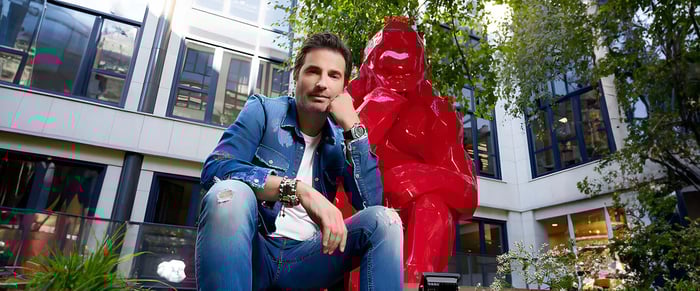
Richard Orlinski Bear Sculptures
Typical range: £3,000 - £50,000+
French sculptor Richard Orlinski's geometric resin bears (and other animals) have established a substantial market across Europe. Signed editions sell through galleries and at auction, with larger pieces and rarer editions commanding higher prices.
Takashi Murakami Bear-Adjacent Pieces
Typical range: £2,000 - £30,000+
Murakami's character-based sculptures — Mr. DOB, Panda, and other works that draw from the same kawaii/pop-art tradition as contemporary bear art — command significant prices in the gallery and auction markets.
Understanding the Market: Why Prices Have Exploded
The bear statue and figurine market has transformed dramatically over the past 15 years. Here's why prices for designer bear art have risen so sharply.
1. The Blurring of 'Toy' and 'Art'
Twenty years ago, a clear line separated 'toys' from 'art.' Museums didn't collect toys. Auction houses didn't sell Bearbricks. Galleries didn't show vinyl figures. That line has dissolved. MoMA has KAWS pieces. Sotheby's holds designer toy auctions. Galleries routinely show 'art toys.' When a category moves from 'toy' to 'art,' prices typically rise 10-50x.
2. Scarcity-Driven Design
Modern designer bear brands are built around scarcity. Limited editions of 300-3,000 pieces. Blind box drops that sell out in minutes. Collaborations that exist in 100 copies. Deliberately engineered scarcity creates secondary market pressure, which drives prices.
3. The Flipping Economy
StockX, Grailed, Vestiaire Collective and similar platforms have made collectibles liquid. A Bearbrick can be bought at 9am and sold at lunch for a profit, with authentication built in. Liquidity attracts investors alongside collectors, and that capital drives prices up.
4. Cultural Convergence
Bear art sits at the centre of multiple cultural movements — streetwear, contemporary art, Asian pop culture, luxury fashion, interior design. When Louis Vuitton x KAWS, Dior x Bearbrick, and Pop Mart x countless collaborators keep releasing bear-based pieces, they pull buyers from every one of those worlds into the same market.
5. Wealth & Wealth Display
Ultra-high-net-worth collectors have increasingly embraced contemporary designer pieces. A £500,000 KAWS sculpture signals taste, cultural awareness, and wealth simultaneously in a way that works across generations. This top-tier demand lifts the entire market.
Top Expensive Bear Statue & Figurine Brands & Artists
Contemporary Designer Bear Artists & Brands
- KAWS (Brian Donnelly) — the defining name in contemporary designer bear/Companion art. Price range: £500 retail to £11m+ at auction.
- Medicom Toy (Bearbrick) — Japanese company behind Bearbrick. Collaborations span every major luxury brand and many fine artists.
- Pop Mart (Labubu, Skullpanda, various) — Chinese designer toy powerhouse producing some of the most-traded figurines of the 2020s.
- Daniel Arsham — American contemporary artist whose bronze eroded-bear sculptures are serious investment pieces.
- Richard Orlinski — French sculptor of bold geometric resin bears and other animals.
- Takashi Murakami — Japanese contemporary artist whose character-based sculpture bridges pop art and designer toy traditions.
- Giant Sculptures — UK-based maker of designer bear statues in limited quantities, hand-finished at life-size and smaller.
Heritage Porcelain Bear Brands
- Steiff (Germany, est. 1880) — the original teddy bear maker. Antique and rare Steiff bears are among the most valuable collectible bears.
- Meissen (Germany, est. 1710) — the original European porcelain house. Antique Meissen bears are serious collectibles.
- Royal Doulton (England, est. 1815) — bear figurines and bunnykins — retired pieces can be highly valuable.
- Herend (Hungary, est. 1826) — ornate hand-painted porcelain bears, each piece produced by hand.
Designer Bear Statues vs Traditional Bear Figurines
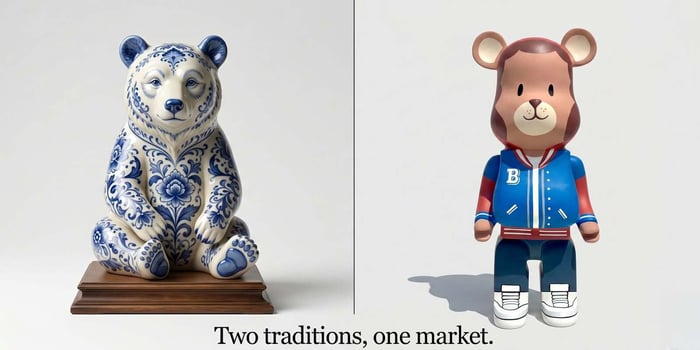
The expensive bear world divides into two distinct traditions. Understanding the difference helps you collect more intelligently.
Traditional Expensive Bear Figurines
- Usually smaller (10-40cm)
- Made from porcelain, fine china, or ceramic
- Heritage brands with long histories (Steiff, Meissen, Royal Doulton)
- Typically depict realistic bears or classical bear imagery
- Value comes from craftsmanship, provenance, age, and scarcity
- Secondary market: auction houses like Sotheby's, Christie's, Bonhams for high-end pieces
- Most valuable examples: antique Steiff teddies, 18th-19th century Meissen bears
Designer Bear Statues
- Typically larger (30cm-2m+)
- Made from resin, stainless steel, bronze, or mixed media
- Contemporary artists, designers and brands (KAWS, Bearbrick, Giant Sculptures)
- Stylised or abstract bear forms — not realistic
- Value comes from artist reputation, scarcity, cultural moment, and condition
- Secondary market: StockX, Myriad, designer toy stores, contemporary art auctions
- Most valuable examples: KAWS Companions, rare 1000% Bearbricks, artist editions
Which Should You Collect?
There's no right answer — it depends on your taste, your interior, and your collecting philosophy:
- If you love heritage, craft, and antique objects, traditional porcelain bears reward deep engagement
- If you're drawn to contemporary art, design, and cultural energy, designer bear statues are more alive
- If you want investment-grade appreciation, both categories work — but designer pieces have moved faster in recent years
- Many serious collectors own both — treating them as complementary rather than competing
What Makes a Bear Statue 'Expensive'
Six factors determine whether a bear statue commands a premium price.
1. Artist or Brand Pedigree
The single biggest driver. A KAWS bear is valuable because it's KAWS. A Bearbrick is valuable because Medicom Toy built the brand. A Giant Sculptures bear is valued because the brand has built a reputation for quality and consistency. Without pedigree, even extraordinary craftsmanship can struggle to command premium prices.
2. Scarcity
An edition of 10 is more valuable than an edition of 1,000. A sold-out, retired piece is more valuable than one still in production. A one-of-one piece can be the most valuable of all.
3. Size & Material
Larger pieces command premium prices. Bronze commands more than resin. Hand-finished commands more than mass-produced. A 400% Bearbrick is £100. A 1000% (71cm) is £500+. The same design, same artist, different size = dramatically different price.
4. Condition & Packaging
'Mint in box' (MIB) commands a huge premium. Original packaging, untouched condition, all documentation present. For vintage pieces, condition issues can reduce value by 70-90%.
5. Collaboration & Cultural Significance
Collaborations between artists or brands add multipliers. A Bearbrick x Chanel is worth dramatically more than a standard Bearbrick. A KAWS x Uniqlo figurine sits in a different price tier than a regular KAWS. Cultural moments — viral drops, celebrity associations — can also spike value.
6. Provenance
Documentation of ownership matters — especially for high-end pieces. Original receipts, certificates of authenticity, gallery documentation, and for antique pieces, known provenance through previous owners all add measurable value.
Are Expensive Bear Statues a Good Investment?
Yes — with caveats. Over the past decade, several bear-related collectible categories have outperformed traditional investment classes significantly. But investment in collectibles comes with real risks.
Categories That Have Appreciated Strongly
- Rare Bearbrick collaborations (100-1000% prime collabs): often 3-10x over 5 years
- Early KAWS figurines and limited editions: often 10-50x over 15 years
- Labubu rare colourways and early pieces: often 20-100x over 3 years (during the boom)
- Signed Richard Orlinski pieces: steady 5-10% annual appreciation
- Antique Steiff bears in mint condition: steady long-term appreciation
Categories That Haven't
- Standard Bearbricks outside of notable collaborations
- Most 'limited edition' mass-produced pieces from lesser brands
- Licensed character bear figurines outside of extraordinary rarities
- Most modern porcelain bear figurines from mid-tier brands
Key Investment Principles
- Condition is critical. A mint piece is worth 3-10x a damaged piece.
- Authentication matters. Counterfeits destroy value.
- Documentation multiplies value. Keep receipts, boxes, certificates.
- Artist reputation is the foundation. Established artists hold value through market cycles.
- Don't invest more than you can afford to lose. Collectibles are illiquid and volatile.
- Buy what you love. If value grows, it's a bonus. If not, you still own something meaningful.
How to Buy Expensive Bear Statues Safely
Expensive bear statues attract counterfeiters. The KAWS, Bearbrick and Labubu secondary markets are all riddled with fakes. Here's how to protect yourself.
Buy Direct Where Possible
Direct from KAWSONE, Medicom, Pop Mart, Giant Sculptures, or other reputable makers is always safest. You pay retail, but you know it's authentic.
Use Authenticated Marketplaces
StockX and Myriad authenticate designer toys before shipping. Vestiaire Collective authenticates luxury pieces. These platforms charge higher prices but remove counterfeit risk.
Auction Houses for High-End Pieces
For £5,000+ purchases, major auction houses (Sotheby's, Phillips, Christie's, Heritage Auctions) offer rigorous authentication and provenance verification, though they charge 20-26% buyer's premiums.
Verify Sellers Carefully
If buying from individual sellers:
- Check seller history and ratings thoroughly
- Ask for multiple high-resolution photos
- Request photos with today's date (piece of paper with date written on it)
- Verify any claimed provenance or documentation
- Research the specific piece — know what authentic looks like
Know the Red Flags
- Price substantially below market
- Missing or unclear serial numbers
- Packaging that doesn't match official versions
- Certificates of authenticity that can't be verified
- Seller unwilling to use escrow or authenticated services
The Giant Sculptures Designer Bear Range
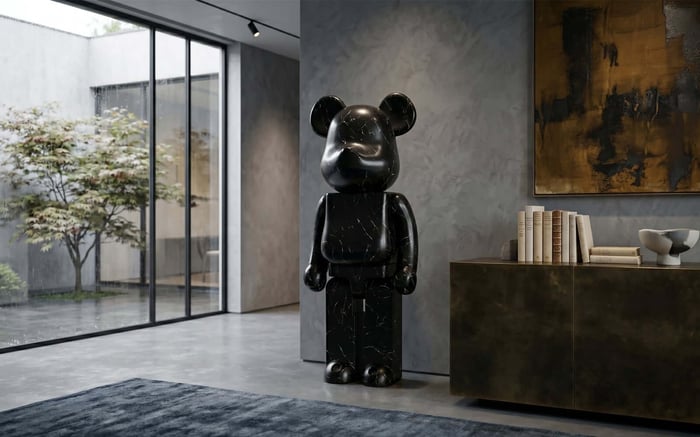
Giant Sculptures occupies a specific place in the expensive bear statue market — designer bear sculptures at premium sizes, made in limited quantities, hand-finished in the UK. Our pieces sit in the £500-£10,000+ range, bridging the more accessible designer toy market and the museum-grade designer artist market.
What Makes Our Pieces Investment-Ready
- Hand-finished production — no two pieces identical
- Limited quantities in each design
- Substantial size ranges up to life-size and beyond
- Premium materials — quality resins, UV-stable pigments, weather-resistant finishes
- Certificate of authenticity with every piece
- Established UK-based brand with secondary market presence
Our Bear Statue Collections
Explore our full bear sculpture collection, which includes:
- Giant bear sculptures — life-size and larger designer bears
- Iconify sculptures — designer art-toy-style figures at premium sizes
- Labubu collection — Labubu-inspired pieces at collector sizes
- Resin sculptures — premium resin designer pieces
Collecting Expensive Bear Statues in 2026
The world of expensive bear statues and designer figurines has never been more interesting. Serious contemporary artists, luxury brand collaborations, cultural phenomena and thriving secondary markets have transformed what was once a niche hobby into a major contemporary collectible category.
Whether you're drawn to the craft and heritage of antique porcelain bears, the cultural energy of KAWS and Bearbrick, the viral momentum of Labubu, or the accessible premium designer sculpture space where Giant Sculptures operates, the key is the same: collect what you love, focus on authenticity and condition, buy from trusted sources, and think in decades, not weeks.
Ready to start or expand a serious bear statue collection? Browse our designer bear range or get in touch to discuss commissions, bespoke pieces, or collection advice.
FAQs
What is the most expensive bear statue ever sold?
Among contemporary pieces, KAWS's 'The KAWS Album' sold for £11.3m at Sotheby's Hong Kong in 2019 — though technically a Companion figure rather than a bear, it remains the benchmark. Antique Steiff teddy bears have sold for over £150,000, while Meissen and other fine porcelain bears from the 18th-19th centuries can reach £50,000+ for exceptional examples. 1000% Bearbricks in rare collaborations have traded at £30,000+.
Are bear statues a good investment?
Some categories have outperformed traditional investments significantly — rare KAWS pieces, sought-after Bearbrick collaborations, early Labubu, antique Steiff bears. But many bear figurines have not appreciated or have even lost value. Investment potential depends on artist reputation, scarcity, condition and cultural relevance. Buy pieces you love, treat appreciation as a bonus, and focus on authentic pieces from established makers or artists.
What makes a bear statue expensive?
Six factors: artist or brand pedigree (most important), scarcity (limited editions vs mass production), size and material (bronze > resin, larger > smaller), condition (mint in box commands huge premiums), collaboration or cultural significance (luxury brand collabs multiply value), and provenance (documented ownership history). A bear by an unknown maker in a large edition can be inexpensive. The same-looking bear by a named artist in an edition of 50 can be 100x the price.
How much does a designer bear statue cost?
Entry-level designer bear statues start around £300-£500 (smaller Bearbricks, Giant Sculptures small pieces, some Orlinski figures). Mid-range designer bears run £1,000-£10,000 (larger Bearbricks, standard KAWS Companions, large designer sculptures, smaller signed Arsham pieces). Premium designer bears sit at £10,000-£100,000 (1000% Bearbrick rare collabs, large KAWS editions, significant Arsham and Murakami pieces). Museum-level bears reach £100,000+ (unique artist pieces, auction-record holders, major collaborations).
Where can I buy expensive bear statues safely?
Safest routes: direct from makers (KAWSONE, Medicom, Pop Mart, Giant Sculptures), authenticated marketplaces (StockX, Myriad), specialist designer toy stores, and auction houses (Sotheby's, Phillips, Heritage Auctions). Avoid unauthenticated peer-to-peer sales for high-value pieces — counterfeiting is a significant problem across KAWS, Bearbrick, and Labubu.
What are the most valuable teddy bears?
Antique Steiff bears from the early 1900s are among the most valuable teddy bears. A 1904 Steiff 'Happy' bear set an auction record at Sotheby's. Rare or unusual Steiff pieces — specific colours, mohair types, or models from brief production runs — regularly sell for £50,000-£150,000. Beyond Steiff, early 20th-century teddy bears from makers like Bing, Chad Valley and Merrythought can also be extremely valuable in original condition.
Is a KAWS figure a bear?
KAWS's 'Companion' figures are bear-adjacent rather than strictly bears — they're cartoon-character-derived figures with bear-like elements (round ears, snout, body proportions). In collector culture they're usually grouped with bear figurines and designer bear sculptures. KAWS also produces pieces that are explicitly bear-themed, including 'BFF' (which resembles a bear more directly) and various bear-specific limited editions.
How do I authenticate a Bearbrick or Labubu?
Key authentication steps: verify serial numbers against manufacturer databases, inspect packaging against official product photos, compare paint details and moulding to authenticated examples, check joint mechanisms and quality, verify weight (counterfeits often feel lighter), examine any logos or text for correct font and placement. When in doubt, use authenticated marketplaces (StockX, Myriad) or buy direct from manufacturers. Counterfeiting is sophisticated — the safest approach is verified sources, not self-authentication.