
The Enduring Beauty of Marble Sculpture
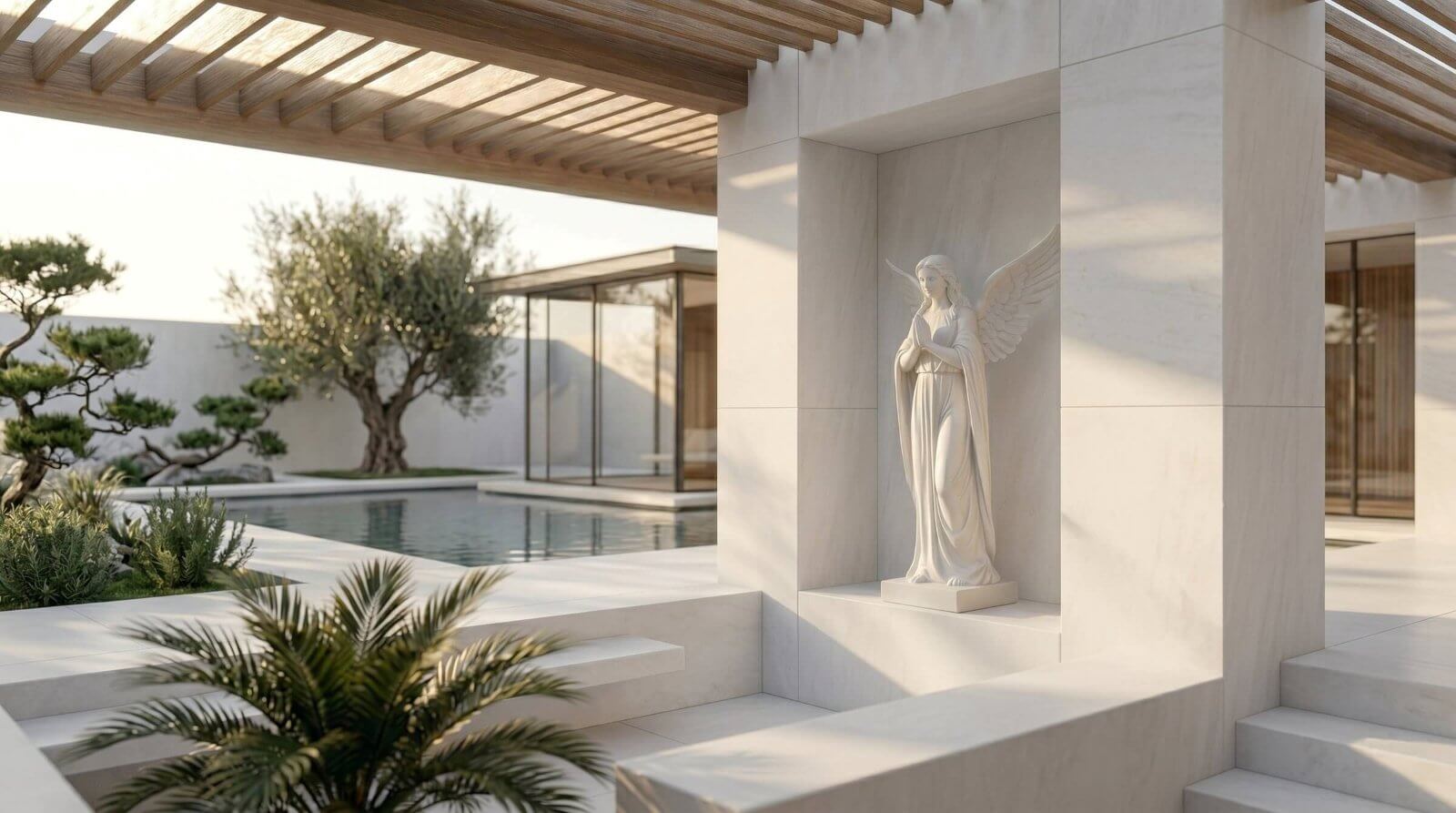
Marble has been the defining material of Western sculpture for over 2,500 years. From the Parthenon friezes to Michelangelo's David, from Bernini's Apollo and Daphne to contemporary pieces in modern galleries, marble has remained the stone of choice for the most important sculptures in human history. There's a reason: marble sculptures combine durability that outlasts civilisations with a luminous translucency that makes it seem almost alive under light.
This guide covers everything you need to know about marble sculptures — what they are, how they're made, the different types of marble used, how to buy, how to care for them, and the iconic marble masterpieces that continue to define the art form. Whether you're considering your first marble piece or deepening an existing collection, you'll find everything here.
We'll cover the history, the techniques, the major works, and the practical realities of owning marble sculpture. We'll explain why marble commands the prices it does, what distinguishes investment-grade pieces from decorative ones, and how to distinguish real marble from imitations. If you want to understand marble sculpture properly, this is the most comprehensive guide on the internet.
At Giant Sculptures, we work with marble-effect finishes and real marble pieces across our sculpture range. This guide draws on years of working with customers who've chosen marble pieces for their homes, gardens and commercial spaces.
What Is a Marble Sculpture?
A marble sculpture is a three-dimensional artwork carved from a block of marble — a metamorphic rock composed primarily of calcium carbonate (calcite) or magnesium carbonate (dolomite), formed when limestone is subjected to heat and pressure over millions of years. The crystal structure that results is what gives marble its distinctive luminosity — light penetrates a short distance into the stone before scattering back, creating an almost living quality that flat paint or bronze can't match.
Unlike bronze sculptures, which are cast from moulds, marble sculptures are carved subtractively — the sculptor starts with a block and removes material until the finished form emerges. This process is one-way: every cut is permanent. A marble sculpture represents tens, hundreds, or thousands of hours of skilled work, all of which cannot be undone.
This is why marble has always been associated with permanence, seriousness, and the highest levels of artistic ambition. You don't carve a marble sculpture casually.
A Brief History of Marble Sculpture
Ancient Greece (8th century BCE - 1st century BCE)
Marble sculpture as we understand it emerges in ancient Greece, where the abundance of high-quality marble (particularly on the islands of Paros and Naxos) combined with the Greeks' interest in realistic human form produced some of the most important sculptures in history. The Parthenon marbles, the Venus de Milo, the Nike of Samothrace — these early masterpieces established the principles of marble sculpture that have been followed ever since.
The Roman Empire (1st century BCE - 5th century CE)
The Romans inherited Greek sculpture techniques and expanded them dramatically, making marble sculpture central to architectural decoration, portrait work, and public art. They also quarried Carrara marble from Italy on an industrial scale — the same quarries that would later supply Michelangelo.
The Renaissance (14th - 17th century)
The Italian Renaissance produced what most people consider the high point of marble sculpture. Donatello, Michelangelo, Bernini — the names associated with this period are the same names associated with the greatest marble sculptures ever made. Michelangelo's David (1501-1504), carved from a single block of Carrara marble over three years, remains one of the most famous artworks in human history.
Neoclassicism (18th - 19th century)
Canova, Thorvaldsen, Houdon — the neoclassical sculptors revived classical Greek and Roman techniques with extraordinary technical refinement. Their marble surfaces achieved smoothness and finish that had never been seen before, and works like Canova's 'Psyche Revived by Cupid's Kiss' remain among the most beloved sculptures in museum collections.
Modern and Contemporary Marble (20th century - present)
The 20th century brought radical new approaches to marble. Constantin Brâncuși stripped figurative forms down to their essence. Henry Moore explored organic, abstract forms in stone. Contemporary artists like Anish Kapoor, Barry X Ball, and Jaume Plensa have pushed marble sculpture into new conceptual and technical territory. Today, marble sculpture exists across the full spectrum from traditional figurative work to radical contemporary installations.

Types of Marble Used in Sculpture
Not all marble is equal. Different marbles have different colours, grain patterns, densities, and properties — and sculptors choose them carefully based on the piece they're making. Here are the most important marbles used in sculpture.
Carrara Marble
The most famous sculptural marble in the world, Carrara marble comes from the Apuan Alps of Tuscany, Italy. Michelangelo's David, the Pietà, and countless other Renaissance masterpieces were carved from Carrara marble. It's a fine-grained, soft-white marble with grey veining. Still quarried today — genuine Carrara marble remains the gold standard for figurative sculpture.
Statuary Marble / Statuario
A particular grade of Carrara marble, Statuario is the whitest, most uniform, and highest quality marble for figurative sculpture. Low grey veining, exceptional workability, and a luminous quality under light make Statuario the choice for the most important pieces. Extremely expensive — Statuario blocks can cost £5,000-£20,000+ per cubic metre.
Pentelic Marble
The marble of ancient Athens, Pentelic marble was quarried from Mount Pentelikon in Greece and used for the Parthenon, the Erechtheion, and most classical Greek sculpture. It's a creamy white marble with subtle golden undertones. Still quarried today, though in small quantities.
Parian Marble
From the Greek island of Paros, Parian marble is particularly prized for its translucency — light penetrates deeper into Parian marble than most other varieties, giving sculptures a unique luminous quality. The Venus de Milo was carved from Parian marble.
Thassian Marble
A bright white marble from the Greek island of Thassos, known for its extreme whiteness and large crystal structure. Used widely in ancient and contemporary sculpture.
Makrana Marble
From Rajasthan, India — the marble used for the Taj Mahal. Makrana marble is extremely dense and white, with minimal veining. Widely used in Indian sculpture and architecture, and increasingly in contemporary work globally.
Black Marble
Various black marbles (Belgian Noir, Nero Marquina from Spain, Nero Portoro from Italy) have been used for dramatic contemporary work and for contrast pieces in classical tradition. Anish Kapoor's marble work often uses dark marbles to extraordinary effect.
Coloured Marbles
Marble exists in extraordinary variety: pink Portuguese Rosa Aurora, yellow Siena, green Tinos, red Rosso Levanto, and dozens more. Coloured marbles are less common in figurative sculpture but play important roles in architectural decoration and some contemporary work.
Figurative vs Abstract Marble Sculptures
Marble sculptures fall into two broad categories: figurative works that represent recognisable subjects (usually human figures, but also animals or objects) and abstract works that explore form, space, texture and material for their own sake.
Figurative Marble Sculpture
Figurative sculpture is the traditional home of marble. The human body in particular has been the central subject of marble sculpture for over 2,500 years — from Greek kouroi to Michelangelo's David to contemporary figurative work. Figurative marble sculpture demonstrates the sculptor's mastery of anatomy, proportion, movement, and emotional expression.
A figurative marble sculpture captures something specific — a person, a pose, a moment. It tells a story or represents an idea through a recognisable subject. Classical mythology, religious themes, portraits, and allegorical figures have been the most common subjects throughout history, though contemporary figurative sculptors work with modern subjects too.
Figurative marble sculptures remain more popular in the collector market than abstract pieces, particularly for traditional interiors and formal spaces. They suit classical architecture, period homes, and collections with a heritage focus.
Abstract Marble Sculpture
Abstract marble sculpture emerged powerfully in the 20th century through artists like Constantin Brâncuși, Henry Moore, Isamu Noguchi, and Barbara Hepworth. These sculptors freed marble from the obligation to represent something and let it explore pure form — curves, planes, voids, the relationship between mass and light, the nature of the material itself.
Abstract marble sculpture works particularly well in contemporary interiors, where a single pure form can anchor a space with a presence that figurative work can't match. Abstract sculpture also often exploits marble's inherent qualities (translucency, grain pattern, crystalline structure) more deliberately than figurative work — the material is part of the subject.
Contemporary abstract marble sculpture is increasingly popular in design-led collectors' homes and galleries.

How Marble Sculptures Are Made
Understanding how marble sculptures are created helps explain why they command the prices they do. The process remains essentially unchanged from the Renaissance — though modern technology has added new tools at certain stages.
Step 1: Selecting the Block
The sculptor selects a marble block from the quarry, carefully inspecting for flaws, cracks, and unwanted veining. For major pieces, sculptors sometimes visit the quarry personally to select blocks, or work with specialist marble merchants. The block is cut slightly oversize to allow for working.
Step 2: Maquette and Planning
The sculptor typically creates a small-scale model (a 'maquette') in clay or plaster, working out the form in a more forgiving material before committing to stone. For important pieces, multiple maquettes may be made at progressively larger scales. Measurements and proportions are carefully planned.
Step 3: Roughing Out
The sculptor removes large volumes of unwanted marble using heavy chisels, hammers, and (in contemporary practice) diamond-tipped power tools. This stage requires extraordinary care — mistakes at this phase can ruin a piece entirely. Large blocks are often roughed out over weeks or months.
Step 4: Refining
Once the rough form is established, the sculptor refines it with progressively smaller and finer tools — point chisels, claw chisels, flat chisels, rasps, and files. This stage brings out the intended form and proportion. Hours of close work establish the subtle contours that distinguish great marble sculpture from merely competent work.
Step 5: Finishing
The final surface finishing — smoothing, polishing — is often the longest stage. Surfaces are worked with progressively finer abrasives, finishing with polishing compounds and sometimes waxes. The level of polish varies: high-polish marble reflects light almost like glass, while matte-finish marble has a more contemplative, ancient quality. Many contemporary works mix polished and matte surfaces for contrast.
Step 6: Finishing and Mounting
The completed sculpture is cleaned, protected, and mounted on an appropriate base. For important pieces, custom-made marble, bronze, or stone plinths are commissioned.
A full-scale marble figure typically takes 6-24 months of skilled labour to complete. The most complex pieces can take years — Michelangelo's David took three years, the Pietà about two. This is why marble sculpture has always been expensive: you're buying time, skill, and irreplaceable material in equal measure.
The Most Famous Marble Sculptures in History
If you want to understand what marble sculpture can achieve, start with these works — the sculptures that define the art form.
The Venus de Milo (circa 130-100 BCE)
Parian marble, 2 metres tall, currently at the Louvre. Ancient Greek figure of Aphrodite (Venus), armless since antiquity but still one of the most instantly recognisable sculptures in the world. The sculpture exemplifies the Hellenistic approach to idealised female form.
Michelangelo's David (1501-1504)
Carrara marble, 5.17 metres tall, currently at the Galleria dell'Accademia, Florence. Carved from a single flawed marble block that previous sculptors had rejected. Depicts the biblical David before his battle with Goliath — captured in the moment of decision rather than action. Considered by many the greatest sculpture ever made.
Michelangelo's Pietà (1498-1499)
Carrara marble, 1.74 metres, currently at St Peter's Basilica, Vatican City. Depicts the Virgin Mary holding the dead Christ. The only sculpture Michelangelo ever signed — he later regretted signing it.
Bernini's Apollo and Daphne (1622-1625)
Carrara marble, 2.43 metres, currently at the Galleria Borghese, Rome. Captures the moment Daphne transforms into a laurel tree to escape Apollo — her fingers becoming leaves, her toes becoming roots. Considered one of the most technically extraordinary marble sculptures ever made.
Bernini's Ecstasy of Saint Teresa (1647-1652)
Carrara marble, currently at Santa Maria della Vittoria, Rome. Baroque masterpiece depicting the mystical vision of Saint Teresa of Ávila. Uses marble's luminosity extraordinarily — figures appear illuminated from within by spiritual light.
Canova's Psyche Revived by Cupid's Kiss (1793)
Italian marble, 1.55 metres, currently at the Louvre. Neoclassical masterpiece exemplifying the smoothness and technical refinement of Canova's work. One of the most romantic sculptures ever created.
The Nike of Samothrace (circa 190 BCE)
Parian marble, 2.44 metres, currently at the Louvre. The winged goddess of victory, captured mid-landing on the prow of a ship. Hellenistic Greek masterpiece famous for its sense of motion despite being carved from stone.
The Parthenon Marbles (447-432 BCE)
Pentelic marble, various sizes, mostly at the British Museum (with ongoing controversy about their rightful location). The friezes, metopes, and pediment sculptures from the Parthenon in Athens — among the most important ancient sculptures in existence.
Brâncuși's Sleeping Muse (1910)
Marble, various versions in major museums. Radically simplified head resting on its side — Brâncuși stripped away all non-essential detail to leave pure form. One of the founding works of modern abstract sculpture.
Henry Moore's Recumbent Figure (1938)
Green Hornton stone (a variety related to marble), currently at the Tate. Iconic Moore piece exploring the human form as landscape — the body as hills, valleys, caves.
How to Buy a Marble Sculpture
Buying a marble sculpture — whether a small decorative piece or a significant artwork — requires knowing what to look for. Here's the framework.
Decide on Your Category
Marble sculptures broadly fall into three categories:
- Decorative reproductions — copies of famous works, mass-produced, typically £50-£500
- Contemporary designer pieces — original works by contemporary sculptors, typically £1,000-£20,000+
- Investment-grade originals — works by named artists, typically £5,000-£500,000+
Understand which category you're shopping in before you start looking. The prices, sellers, and authentication requirements differ dramatically across categories.
Verify Authenticity
For anything above the decorative range, authentication is essential. Questions to ask:
- Is this real marble or a marble-effect material? (Real marble is extremely heavy — typically 2.7kg per litre of volume)
- What type of marble is this? (Carrara, Makrana, Statuario — the specific marble affects value)
- Who is the artist? Is the piece signed? Is there a certificate of authenticity?
- What's the provenance? Where has this piece been since it was made?
- Are there photos of the artist with the piece, or documentation of its creation?
Inspect Condition
Check thoroughly for:
- Chips, cracks, or repairs (look for filler material, particularly around extremities like fingers, noses)
- Staining or discolouration (marble can stain permanently from oils, acids, or metal contact)
- Weathering damage (for outdoor pieces — look for surface degradation)
- Historical restoration (older pieces often have restored parts; some restoration is acceptable, but extensive restoration reduces value)
Consider Practical Realities
- Weight — a life-size marble figure can weigh 500-1,500kg. Installation requires proper foundations and often professional moving
- Environment — indoor vs outdoor use matters; some marbles weather better than others
- Context — how will the piece fit in your space? Marble works best with significant space around it
- Transportation — factor in £200-£2,000+ for professional delivery on larger pieces
Where to Buy
Reliable sources vary by category:
- Decorative marble — garden centres, home decor shops, online marketplaces (Amazon, eBay) — but quality is variable
- Mid-range contemporary — specialist sculpture dealers, designer sculpture brands, galleries
- Investment pieces — auction houses (Sotheby's, Christie's, Bonhams, Phillips), top galleries, private dealers
- Commission work — work with a sculptor directly for bespoke pieces
At Giant Sculptures, our marble sculpture collection includes both genuine marble pieces and premium marble-effect sculptures — providing access to the marble aesthetic across a wider range of price points.
How Much Do Marble Sculptures Cost?
Decorative and Mass-Market Marble Pieces
- Small decorative marble (10-30cm): £50-£500
- Medium decorative marble (30-60cm): £200-£1,500
- Large decorative pieces (60cm+): £500-£5,000
These are typically mass-produced reproductions or pieces from lesser-known workshops. Quality ranges enormously — some are beautifully carved, others are disappointing.
Contemporary Designer Marble Sculpture
- Small contemporary pieces: £800-£3,000
- Medium contemporary pieces: £3,000-£15,000
- Large contemporary pieces: £15,000-£50,000+
Work by established contemporary sculptors. Often limited editions or unique pieces. Reasonable investment potential for work by rising artists.
Investment-Grade Marble Sculpture
- Pieces by recognised contemporary artists: £20,000-£500,000+
- Museum-quality contemporary work: £100,000-£10 million+
- Antique pieces with provenance: £5,000-£5 million+
Serious investment territory. Authentication, provenance, and condition are critical. Typically acquired through galleries or auction houses.
How to Display Marble Sculptures
Where and how you place a marble sculpture transforms it from object to experience. Here's how to do it well.
Lighting Is Everything
Marble's defining quality — its translucency, the way light penetrates and scatters within the stone — is only visible under proper lighting. Bad lighting makes even extraordinary marble look flat and lifeless. Key principles:
- Use directional lighting rather than flat overhead illumination
- Side-lighting reveals surface texture and depth best
- Warm light (2700K-3000K) flatters most marbles; cool light makes white marble look stark
- For important pieces, consider dedicated picture lights or track lighting positioned to cross-light the form
- Natural light from the side (not directly overhead) works beautifully — a marble piece near a north-facing window is particularly lovely
Give It Space
Marble sculptures need breathing room. A £20,000 piece crammed between furniture is diminished. The same piece isolated in a clear space, visible from multiple angles, achieves its full effect. For important pieces, clear at least 1-2 metres of space around them in all directions.
Use Appropriate Plinths
Most marble sculptures look best on plinths that raise them to eye level or slightly below. Options:
- Bespoke marble plinths (expensive but ideal for major pieces)
- Stained oak or walnut plinths (timeless, work in most interiors)
- Contemporary Corian or concrete plinths (good for modern spaces)
- Vintage pedestals from antique dealers (character and patina)
Consider Background
A pale marble sculpture against a pale wall disappears. The best displays use a contrasting background — a dark-painted wall behind a white marble piece, or a textured backdrop (exposed brick, stone cladding) that complements the sculpture's own texture.

How to Care for Marble Sculptures
Marble is durable but also porous and chemically sensitive. Proper care prevents damage and preserves beauty.
Indoor Marble Care
- Dust regularly with a soft lint-free cloth or natural bristle brush
- Clean with distilled water only — tap water can deposit minerals over time
- For stains, use a mild soap specifically designed for marble; never use acidic cleaners (vinegar, lemon, commercial glass cleaners)
- Blot spills immediately — wine, coffee, and oil can penetrate and stain permanently
- Apply marble sealer every 1-3 years for high-traffic pieces
- Keep away from direct heat sources (fireplaces, radiators) that can dry and crack marble
Outdoor Marble Care
- Clean seasonally — twice yearly in spring and autumn is usually sufficient
- Use soft brushes and mild marble-specific cleaners
- Protect from acid rain by re-sealing annually
- Check for frost damage each winter — water in small cracks can expand and cause splitting
- Consider winter covers for particularly valuable outdoor pieces
- Never use pressure washers — they damage the surface
What to Avoid
- Acidic cleaners (vinegar, lemon juice, commercial cleaners with citric acid)
- Harsh chemicals (bleach, solvents, ammonia)
- Abrasive cloths or brushes
- Direct sunlight for prolonged periods (can cause subtle colour changes)
- Metal brackets or clamps in direct contact with marble (can cause rust staining)
Installing Outdoor Marble Sculptures Safely
Outdoor marble sculpture installation is a specialist discipline. Doing it wrong creates risks to the sculpture, the surroundings, and anyone nearby.
Foundation Requirements
Marble is extraordinarily heavy. A life-size figure weighs 500-1,500kg. Foundation considerations:
- Reinforced concrete footings appropriate to the weight and ground conditions
- Frost protection (foundations extending below frost line — typically 60cm in UK climate)
- Drainage to prevent waterlogging around the base
- Professional assessment of ground-bearing capacity for larger pieces
Mounting and Security
Proper mounting prevents theft and movement:
- Stainless steel dowels set in epoxy for permanent installation
- Anti-theft locking mechanisms for high-value pieces
- GPS tracking devices for investment-grade outdoor pieces
- Insurance appropriate to value
How Long Do Outdoor Marble Statues Last?
Properly installed and maintained, outdoor marble sculptures can last hundreds of years — museum collections worldwide include outdoor marble pieces centuries old. However, lifespan depends on:
- Marble quality (higher-grade marble weathers better)
- Climate (marble degrades faster in acid rain, frost, or pollution)
- Maintenance (regular cleaning and sealing dramatically extends life)
- Microclimate (pieces under tree canopy may suffer from tannin staining; pieces in open weather face acid rain directly)
In general, well-maintained marble in UK outdoor conditions should retain its condition for 50-100+ years without major intervention. Neglected pieces can show serious degradation in 10-20 years.
Marble vs Resin vs Bronze: Material Comparison
Marble
Strengths:
- Unmatched prestige and tradition
- Translucent luminosity impossible to replicate
- Extreme durability when properly cared for
- Holds value over generations
- Develops beautiful patina over decades
Considerations:
- Extremely expensive relative to other materials
- Very heavy — professional installation usually required
- Porous and chemically sensitive
- Can weather/erode in outdoor conditions
- Can crack or chip if dropped/impacted
Resin
Strengths:
- Versatile — can mimic marble, bronze, stone, or pure contemporary finishes
- Lightweight (10-20% of marble weight)
- Durable and weather-resistant
- Much more affordable than marble
- Holds fine detail extremely well
Considerations:
- Doesn't have the prestige of real marble
- Lower-grade resin can degrade over decades
- Doesn't have the same translucent luminosity as real marble
Bronze
Strengths:
- Extraordinary durability (thousands of years)
- Develops beautiful patina over time
- Traditional artistic material with serious provenance
- Good investment potential
Considerations:
- Very expensive (£5,000-£100,000+ for garden scales)
- Heavy — though lighter than marble for equivalent size
- Subject to theft for scrap value in some contexts
- Cast rather than carved — different aesthetic from marble
Which Should You Choose?
For serious investment pieces and pieces meant to last generations: marble. For most home and garden applications where you want the look without the cost: quality resin with marble-effect finish. For outdoor sculpture with serious presence and indefinite lifespan: bronze.

Contemporary Marble Sculpture Today
The contemporary marble sculpture world is more active than many people realise. Artists continue to push what marble can do, both technically and conceptually.
Notable Contemporary Marble Sculptors
- Anish Kapoor — known for highly polished marble and reflective surfaces that play with perception
- Barry X Ball — creates extraordinary detailed marble portraits using a combination of traditional and digital techniques
- Jaume Plensa — Spanish sculptor whose massive marble figures appear in public spaces globally
- Isamu Noguchi (1904-1988) — defined much of the 20th century's approach to organic abstract marble
- Henry Moore (1898-1986) — landmark mid-century figure in stone sculpture more broadly
- Louise Bourgeois (1911-2010) — used marble in her late career for powerful abstract work
- Marc Quinn — contemporary British sculptor with significant marble work in his practice
Contemporary Marble Trends
- Digital fabrication techniques combined with hand finishing
- Abstract organic forms (in the Noguchi/Moore tradition)
- Hyperrealistic portrait work
- Experimental marble colour combinations and inlays
- Very large-scale public sculpture
- Dialogue with traditional marble techniques and themes
Investing in Contemporary Marble
Contemporary marble sculpture is one of the more stable corners of the art market. Unlike trendy categories, marble has enduring appeal and rising artists often see steady appreciation. Major auction results for contemporary marble have climbed consistently over the past two decades. For collectors considering sculpture as an investment vehicle, emerging contemporary marble sculptors represent reasonable opportunities.
Bringing Marble Sculpture Into Your Home
Marble sculpture isn't just decoration — it's an invitation to bring centuries of artistic tradition into your space. Whether you choose a decorative reproduction of a classical masterpiece, a contemporary abstract piece, or a genuine investment-grade artwork, you're participating in a tradition stretching back to ancient Greece.
At Giant Sculptures, we offer access to the marble sculpture aesthetic across a range of price points — genuine marble pieces for serious collectors and premium marble-effect sculptures that deliver the look, presence and luminosity at more accessible prices. Browse our marble sculpture collection or explore our full sculpture range to find the right piece for your space.