


































































Table of Contents
- Decide on the Room’s Feel First
- Find the Right Height for Kids Room Art
- High-Impact Places to Hang Kids Room Art
- Make Kids Room Art Secure and Kid-Proof
- Use Lighting to Make Kids Room Art Stand Out
- How to Create a Tidy Kids Room Gallery Wall
- Let Kids Room Art Evolve With Your Child
- Fast Kids Room Art Placement Guide
- Conclusion: Hanging Kids Room Art Safely and Beautifully
- FAQs
Hanging art in a child’s room sounds simple until you’re holding a frame in one hand, a tape measure in the other, and wondering whether you’re about to create a gorgeous focal point or a head-bonker. The good news is that kids room art is one of the quickest ways to shape how a space feels playful, calm, adventurous, or cosy and you don’t need an interior design degree to place it well. What does matter is understanding sightlines, furniture “anchors”, and a few safety rules that stop your lovely wall from turning into a hazard.
This guide is hybrid on purpose: you’ll get practical placement rules (the “where and how”) alongside smart, product-style ideas about frames, fixings, lighting, and the kind of art that tends to hold up best in real family homes. By the end, you’ll know exactly where to put your kids room art so it looks intentional, works with the furniture, and stays secure even if your child treats the room like a mini obstacle course.
Decide on the Room’s Feel First
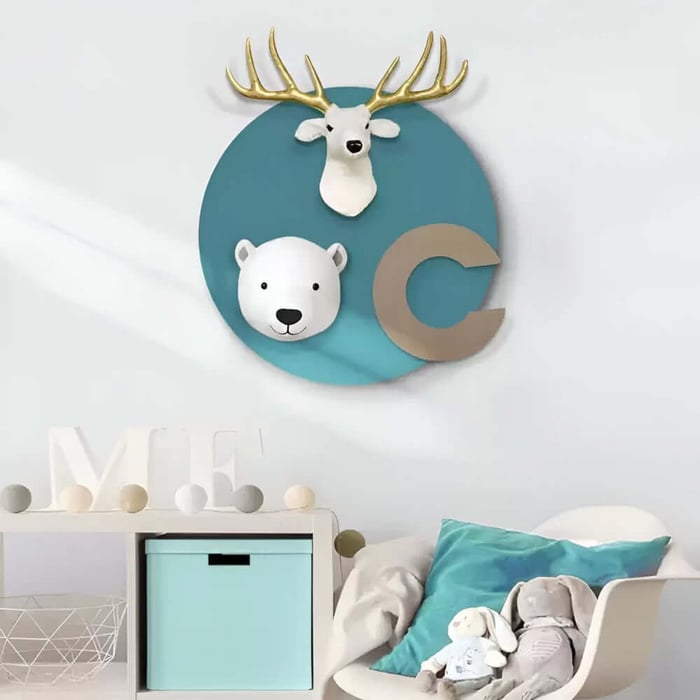
Before you drill a single hole, take a moment to think about what the room is meant to feel like. Kids spend hours in their spaces sleeping, playing, reading, winding down, sometimes bouncing off the walls and art helps steer that mood. A room can be bright and lively without feeling frantic, or soothing without looking bland. Your Kids Room Art should support that tone, not fight it.
If you’re decorating a nursery or a sleep-focused bedroom, aim for a calmer “visual rhythm”: fewer pieces, more breathing room, and art that feels gentle to look at. In a playroom or activity-heavy bedroom, you can go bolder and more layered, but it still needs structure so the wall doesn’t become visual noise. Think of the wall as part of the routine: calm art where they rest, energising pieces where they play.
A useful trick is to pick one main feeling for the room woodland cosy, space explorer, soft rainbow dreamy, sporty and confident then let your placement reinforce that feeling. When art is positioned thoughtfully, even simple prints can make the whole room feel pulled together.
Find the Right Height for Kids Room Art
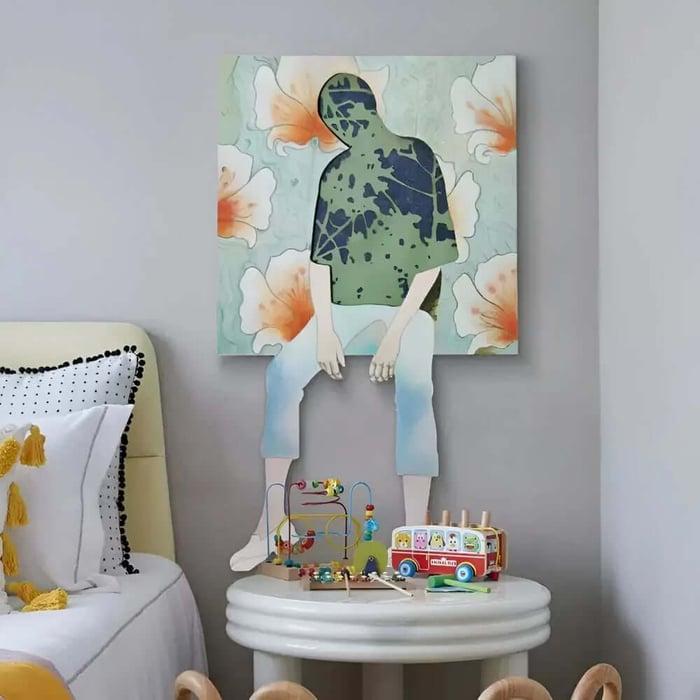
Adults tend to hang pictures at adult height. In kids’ rooms, that’s the easiest way to make art feel disconnected. The most effective kids room art sits where your child can actually enjoy it: in their line of sight while they’re in the bed, on the floor, or in their favourite corner. That’s where it has the most emotional impact.
A quick way to estimate height:
Stand where your child spends time (near the bed, reading nook, play area).
Imagine a horizontal line at their eye level.
Centre your biggest piece on that line.
Mark the centre point for your main piece on that line, so the artwork sits naturally in their sightline.
If the art is going above furniture, leave a safe gap of about 15-25 cm between the top of the furniture and the bottom of the frame.
Step back and check balance, making sure the piece feels centred to the furniture (not just the wall) and isn’t within easy pulling or climbing reach.
For toddlers, that may feel low to you but it looks right from their viewpoint and invites them into the room. It also reduces the “what’s that up there?” curiosity that tempts little hands to pull things down. For older kids, eye level shifts higher, so don’t be afraid to move pieces up over time. If you’re planning a gallery wall, use the child’s eye level as the centre of the overall arrangement rather than the centre of each frame.
High-Impact Places to Hang Kids Room Art
1. Above the bed (the main focal point)
This is the classic spot because it naturally draws attention the moment you walk in. A bed is a big visual block, so it needs something above it to balance the wall. Done well, kids room art here can anchor the whole scheme and make the room feel finished.
How to get it right:
Size matters. Aim for artwork that spans around two-thirds the width of the bed. If it’s much smaller, it looks like it’s floating; if it’s too big, it overwhelms the wall.
Leave breathing room. A gap of 15-25 cm between the top of the headboard and the bottom of the frame is a safe, tidy rule.
Keep it centred to the bed, not the wall. Even if the bed is off-centre, your art should align with the furniture beneath it.
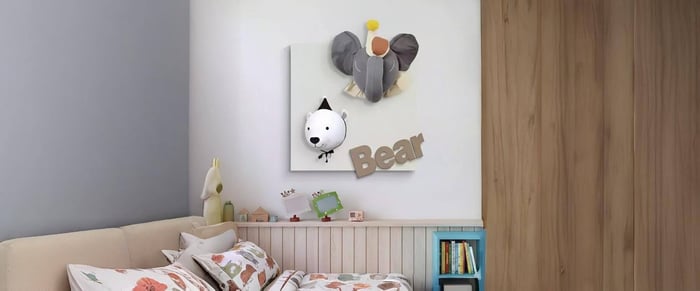
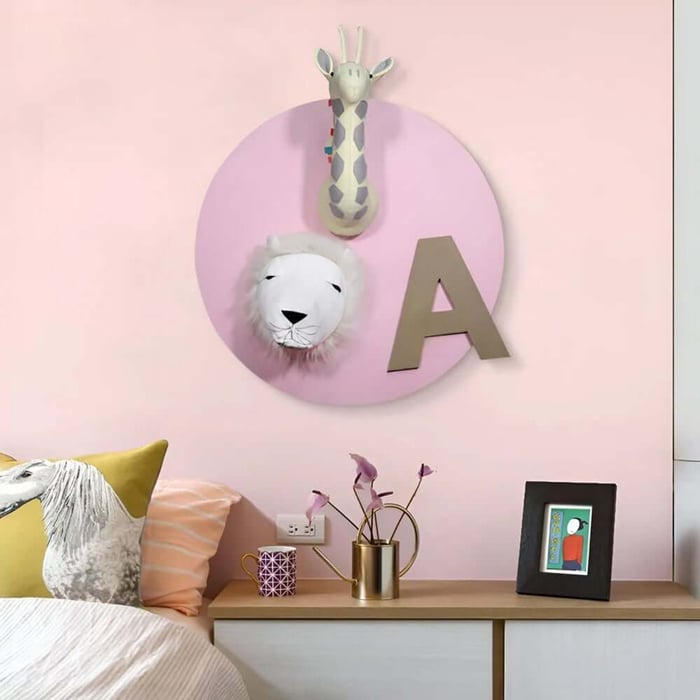
Safety note: avoid heavy glass frames directly above where heads sleep. Large canvas pieces, lightweight framed prints with acrylic glazing, or soft wall hangings are safer options. If you’re determined to use a frame here, make sure it’s properly anchored and not within easy climbing reach.
2. Above a dresser or changing table
This spot works almost like above-bed styling, but with less risk. The furniture below gives your kids room art a base, which makes the layout feel grounded. It’s also one of the best places to use slightly heavier pieces, because they’re less likely to land on someone if there’s a bump or wobble.
Tips:
Centre art to the furniture, not the wall. Picture the dresser as the “stage” and the art as the “backdrop”.
If you’ve got a wide dresser, one big hero print looks clean and modern. If it’s narrower, a stacked pair or a trio works well.
Think about what’s on the surface. If your dresser holds colourful toys or storage baskets, keep the art simpler so the top doesn’t feel chaotic.
This area is also great for reinforcing a theme. For example, a warm set of animal art prints above a light wood dresser adds character without turning the whole wall into a zoo.
3. Reading nook or quiet corner
A reading nook is where art sets mood more than anything else. Even a tiny corner feels special when it’s framed by cosy visuals. The right Kids Room Art here can make the space feel like a private retreat somewhere they want to sit.
What works well:
Calm palettes (soft blues, sage, warm neutrals).
Illustrations with simple shapes, gentle movement, or subtle texture.
Scenes that invite imagination without being too busy.
Try a small picture ledge above the nook. It lets you mix framed prints with a favourite book cover face-out. The ledge also makes it easy to rotate art as seasons or interests change, without constantly re-hanging. If you’re short on wall space, one larger print above the nook often does more than a cluster of small ones.
4. Playroom walls (art that invites action)
Playrooms can handle more colour and more pieces, but they still need a plan. Without structure, busy playroom walls can feel messy, which makes the whole room feel noisier than it is.
Best layouts for playrooms:
A gallery wall that follows a clear rectangle or arch shape.
A long horizontal line of prints above toy storage.
One oversized statement piece plus smaller supporting art.
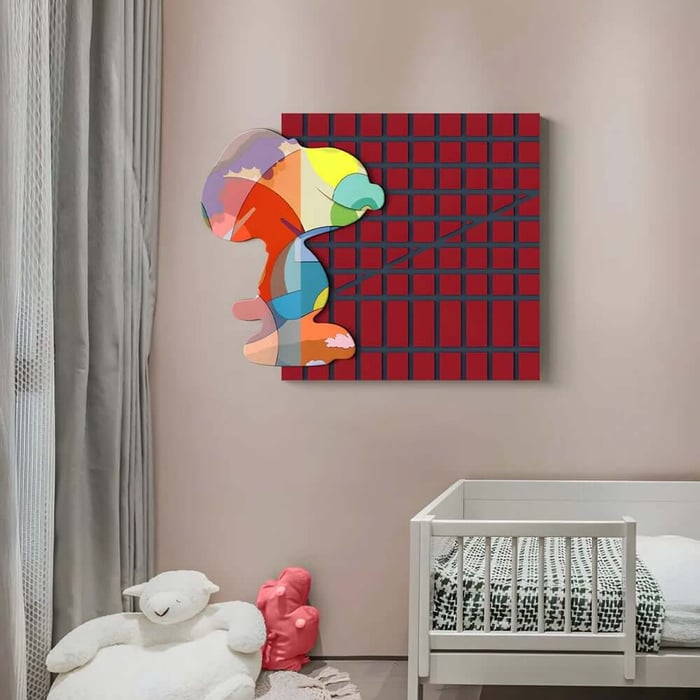
This is also a brilliant place for bolder styles. If your child loves characters, movement, or people-focused illustrations, a single piece of figure art can bring energy to the wall without needing to theme the whole room around it. Balance it with calmer supporting prints so the wall still feels deliberate.
5. Along a hallway wall inside the room
If your child’s bedroom has a short internal corridor say, between the door and wardrobe it’s an underused gallery space. Because it’s a walk-through area, artwork here adds movement and interest without crowding the main sleeping wall.
A simple approach is a row of slim frames in identical sizes, evenly spaced. It looks tidy, and it naturally guides the eye into the room. This is a great place for smaller kids room art pieces that might look lost elsewhere. Keep the content cohesive (same palette or theme), and avoid anything too bright if the hallway faces the bed.
Make Kids Room Art Secure and Kid-Proof
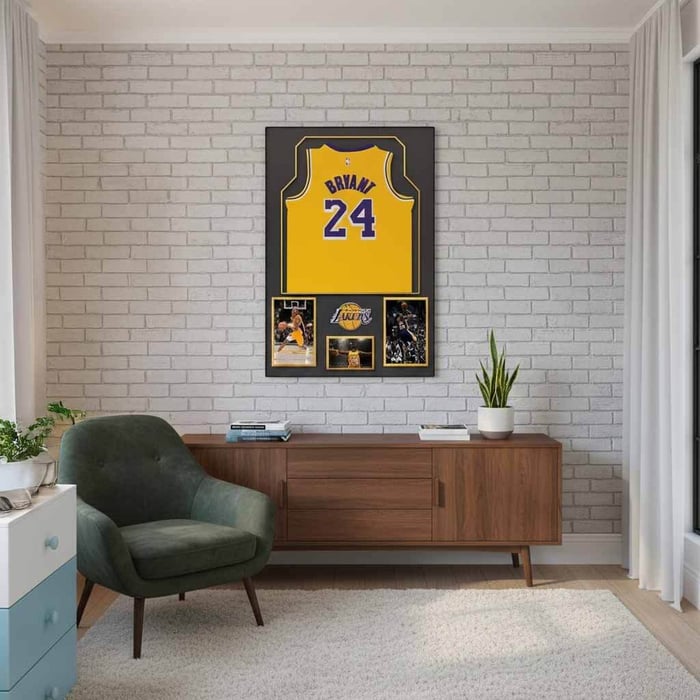
This bit matters. kids climb, tumble, throw, and pull. Even calm children can turn into little testers of physics when something catches their eye. Safe kids room art is about both materials and method.
Choose child-safe materials
Acrylic glazing instead of glass if you’re framing prints. It’s lighter and doesn’t shatter.
Canvas for large pieces, especially near beds.
Lightweight wood or plastic frames rather than metal.
If your child is a climber, consider avoiding anything heavy within reach. A ledge hung higher up can keep art visible but out of grabbing range.
Fixings that actually hold
Use proper wall plugs and screws for anything heavier than a small print.
If you’re mounting shelves or substantial frames, anchor into studs when possible.
For light prints, Command strips are fine just stay well within the weight limit and clean the wall first so the adhesive grips.
Avoid risky zones
Do not hang heavy kids room art:
directly above cots or beds,
over climbing-friendly furniture,
near doors or cupboards that swing open.
If you want a big visual above the bed, choose a lightweight canvas or fabric wall hanging. You still get impact, with far less risk.
Use Lighting to Make Kids Room Art Stand Out
Placement isn’t only about height it’s about how the art is seen through the day and night. Even the best kids room art can look flat if it’s stuck in a dark corner or washed out by harsh overhead light.
Easy upgrades:
Clip-on picture lights: for a hero print above a dresser or desk.
Soft wall washers: that gently highlight a gallery wall.
Warm bedside lamps: that catch the art indirectly.
Fairy lights or a subtle LED strip along a picture ledge: to softly backlight smaller prints without glare.
A dimmable ceiling or wall light aimed toward the art wall: so you can adjust brightness between playtime and bedtime.
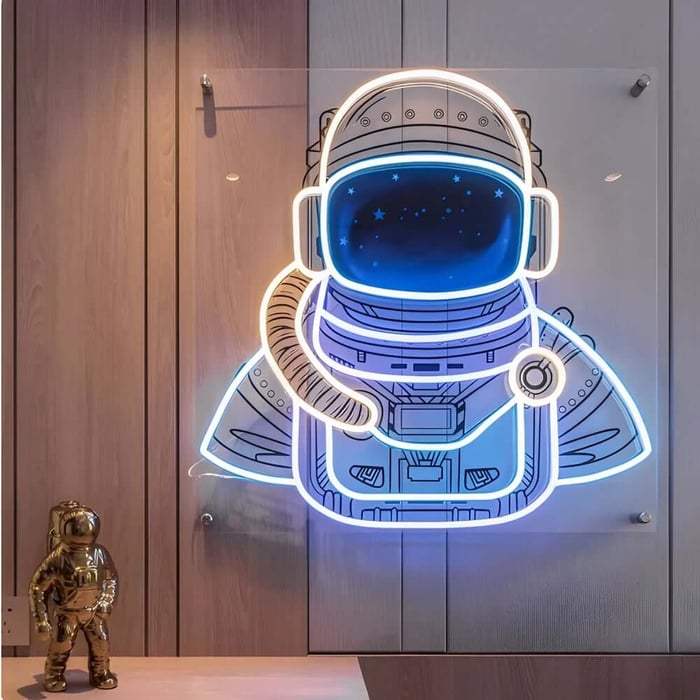
If your child loves a cosy, slightly magical glow, a small feature of led & neon art near a desk or reading corner can work beautifully. Keep it away from beds so it doesn’t interfere with sleep, and avoid very bright blues late in the evening.
Lighting also helps older kids keep their art visible as their rooms get more functional (desks, shelves, storage). A little glow on the right wall makes the room feel designed, not accidental.
How to Create a Tidy Kids Room Gallery Wall
A kids’ gallery wall can look stunning, but only if it reads as one composed unit rather than a random scatter. The trick is planning the whole shape first.
How to plan it:
Lay the frames on the floor and play with the arrangement.
Pick a shape rectangle, gentle arch, or a loose grid.
Repeat something to tie it together: a frame colour, print style, or shared palette.
Mix sizes, not moods. It’s fine to vary scale, but keep the vibe consistent.
A reliable gallery formula:
1 large centre print
2 medium prints flanking it
3-4 small accents around the edges
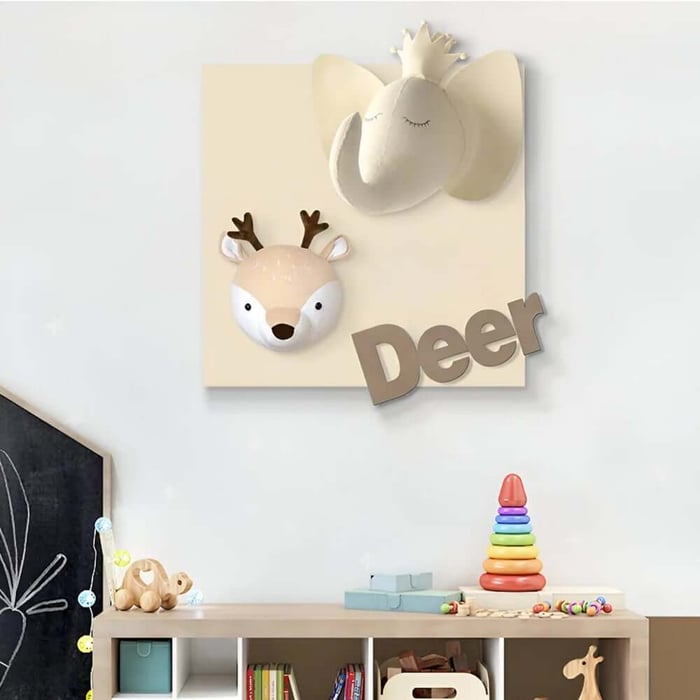
This gives you a focal point plus supporting interest. If you’re leaning into a nature theme, anchor the centre with a stronger print and let softer pieces frame it. Keep spacing even (around 5–8 cm) so the whole wall feels tidy.
Let Kids Room Art Evolve With Your Child
One of the smartest ways to keep kids room art relevant is to plan for change. Children grow quickly, and their interests change even faster. Rotation lets the room evolve without constant redecorating.
Try this:
Use a picture ledge so you can swap prints without re-hanging.
Keep a timeless core set (animals, shapes, landscapes, calm abstracts).
Add one seasonal or interest-based print your child chooses.
Frame a few of your child’s own drawings in matching frames and rotate them as they make new favourites.
Stick to one consistent colour palette for your main pieces, then swap themes within that palette so updates still look cohesive.
You can even store older prints in a folder so they cycle back later. A room that changes with them feels alive and they notice it.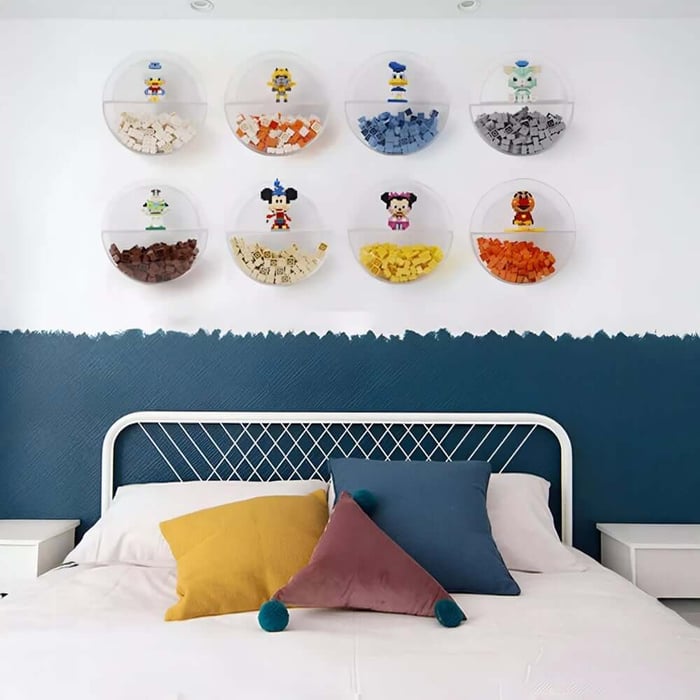
Fast Kids Room Art Placement Guide
If you want the fast version, here you go:
Over bed: canvas or light frames only, 15-25 cm above headboard.
Over dresser/changing table: heavier frames OK, centre to furniture.
Reading nook: calm, low-hung, intimate scale.
Playroom: bold art higher up, structured gallery arrangement.
Child eye level: centre major pieces to their viewpoint.
Safety: acrylic instead of glass, proper anchors, avoid cot/bed hazards.

Conclusion: Hanging Kids Room Art Safely and Beautifully
The best kids room art doesn’t just match the wallpaper it matches your child. When you decide the feel of the room first, it’s much easier to choose art that supports that mood, whether you’re aiming for calm, playful, or adventurous. Hanging pieces at your child’s eye level makes the room feel made for them, not just decorated around them. And placing art in high-impact spots like above the bed, dresser, reading nook, playroom wall, or even a short hallway section helps the whole space look balanced.
Safety is what makes good placement last. Choosing lightweight materials, avoiding heavy frames over sleep areas, and securing everything with proper fixings means you don’t have to worry when kids climb, tumble, or grab at what interests them. Simple choices like acrylic instead of glass and anchors for anything heavy keep the room both stylish and kid-proof. When art is secure and thoughtfully placed, kids can enjoy their space freely and you can relax.
To finish the room like a designer, keep your base calm and use art for controlled pops of colour. Aim for pieces that span about two-thirds the width of furniture so they feel grounded, and repeat one frame colour or print style to tie the wall together. Build gallery walls inside a clear shape with even spacing, and leave breathing room so the display doesn’t feel busy. Finally, use gentle, warm lighting to highlight key pieces and make your kids room art feel intentional, cosy, and beautifully part of the room.
FAQs
What size Kids Room Art should I buy for above a bed or dresser?
Go for a piece (or set) that’s about two-thirds the width of the furniture underneath. For standard single beds, that usually means 60-90 cm wide total; for dressers, match the dresser width visually rather than the wall.
Is framed Kids Room Art safe, or should I choose canvas instead?
Framed art is safe if it’s lightweight and uses acrylic (not glass). For areas above beds or cots, canvas is the safest choice because it’s lighter and won’t shatter.
How high should Kids Room Art be hung?
Centre the main piece at your child’s eye level. As a quick guide: toddlers 90-110 cm from the floor, older kids 120-140 cm. If it’s over furniture, keep the bottom edge 15-25 cm above the top of the piece below.
What fixing method is best for Kids Room Art?
Light prints: strong adhesive strips are fine.
Medium/heavy frames or shelves: use wall plugs + screws (ideally into studs).
If you can gently tug the frame and it doesn’t shift, it’s secure enough for a kid’s room.
What themes in Kids Room Art last as kids grow?
Choose broad, flexible themes like nature, animals, space, rainbows, maps, or simple shapes. Then add one smaller “current interest” print you can swap later. This keeps the wall feeling fresh without redoing the room.