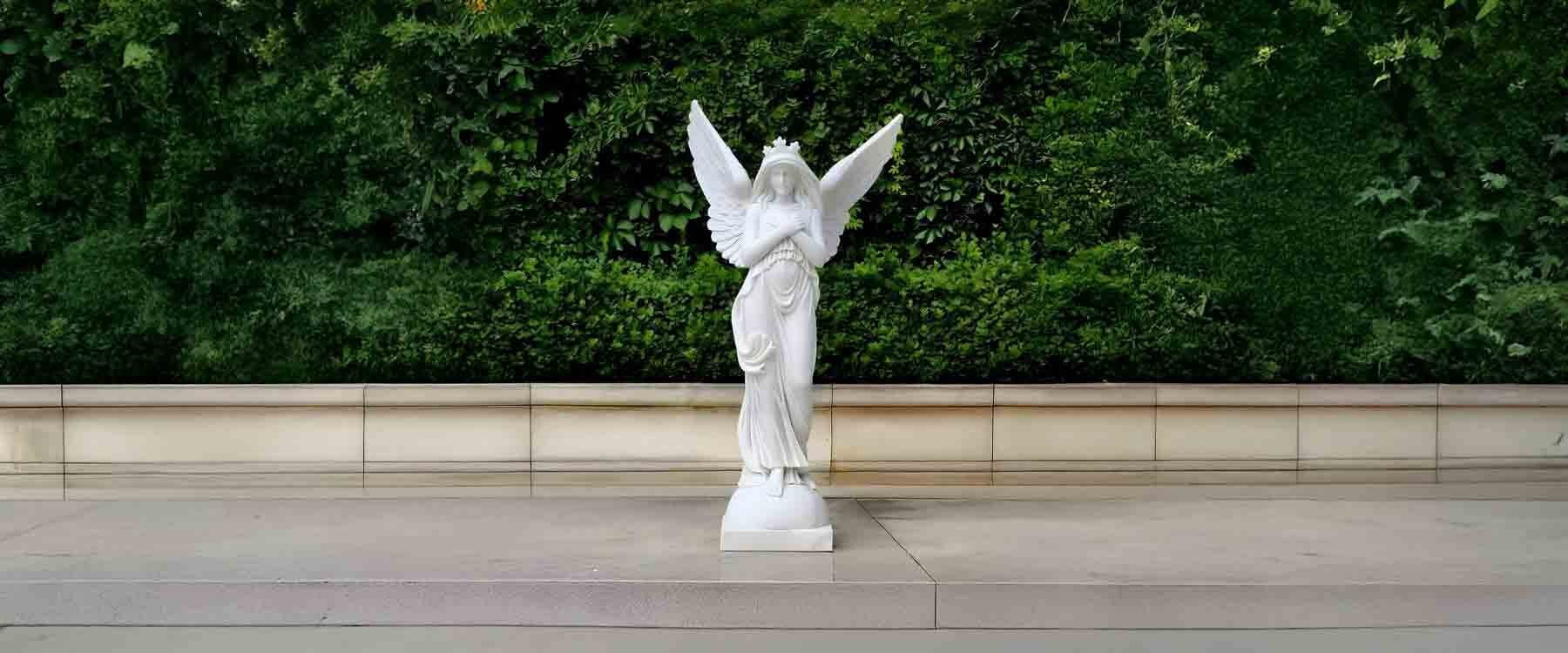

If you’ve ever stood in front of a finished statue and wondered how someone coaxed that level of detail out of a solid rock, you’re not alone. Marble sculptures can look almost soft, with crisp drapery, delicate fingers, and calm expressions that feel surprisingly lifelike. What you’re really seeing is a careful balance of planning, technique, and patience applied to an unforgiving material. Every cut matters, because stone doesn’t give second chances.
This guide breaks down how marble sculptures are made from start to finish, without skipping the important details. You’ll learn how artists choose the right marble, map out a design, and remove material in controlled stages. We’ll also cover the tools used for shaping and refining, plus the methods that create texture and polish. By the end, you’ll understand what turns a raw block into a finished piece that looks effortless.

What Makes Marble Suitable For Sculpture?
Marble is a metamorphic stone, formed when limestone is subjected to heat and pressure over time. This transformation produces a fine, compact structure that can be shaped with control and finished smoothly. The best carving marble has an even grain that holds crisp edges without crumbling.
Sculptors pay close attention to how marble behaves under tools during carving. Because it is both strong and workable, it allows gradual refinement from bold cuts to delicate detail. That balance is a major reason marble sculptures can achieve lifelike surfaces and sharp definition.
Light matters just as much as structure when the final piece is displayed. A well-finished surface can look subtly luminous, especially along curves and high points where light catches. This is one reason marble sculptures have remained a benchmark of artistry for centuries.
Step 1: Selecting The Right Block
Everything starts at the quarry (or with a specialist supplier). A block that looks beautiful on the outside may hide fractures, soft spots or awkward veining inside. Selecting stone for marble sculptures is part science, part experience.
A sculptor typically checks:
Structural soundness: Hairline cracks can ruin a piece later.
Grain and density: Finer grain allows cleaner detail.
Veins and colour: Bold veining can suit some designs; calm tone suits others.
Size and orientation: The block must support the intended pose and negative space.
If the design includes thin elements like fingers, leaves, or extended drapery vein direction becomes even more important.
Step 2: Designing The Artwork Before Carving Begins
Before a chisel touches the stone, the artist plans the design in detail. Traditionally, sculptors create a clay maquette or a full-size plaster model to settle proportions and composition. This stage helps reveal problems early, when changes are still easy to make.
Modern workshops may also use digital modelling to test angles, balance, and overall structure. It’s especially useful for larger works where weight, stability, and viewing distance matter. Even with modern tools, the purpose remains practical rather than decorative.
The goal is always to reduce mistakes before carving begins. Marble is unforgiving, and once material is removed, it cannot be put back. That careful planning is one reason marble sculptures can look so confident and precise in their finished form.

Step 3: Marking Up The lock
Next comes transferring the design onto the stone. This step creates clear reference points so the sculptor can carve accurately and keep proportions consistent.
Common approaches include:
Pointing systems: Taking measured reference points from a model.
Grid mapping: Aligning sections for accurate scaling.
Templates or projections: Useful for early positioning.
Centreline and datum marks: Drawing key axes to keep the sculpture symmetrical and correctly aligned.
Depth drilling (reference holes): Drilling measured guide holes to control how deep to carve in critical areas.
At this stage, the sculptor decides where the highest points and deepest recesses will be, and how the stone’s natural features should support the design.
Step 4: Roughing Out The Shape
Roughing out is the dusty phase where the block starts to resemble the intended form. The sculptor removes large volumes of stone using point chisels, pitching tools, and sometimes pneumatic hammers.
The priorities are:
Checking key measurements frequently to keep proportions on track.
Removing stone evenly to avoid stress points and accidental cracks.
Establishing the overall silhouette.
Setting the main planes (front, sides, depth).
And keeping the structure stable.
Chasing detail too soon can throw proportions off, so experienced sculptors stay disciplined here.

Step 5: Refining Forms And Proportions
Once the basic mass is in place, the sculptor shifts to finer tools such as tooth chisels, rasps, and rifflers. These tools refine curves and transitions so the form starts to feel intentional rather than blocky. At this stage, the overall silhouette stays the same, but the quality of the shapes improves dramatically.
The sculptor works methodically across the whole piece, adjusting planes, edges, and depth in small increments. Frequent checks from multiple angles help keep proportions consistent and avoid accidental flattening. It’s also where balance and rhythm in the design become clearer, especially around shoulders, hips, and flowing lines.
A few millimetres can change an expression from calm to stern, so decisions are careful and measured. This refinement phase is often where marble sculptures begin to look convincing, because the surfaces start to carry subtle tension and movement. Any issues that appear here must be corrected gradually, before the work moves into delicate detailing.

Step 6: Carving Details Without Weakening The Stone
Details are what people notice first, but they’re also the riskiest part. Thin sections can snap, and deep undercuts can introduce weak points.
Sculptors usually work:
From largest to smallest forms (so proportions stay consistent).
From strong areas to delicate areas (to avoid accidental damage).
And from supported sections to free sections (so the piece doesn’t flex).
From shallow cuts to deeper cuts (to control undercuts safely).
And from simple surfaces to complex details (so small features don’t get damaged during handling).
For lifelike results, artists vary texture. Skin, hair, fabric, and carved ornament shouldn’t all feel identical.
Step 7: Creating Texture And Choosing A Finish
Not all marble carving aims for a mirror shine. Finish is a creative choice, and it changes how the sculpture reads in a room and how marble sculptures interact with light and space.
Common finishes include:
Honed: Smooth but not glossy; diffuses light gently.
Polished: Reflective and luminous; highlights form and colour.
Tooled or textured: Leaves deliberate marks for a raw or contemporary look.
Satin: Softly reflective; sits between honed and polished for a gentle glow.
Sandblasted: Matte and lightly grained; reduces glare and suits outdoor or modern settings.
In many museum works and classic sculptures, subtle shifts in finish are used to create contrast and depth.

Step 8: Sanding And Polishing
Polishing is gradual, not instant, and it’s one of the most controlled stages of the process. The sculptor works through increasingly fine abrasives to remove tool marks and unify the surface. Water is often used to manage dust, reduce heat, and keep the finish even.
The work usually starts with coarser grits to smooth out visible chisel lines, then moves step-by-step towards finer grades. Each change of abrasive removes the scratches left by the previous one, so rushing this stage only creates more work later. Done properly, marble sculptures keep their crisp edges while gaining a cleaner, more refined surface.
Final polishing is about bringing out the stone’s natural depth without flattening the forms that were carefully carved. Light should move smoothly across curves, with highlights sitting on the highest points rather than looking shiny everywhere. This is what gives marble sculptures their signature clarity and soft glow when viewed up close.

Step 9: Sealing And Long-Term Care
Marble is porous, so sealing can help protect the surface from stains and moisture, particularly in high-traffic interiors or sheltered outdoor areas. Proper maintenance also helps marble sculptures keep their finish and detail over time.
For everyday care:
- Dust with a soft, dry cloth,
- Avoid acidic cleaners (anything with vinegar or lemon),
- Blot spills promptly rather than rubbing,
- Use a pH-neutral stone cleaner for deeper cleans,
- Place felt pads under bases to prevent scratching surfaces,
Outdoor pieces need extra thought. Freeze-thaw cycles, pollution, and standing water can cause damage over time.
A quick note on transport and handling
Large blocks and partly carved pieces are heavy and surprisingly vulnerable. Workshops use slings, padded supports, and controlled lifts to prevent micro-fractures. Even a small knock on a sharp corner can create a fault line that only shows up later during refinement, so careful handling is part of the craft, not an afterthought.
Dust, noise, and safety in the studio
Stone carving produces fine dust and constant vibration. Professional studios manage this with extraction systems, wet-working where appropriate, hearing protection, and proper masks. Beyond comfort, safety affects quality: when visibility is poor or fatigue sets in, mistakes happen faster than you’d think.
Conservation considerations for heritage pieces
For older works, conservators often avoid aggressive cleaning and instead focus on stabilising the surface, removing harmful deposits, and controlling the display environment. If a sculpture has historical value, it’s worth getting specialist advice before using any sealant or restoration method.
Special Subjects: Human Figures, Animals, And Abstract Forms
Different themes demand different strengths, and the subject often dictates the carving approach. Figurative work requires anatomical understanding and convincing weight distribution so the form feels believable from every angle. Abstract forms rely on balance and negative space, where a single curve or line can define the whole piece. In well-made marble sculptures, these choices shape not just the look, but the stability and longevity of the work.
Animal themes are particularly challenging because texture must read clearly without becoming fragile. Sculptors often simplify surface detail so fur, feathers, or scales don’t create weak points in the stone. Many wildlife sculptures succeed by prioritising posture and movement, then adding texture only where it won’t compromise strength. The result feels natural and lively, while still being structurally sound.

Why The Process Matters
Knowing how these works are made changes how you see them. You start noticing deliberate choices, like where the form is softened, where an edge is kept crisp, and how the stone’s natural character supports the design. When you understand the craft behind marble sculptures, the details stop feeling accidental and start feeling intentional. Even small transitions and surface textures become easier to appreciate.
It also helps you recognise quality with more confidence. With marble sculptures, true craftsmanship shows up in proportion, structure, and restraint, not just shine. You begin to spot when a piece has been refined patiently rather than rushed to a finish. That knowledge makes it easier to value the work for what it really is: skill made visible in stone.

Conclusion: From Block To Finished Masterpiece
Making marble sculptures is a step-by-step craft that starts with choosing the right block and ends with careful finishing that brings the form to life. Along the way, sculptors plan the design, transfer measurements, and remove stone in controlled stages. They refine curves and proportions, then carve details while protecting delicate areas from stress or breakage. Finally, sanding and polishing reveal the surface clarity that makes marble sculptures so distinctive.
What looks effortless in the finished piece is really the result of patience, precision, and a deep understanding of the material. Each stage builds on the last, so accuracy early on makes the later work cleaner and more confident. When you understand the process, you can spot the difference between rushed work and craftsmanship that lasts. To see these techniques in action, explore the collection and discover marble sculptures that suit your space.