
Introduction
In a world obsessed with perfection, what if imperfection is the real luxury? As modern homes become increasingly curated, many homeowners are seeking a counterbalance: warmth, authenticity, and peace. That’s where wabi sabi art steps in, a visual philosophy that finds beauty not in flawlessness, but in flaws themselves.
Rooted in centuries-old Japanese aesthetics, wabi-sabi celebrates the transient, the incomplete, and the worn. It offers an antidote to the sterile uniformity of mass-produced decor and invites us to embrace what’s real. As a design movement, it’s gaining momentum among mindful homeowners, minimalists, and lovers of handcrafted beauty. If you’re new to this concept, this guide will walk you through what makes wabi-sabi art so timeless, and how to make it a soulful part of your interior style.

What Is Wabi-Sabi Art? Understanding the Philosophy of Imperfection
At its core, wabi sabi art is about appreciating things as they are, aged, irregular, and quietly beautiful. Wabi means “rustic simplicity,” while sabi reflects “the beauty of aging and weathering.” Together, they form an aesthetic that embraces asymmetry, earthiness, and the emotional resonance of natural decay.
The concept stems from Zen Buddhism, where impermanence is seen as a spiritual truth. In traditional Japanese design, this meant raw materials, handcrafted ceramics, and the patina of use were cherished, not corrected. Over time, these values shaped everything from architecture to pottery to painting.
Unlike Western ideals that prize perfection, symmetry, and gloss, wabi-sabi invites peace through restraint and realism. In the context of wall decor, that translates to art that feels humble yet profound, soft brushstrokes, faded ink, weathered paper, and forms that leave space for stillness.

The Visual Language of Wabi-Sabi Art
So, what does wabi sabi art look like? Its visual language is quiet, textured, and deeply tied to nature.
You’ll find:
Muted color palettes: beige, soft greys, ochre, stone, and off-white
Raw edges and asymmetry: jagged lines, unbalanced compositions, unfinished forms
Organic materials: rice paper, clay, linen, wood, and oxidized metals
Texture over precision: brushstrokes left visible, imperfections left intact
Popular forms include:
Minimalist ink paintings with generous use of negative space
Kintsugi pieces, where broken ceramics are repaired with gold, making the fracture part of the art
Abstract compositions inspired by stones, branches, or landscapes in decay
The tactile quality and natural imperfection of each piece make them feel personal, grounding, and timeless.

Why Wabi-Sabi Art Resonates in Modern Interiors
There’s a reason wabi sabi art is appearing in everything from design showrooms to tranquil spas and curated homes: it aligns perfectly with today’s longing for calm, authenticity, and mindfulness.
Emotional Impact
Wabi-sabi pieces do more than decorate, they evoke feeling. The softness, silence, and humility in these works help transform rooms into emotional sanctuaries. Instead of dominating a space, they offer gentle presence.
A Match for Wellness-Oriented Spaces
This style complements wellness and slow-living design philosophies. In interiors full of light wood, linen, plants, and stone, imperfect art adds warmth and emotional depth.
Soften Sterile or Modern Spaces
Sleek, ultra-minimalist interiors can sometimes feel cold or impersonal. The introduction of textured, hand-touched artwork softens hard lines and brings human warmth to the environment.
As we seek greater connection with nature and ourselves, wabi sabi art feels less like a trend and more like a quiet revolution in how we define beauty.

How to Style Wabi-Sabi Art in Your Home
Because of its natural textures and emotional subtlety, wabi sabi art integrates beautifully into every part of the home. Its essence lies in restraint and harmony, so when placing these pieces, think less about filling space and more about honoring it. Below are styling suggestions for a variety of rooms and design settings.
Living Room
The living room sets the emotional tone for your home. Here, wabi-sabi can anchor a calm, grounded space.
Select a single statement piece or create a loose, asymmetrical gallery wall.
Pair with linen sofas, raw wood furniture, and unglazed ceramics.
Place near natural light and allow the artwork to interact with shadow and silence.
Bedroom
Your bedroom should feel like a retreat, soft, intimate, and still. Wabi-sabi art nurtures this beautifully.
Choose pieces made with aged paper, faded brushwork, or ink washes.
Hang above the headboard or along a clean accent wall.
Add textile art or worn ceramic pieces to reinforce the handmade feel.

Hallways or Transitional Spaces
Styling Suggestions:
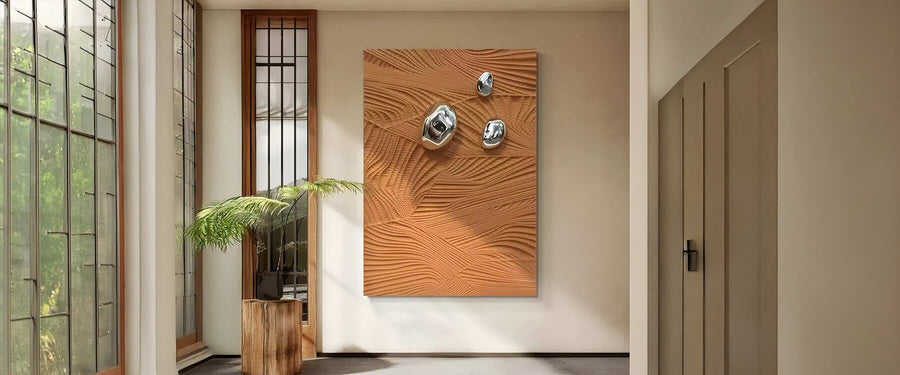
Let the artwork breathe. Mount the piece at eye level and give it generous negative space on all sides to emphasize the asymmetry and tactile contrast.
Pair with sculptural decor. Use an organically shaped vase, as shown here, filled with loose, foraged greenery like eucalyptus, monstera, or dried branches.
Choose subtle flooring and cabinetry. Neutral stone or marble tiles and matte cabinetry allow the art to remain the visual anchor without overpowering the room.
Lighting matters. Install a recessed spotlight or a directional picture light above the piece to accentuate its dimensional surface and shadows.

Dining Room
Bring slow living to the table with art that encourages presence.
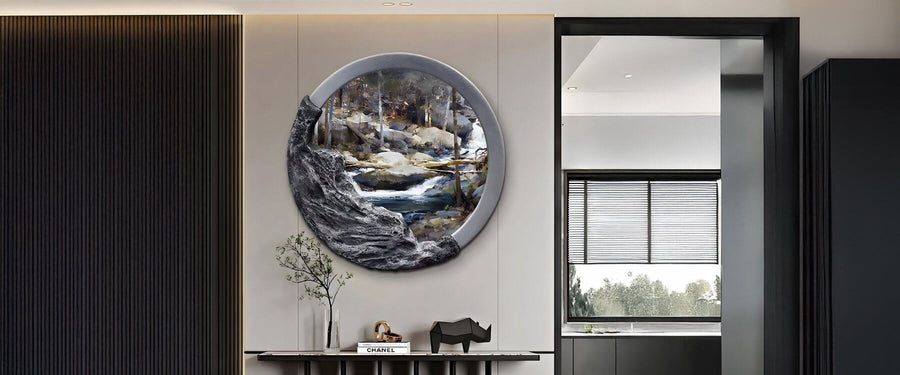
Let the artwork serve as the focal point. Hang a single, large piece with textural depth and muted hues, like the folded, stratified design shown, to reflect organic form and aging.
Complement with tactile table settings. Incorporate linen placemats, ceramic plates, and imperfect glassware for an earthy, collected feel.
Include fresh, unstyled florals. A loose arrangement of hydrangeas or garden-cut stems adds softness and life to the space.
Keep color contrasts minimal. Soft greys, stone blues, and natural whites create harmony, letting the art communicate presence without distraction.

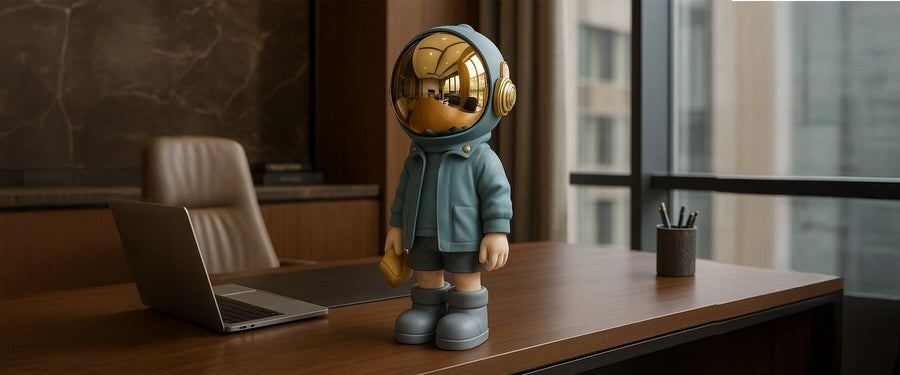
Office or Studio
In creative or professional spaces, wabi sabi art fosters clarity, mindfulness, and gentle inspiration.
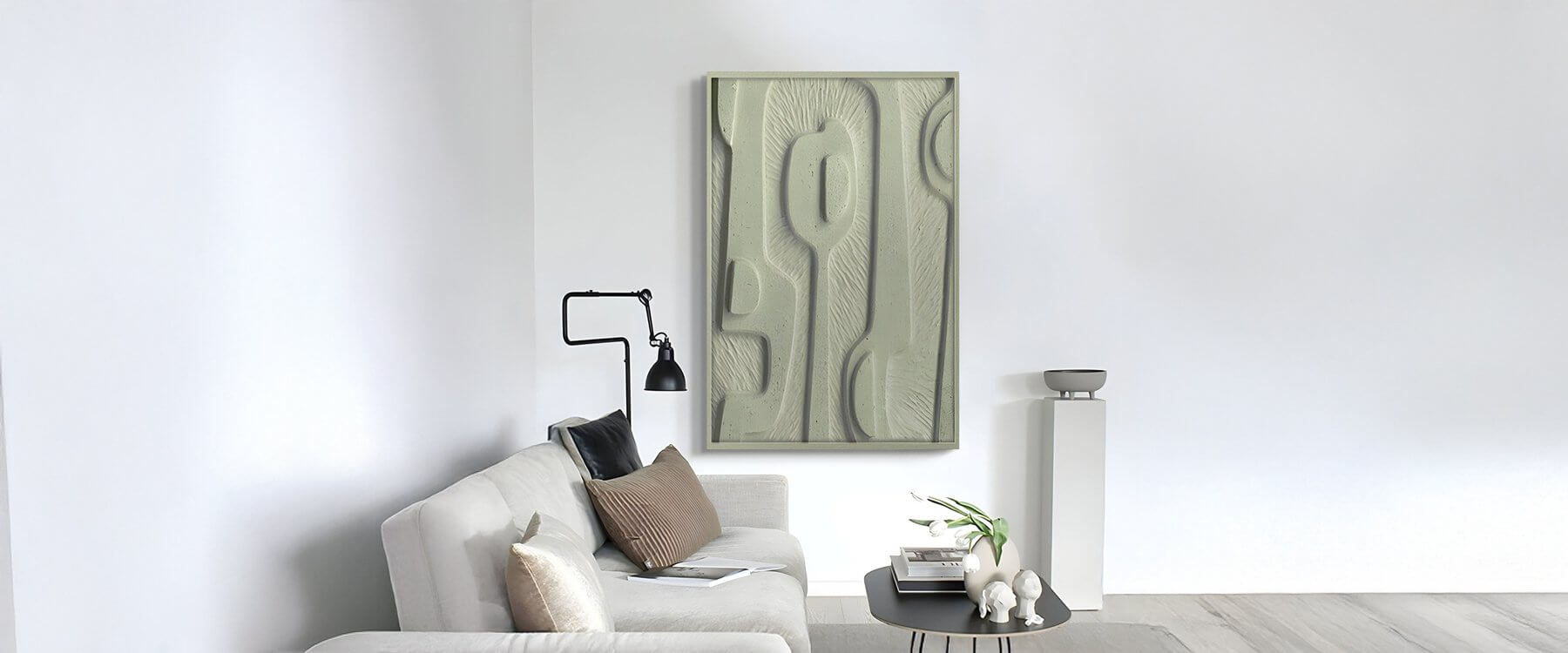
Choose tactile depth over color. Art like this adds interest through form and material rather than bright hues, ideal for avoiding visual overwhelm in workspaces.
Balance order with softness. While the piece introduces layered repetition, the irregular shapes and edges offer necessary contrast to clean lines and rigid surfaces.
Complement with earthy decor. Add clay mugs, woven mats, or hand-carved desk accessories to build a cohesive look grounded in natural materiality.
Keep furniture honest. Natural wood desks, neutral upholstery, and open shelving work best to echo the intentional simplicity of wabi-sabi philosophy.
Wellness Areas
Even small sanctuaries can benefit from wabi-sabi’s quiet charm.
Hang a simple textured canvas, faded floral ink drawing, or pressed botanical art.
Use waterproof materials or protective mounting for humidity-prone spaces.
Complement with hand-carved trays, pumice stones, or aged metal fixtures.

Entryway
First impressions matter. Let wabi-sabi set a tone of calm, grounded welcome.
Use grid-based arrangements with variation. Although the panels form a clean grid, the differences in curvature from piece to piece embody subtle irregularity, key to the wabi-sabi spirit.
Let light reveal texture. Install soft overhead or side lighting to enhance the depth and shadow play across the sculptural surfaces.
Integrate tactile elements. The raw wooden stool in the space adds warmth and contrast against the cool, pale artwork, bringing balance through natural materiality.
Keep it minimal. Avoid cluttering the entryway; wabi-sabi art speaks loudest in calm, open environments. A single ceramic vessel or organic textile can complete the look.

Open Shelving & Niche Displays
Don't overlook layered, built-in areas, perfect for mixed-media integration.
Feature one hero piece. In niche or inset wall sections, a single, large-format artwork like this can speak volumes. Let its scale and serenity define the space.
Embrace sculptural simplicity. Avoid clutter, balance the focal point with small accents like stone bowls, weathered wood, or hand-poured concrete objects nearby.
Play with lighting. Use indirect uplighting or side lighting to enhance surface patterns and shadows, crucial for tactile designs like ripples.
Contrast with softness. If placed near shelving, add raw ceramics, textiles, or books in handmade covers to echo imperfection and warmth.

Wabi-Sabi vs. Minimalism: Similarities and Key Differences
It’s easy to confuse wabi sabi art with minimalism, and while the two share common values, simplicity, restraint, and harmony, there are crucial differences.
Minimalism:
Seeks perfection through reduction
Aims for order, clarity, and symmetry
Surfaces are clean, materials often industrial or polished
Wabi-Sabi:
Embraces imperfection and irregularity
Prioritizes warmth, texture, and natural decay
Materials are raw, weathered, and often handcrafted
Minimalism offers structure and stillness. Wabi-sabi offers story and soul. Together, they can coexist beautifully, but it’s the latter that reminds us to welcome imperfection as a form of beauty.

Conclusion
In an era of curated feeds and polished surfaces, wabi sabi art is a breath of fresh air. It gently reminds us that beauty is not found in flawless lines or pristine finishes, but in the marks of time, the textures of nature, and the quiet of imperfection.
Whether you’re curating a tranquil living room, designing a serene bedroom, or softening a modern space, wabi-sabi wall art invites warmth, humility, and balance. It transforms interiors into stories, ones that reflect not just who we are, but how we feel.
Ready to embrace imperfection with intention?
Explore our curated wabi-sabi wall art collection at Giant Sculptures, or browse more guides on soulful, natural design.