
























Table of Contents
- Why Steel Sculptures Beat Other Garden Décor
- Stainless vs. Corten: Which One Fits Your Garden?
- Outdoor Steel Sculpture Styles That Work Every Time
- How to Place Steel Sculptures for Maximum Impact
- What Outdoor Steel Sculptures Cost (and Why)
- When Commissioning a Custom Piece Makes Sense
- Steel Sculpture Maintenance: Simple and Minimal
- Quick Checklist: Choosing the Right Piece
- Conclusion: The Garden Statement That Doesn’t Quit
- FAQs
Let’s be honest: most garden décor has a short, dramatic life. That “weatherproof” statue fades to a miserable grey by August, the ceramic bird cracks after the first frost, and the timber feature warps into a rustic surprise you definitely didn’t order. Your outdoor space might be lovely, but it’s also a full-time stress test for anything you put in it, sun, rain, wind, salt, moss, and whatever else the seasons feel like throwing at it. That’s exactly why steel sculptures have become the ultimate garden statement: they don’t just cope with the outdoors, they’re built for it.
A well-made outdoor steel piece stays crisp through summer heat, steady in storms, and visually powerful when winter strips the borders bare. It’s a show-stopper, sure, but it’s also one of the few garden upgrades that actually makes practical sense. In this guide, we’ll get into both the why and the how steel sculptures win outside, how to choose between types, where to place one for maximum impact, and what to expect if you’re buying or commissioning.
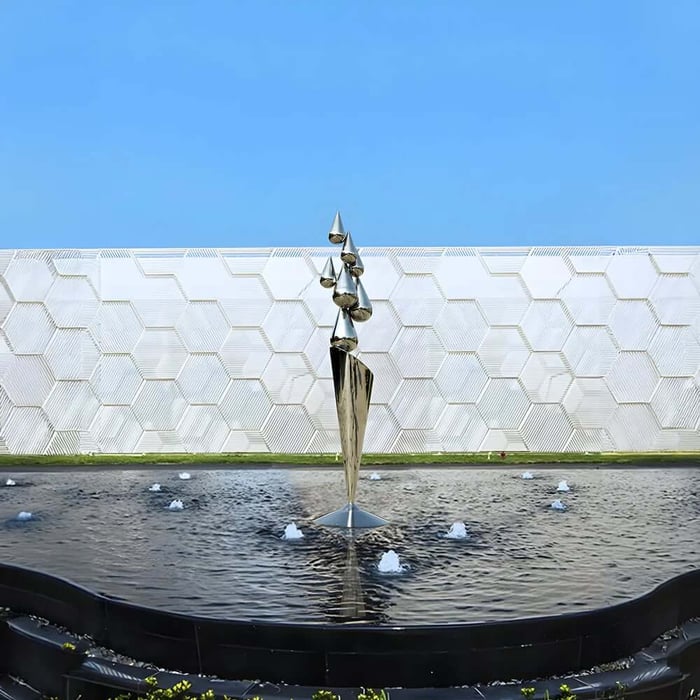
Why Steel Sculptures Beat Other Garden Décor
There’s a reason you’ll find steel sculptures everywhere from private courtyards to city plazas: they last. But here’s what that durability actually comes down to.
1. Steel is structurally brilliant
Steel has an exceptional strength-to-weight ratio. Artists can create tall sweeping forms, crisp edges, and delicate silhouettes without building something chunky just to keep it standing. That means outdoor steel works can look light and elegant while still being stable in high winds or heavy rain.
If you’ve ever had a garden ornament topple because the base wasn’t up to the job, you’ll appreciate how steel lends itself to proper anchoring and long-term stability.
2. Steel handles weather like a pro
Sunlight, frost, rain, pollution, even sea air steel can take it. The right steel either resists corrosion outright or uses it to protect itself. That gives steel sculptures a huge edge over wood, terracotta, resin, and many stones.
3. Steel doesn’t just survive, it ages well
Outdoor pieces usually get worse with time. Steel often gets better. Stainless develops a subtle lived-in softness. Corten deepens into a rich, earthy patina that feels like part of the landscape. You’re not buying something that looks great for one season; you’re choosing steel sculptures that stay relevant and handsome as your garden evolves.
Stainless vs. Corten: Which One Fits Your Garden?
When people shop for steel sculptures, they usually end up choosing between stainless steel and corten (weathering) steel. Both are excellent outdoors, but they create very different moods.
Stainless steel pieces: sleek, bright, contemporary
Stainless steel is naturally corrosion-resistant. It’s used in architecture, marine environments, and design-led outdoor spaces for a reason: it stays clean and strong year after year.
What stainless steel looks like in a garden:
modern
crisp
reflective
a bit of “wow” without being fussy
Best for:
contemporary or minimalist gardens
coastal or high-rain climates
patios and courtyards that want light and shine
spaces with strong architectural lines
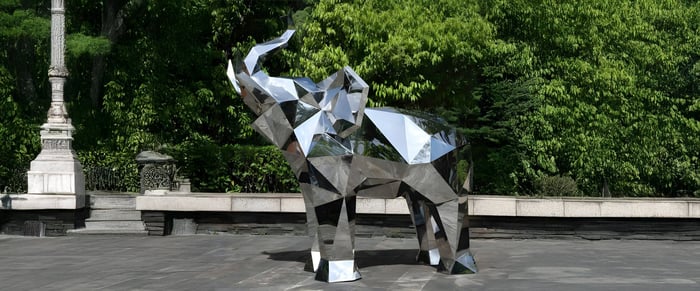
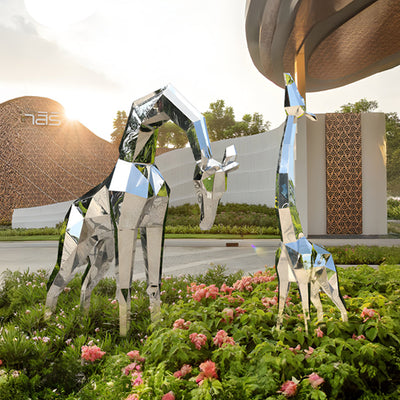
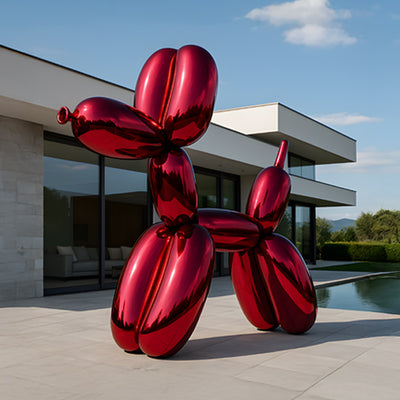
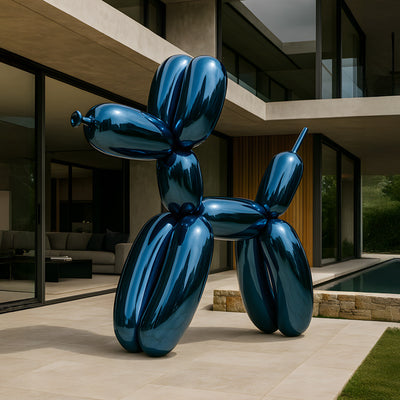
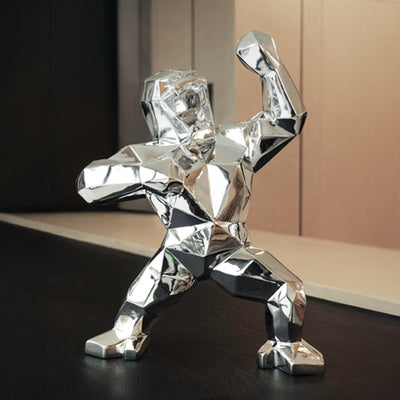
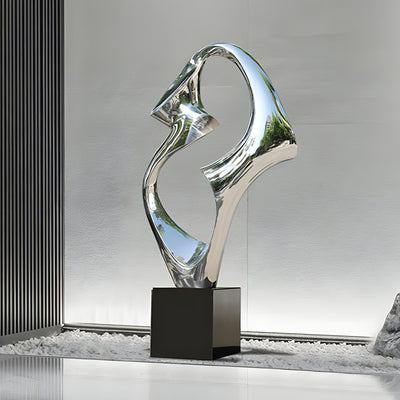
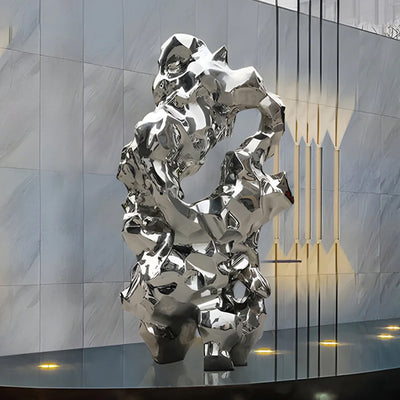
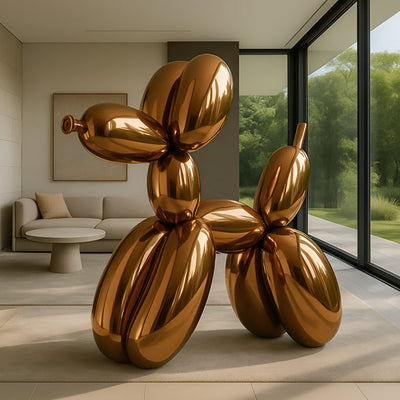
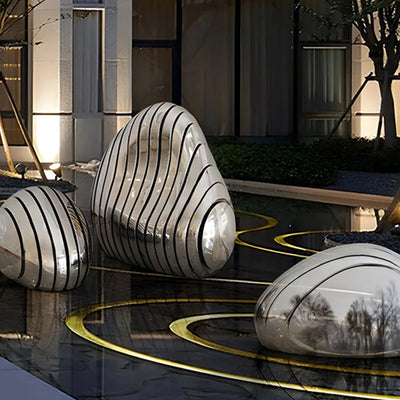
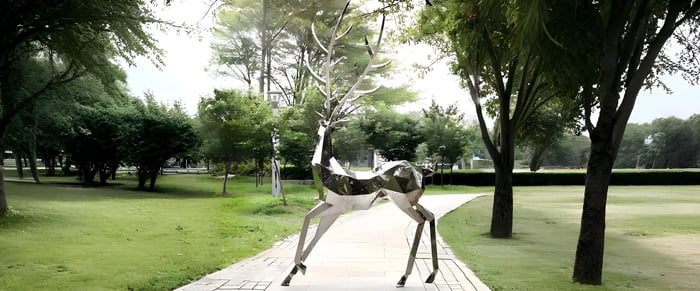
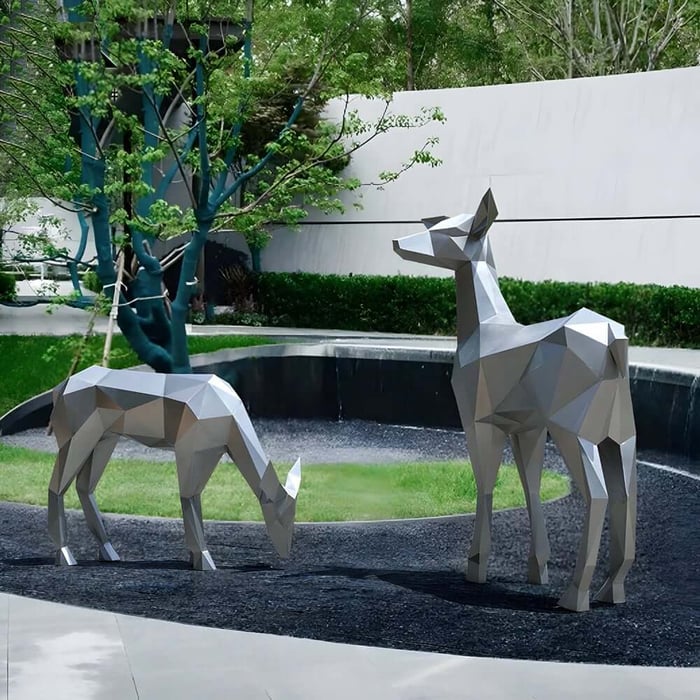
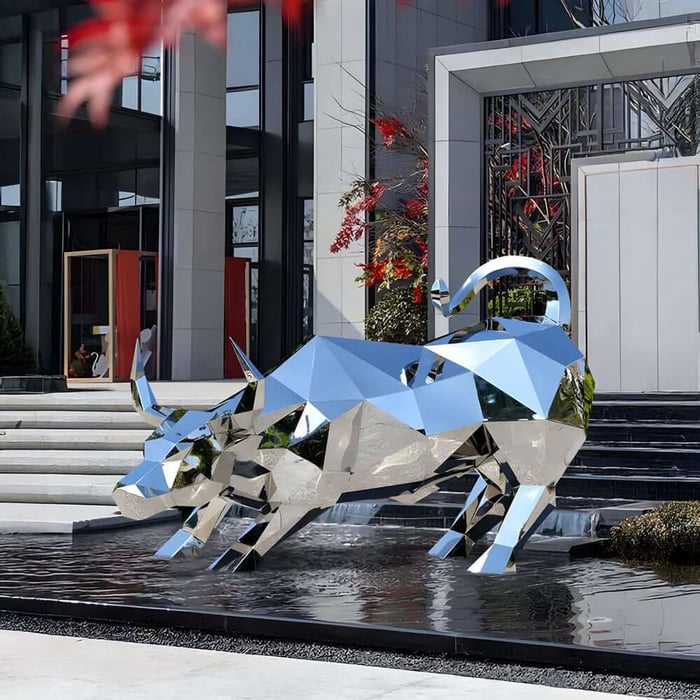
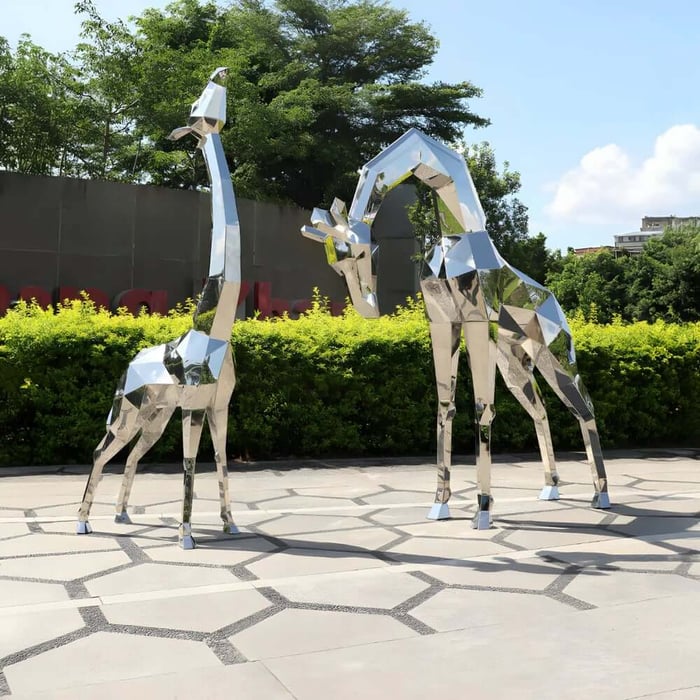
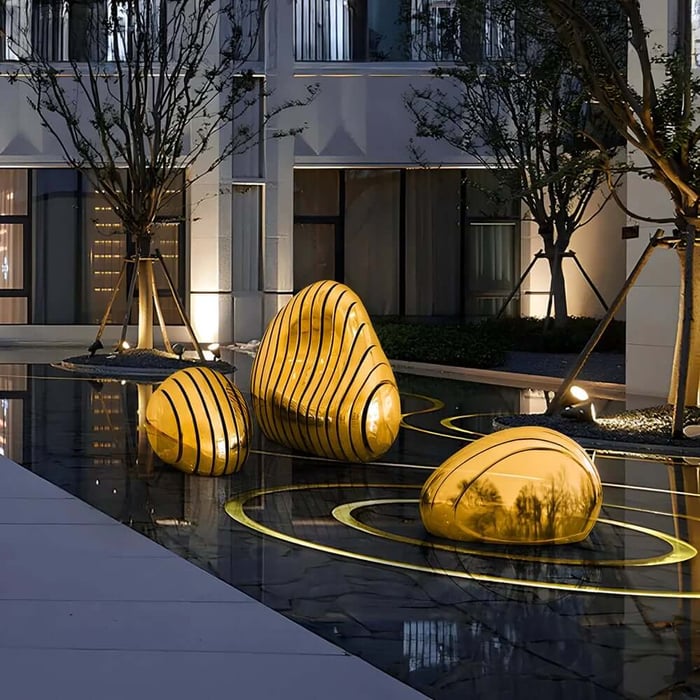
Finishes range from brushed (soft sheen) to mirror-polished (high reflection). Mirror stainless is especially dramatic near planting or water because it pulls the sky and greenery into the metal itself, making the garden feel bigger.
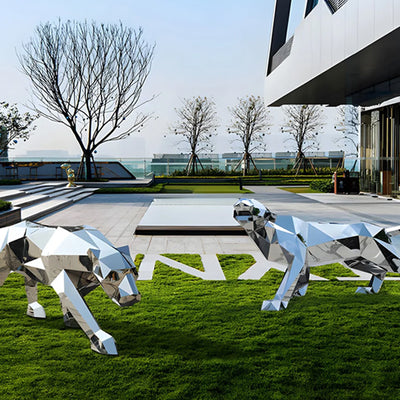
This is also why stainless features so often in geometric sculptures work: sharp angles and clean planes suit the material beautifully.
Corten steel pieces: warm, organic, landscape-friendly
Corten is designed to rust on purpose. That surface rust forms a stable protective layer called a patina. Once established, it shields the steel from deeper corrosion.
What corten feels like in a garden:
earthy
sculptural
natural
quietly bold
Best for:
wild, meadow-style, woodland, or cottage gardens
dry or mixed climates
people who want low-maintenance outdoor art
spaces where you want harmony with planting
Corten works outdoors because it doesn’t demand attention through shine it earns attention through presence. The colour shifts over time, so the piece feels alive in the landscape rather than fixed.
Outdoor Steel Sculpture Styles That Work Every Time
Steel is versatile enough to cover nearly every aesthetic. Here are the styles that consistently work outside and why.
Abstract steel works
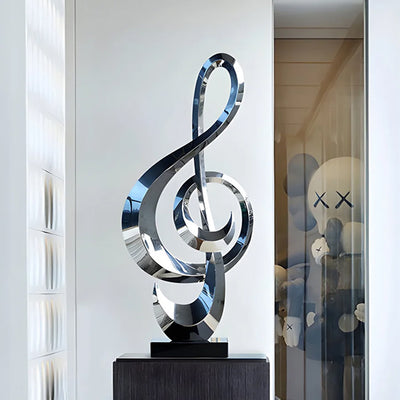
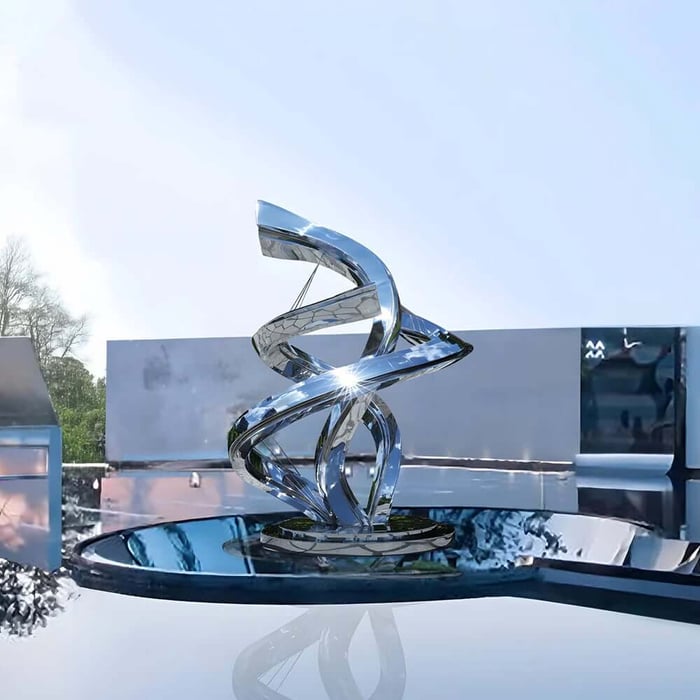
Abstract pieces are popular because they act like visual punctuation. Instead of competing with planting, they give the eye a resting point: a curve, a twist, a loop, a balanced stack. Steel lets abstract forms stay slim and elegant while still robust.
If your garden leans modern or you want a statement without a literal subject, abstract sculptures pieces are a dead-easy win. They also sit naturally with water features, gravel beds, and strong hardscape lines, feeling intentional rather than decorative.
Figurative and wildlife forms
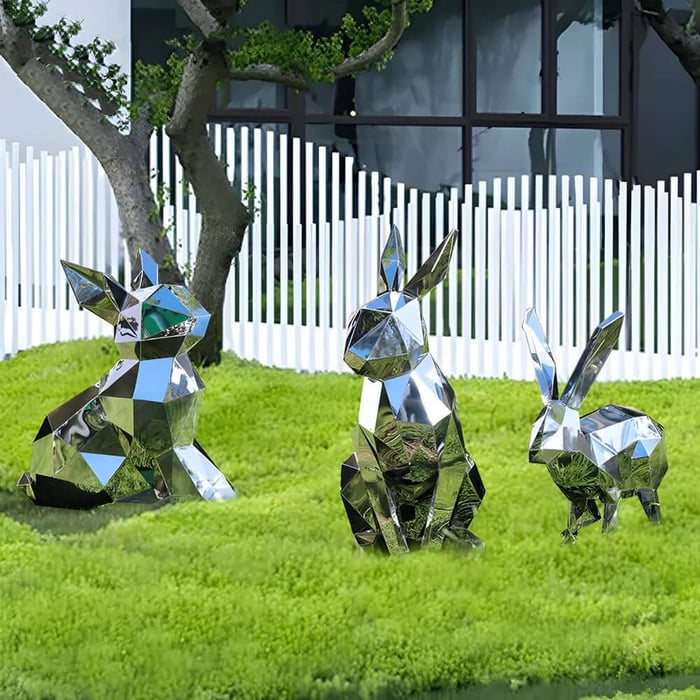
These include animals, birds, human silhouettes, or stylised botanical shapes. Steel makes these feel crisp and readable at a distance, even in dense planting. Laser-cut plate creates bold silhouettes; welded rod creates airy “drawings in space.”
They’re especially good for gardens with a narrative vibe, places where you want charm and personality without sacrificing durability.
Large statement pieces
Even if you’re not designing a town square, the public-art approach can work beautifully in large gardens. Monumental steel forms act as landmarks within your own space, creating structure and movement across long sightlines. A bigger piece doesn’t just fill space, it defines it.
Flowing, landscape-led forms
Steel doesn’t have to be sharp or industrial. Some of the best modern steel sculptures use slow curves and plant-like movement, echoing the way paths, borders, and trees actually behave. These are particularly strong in corten, where the patina makes the form feel like part of the earth.
How to Place Steel Sculptures for Maximum Impact
I’ve seen incredible garden pieces completely disappear just because they were parked in the wrong spot. Placement doesn’t just affect how a work looks, it decides whether it feels like art or background noise.
1. Put it at the end of a sightline
What do you naturally look towards as you move through the garden down a path, across a lawn, through an arch? That’s your prime sculpture zone. Steel holds a clean silhouette from a distance, so it rewards this kind of staging.
2. Let it contrast with planting
Steel shines (sometimes literally) against soft organic sculptures textures.
Corten pops against green foliage, grasses, and silver leaves.
Stainless glows beside darker shrubs or clean architectural planting.
Think “hard meets soft.” The contrast makes both the planting and the sculpture look more deliberate.
3. Give it breathing space
A steel sculpture needs a little negative space so its shape reads clearly. Don’t let tall shrubs swallow it. A gravel halo, slate base, or clear lawn surround keeps it feeling like a focal point rather than a hidden object.
4. Use it for a winter structure
A garden can look flat in winter once perennials die back. Steel doesn’t disappear. It becomes the bones of the garden, a visual anchor when colour and foliage are sparse. If you want a garden that stays beautiful in January, steel sculptures are basically cheating.
What Outdoor Steel Sculptures Cost (and Why)
Steel art prices range widely, and that’s normal. You’re paying for design, labour, finishing skill, and sometimes serious installation planning.
Here’s what changes the price fastest:
Size and weight: more material and a larger scale increase cost quickly.
Type of steel: stainless steel usually costs more than corten, because the metal is pricier and takes more labour to finish.
Complexity of form: a flat silhouette is cheaper than a multi-part abstract twist. More cutting, welding, grinding, and fit-ups mean more workshop hours.
Finish: mirror polish is labour-intensive. Patina treatments or high-end coatings also add time.
Installation needs: if the piece requires a footing, anchors, or a crane, that cost is part of doing it properly.
Quick practical takeaway:
small steel sculptures often land around premium furniture pricing
medium statement pieces are an investment
large bespoke works are priced like architectural features (because basically, they are).
When Commissioning a Custom Piece Makes Sense
If you want something that feels “made for your garden,” commissioning is the route.
A typical custom process looks like:
You share site images, dimensions, and the feel you want.
The sculptor proposes concepts or sketches.
You refine the design together.
Fabrication happens in stages, often with progress photos.
Installation is planned to suit your exact location.
Why people commission steel sculptures:
they want a scale that fits a precise space
they prefer a unique story or meaning
they want a one-of-one piece that no neighbour can copy
they need a sculpture to solve a design problem (like balancing a long axis or anchoring a sparse corner)
Custom doesn’t always mean wildly expensive, either. A sculptor can work to a realistic budget by adjusting scale, finish, or complexity while still delivering something special.
Steel Sculpture Maintenance: Simple and Minimal
One of the best parts of owning outdoor steel work is that upkeep is simple.
Caring for stainless pieces
Wash a few times a year with mild soapy water and a soft cloth.
Avoid abrasive pads that scratch.
If you’re near the coast, rinse occasionally to remove salt.
That’s genuinely it. Stainless is low drama.
Caring for corten pieces
Let the patina develop naturally.
Early on, rust run-off can stain paving, so place it on gravel, soil, or a bed with drainage.
Don’t seal unless your artist recommends it.
Once the patina stabilises, corten is essentially self-protecting.
Quick Checklist: Choosing the Right Piece
Use this checklist to decide fast and confidently:
What’s your garden’s personality?
Modern, minimal, architectural-stainless
Earthy, wild, naturalistic-cortenHow harsh is your climate?
Coastal, wet, or high-pollution - stainless
Dry or mixed seasons - either is excellentDo you want contrast or harmony?
Contrast- stainless against planting
Harmony-corten blending into the landscapeWhat scale suits your sightlines?
The “right size” is what’s visible and balanced from key viewpoints.Do you want year-round impact?
Steel Sculptures stays visually strong in every season, which makes it a proper four-season investment.
Conclusion: The Garden Statement That Doesn’t Quit
Outdoor décor usually asks you to compromise, but this is where steel sculptures pull ahead. They’re structurally strong, built to handle real weather, and they don’t just survive outdoors, they improve with age. Whether you lean toward the sleek, reflective impact of stainless or the warm, landscape-friendly patina of corten, steel sculptures let you choose a mood that fits your garden instead of fighting it. Add to that the range of styles, abstract, wildlife, flowing organic forms, even large landmark pieces, and you’ve got outdoor art that works in almost any setting.
The real magic comes from choosing the right type, scale, and placement: set your piece on a sightline, let it contrast with planting, give it breathing room, and it’ll anchor your garden year-round, especially in winter when everything else fades back. Costs naturally rise with size, complexity, finish, and installation needs, but the payoff is a four-season investment that lasts for decades. And if you want something that feels made for your space, commissioning a custom work is a straightforward process with flexible options, plus maintenance stays refreshingly low, whether you go stainless or corten.
If you’re ready to add a garden statement that won’t quit, explore the outdoor steel sculptures collection on the Giant Sculptures website, or send us a photo of your space and the vibe you want, we’ll help you choose (or create) a piece that fits your garden perfectly.
FAQs
What type of steel sculpture is best for outdoor gardens?
For most gardens, stainless steel and corten steel are the best outdoor choices. Stainless stays sleek and corrosion-resistant, especially in wet or coastal areas. Corten is made to weather into a stable rust patina, giving a warmer, natural look with very low maintenance.
How do I choose between stainless steel and corten steel?
Choose stainless if you want a bright, modern, reflective statement or you live in a rainy/coastal climate. Choose corten if you prefer an earthy, landscape-blending sculpture and like the idea of a patina that deepens over time.
Where should I place a steel sculpture in my garden?
Place it where people naturally look: at the end of a path, across a lawn, or in a framed view. Give it breathing room, let it contrast with planting, and avoid hiding it behind bushes so the silhouette reads clearly from a distance.
How much do outdoor steel sculptures usually cost?
Pricing depends on size, steel type, complexity, finish, and installation. Small pieces often cost like premium furniture, medium ones are an investment focal point, and large custom works are priced more like architectural features due to labor and mounting needs.
Do steel sculptures need a lot of maintenance?
Not much. Stainless steel only needs a gentle wash a few times a year (more rinsing if near the sea). Corten steel is mostly self-protecting once its patina forms just manage early rust runoff and avoid sealing unless recommended.