














Table of Contents
- Why Modern Spaces Keep Choosing Geometric Sculptures
- The Minimal Statement Piece
- Open-Frame Geometry That Lets Light Through
- Faceted Forms That Catch Light From Every Angle
- Kinetic Geometric Sculptures That Bring Subtle Movement
- Mirror and Polished Finishes for Maximum Impact
- Modular Designs That Build Rhythm and Structure
- Wall-Mounted Geometry for Smaller Spaces
- How to Pick the Right Geometric Sculpture Without Overthinking It
- Practical Care Tips to Keep Your Sculpture Looking New
- Conclusion: Choose a Style, Then Build the Space Around It
- FAQs
Modern spaces love clean lines. Not the sterile kind more the confident, intentional kind. That’s why geometric sculptures have become a go-to choice for homes, gardens, hotels, and public spaces. A strong shape can calm a busy room, sharpen a soft landscape, or give a blank corner a clear purpose.
The appeal is simple: Geometric sculptures look current without chasing trends. They work with glass, stone, timber, concrete, and planting. They photograph well, they age well, and they can be subtle or dramatic depending on the style you choose.
If you’re deciding what to buy (or what to commission), this guide breaks down the seven modern styles people are choosing right now and why each one works.

Why Modern Spaces Keep Choosing Geometric Sculptures
There’s a reason you see geometric sculptures in places that want to look considered rather than cluttered. Geometry brings order. A clean silhouette anchors the eye, while edges and planes catch light in a way that changes throughout the day.
They also give you options. A single bold form can act as a centrepiece. A series of repeated shapes can create rhythm. A cut-out structure can feel light and airy, even at a large scale. And because the design language is simple shape, balance, proportion it’s easier to place and style than many decorative pieces.
Most importantly, good geometric sculptures don’t rely on gimmicks. They rely on craft, finish, and proportion. When those are right, the sculpture feels like it belongs, almost as if the space was designed around it.
The Minimal Statement Piece
Minimalist monoliths are the “less is more” option: a cube, sphere, ring, column, or stacked form with no extra detail. These geometric sculptures feel calm and deliberate, which is exactly what many modern interiors and gardens need.
Why they’re popular is straightforward. They’re easy to live with. They don’t fight for attention with furniture, planting, or architecture. Instead, they add a quiet sense of structure that makes everything around them feel more cohesive.
To make this style work, scale matters. Small minimalist pieces can look like décor. Larger ones read as sculpture full stop. In a garden, a monolith at the end of a path creates a destination. Indoors, a strong form near an entryway sets the tone immediately and makes the whole space feel more intentional.
If you’re comparing finishes and durability, it’s also common to browse steel sculptures at the same time, especially when you want something crisp, contemporary, and built to last.
Open-Frame Geometry That Lets Light Through
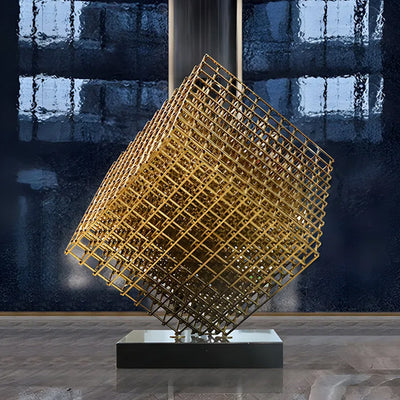
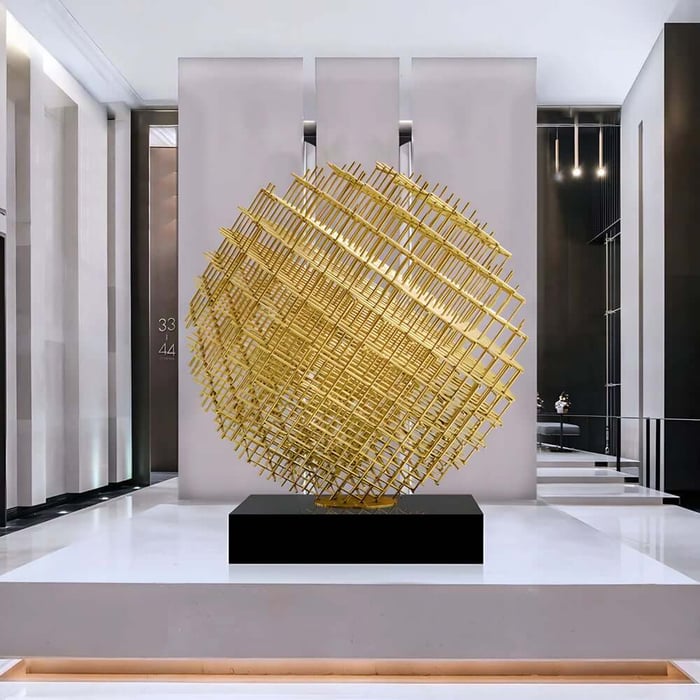
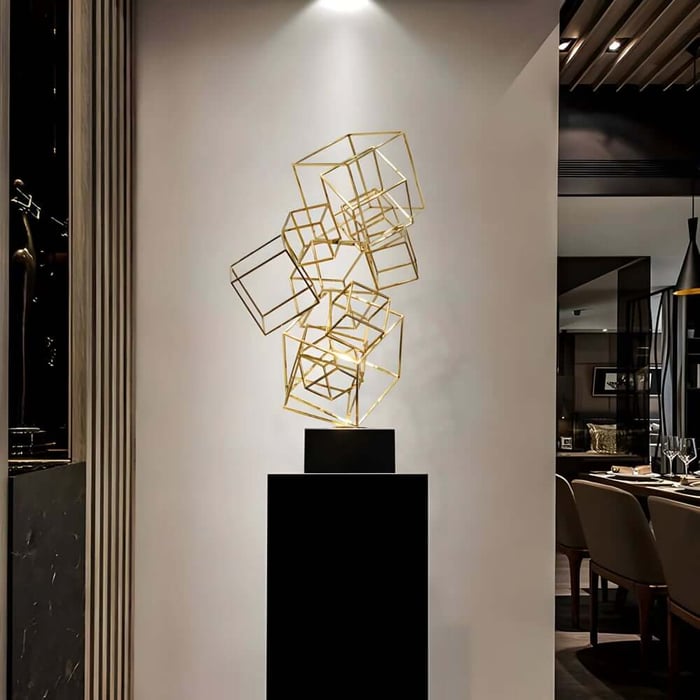
Wireframe pieces are made from rods, bars, or tubular frames that outline a form without filling it in. They might suggest a cube, a polyhedron, or an abstract structure that looks like a sketch brought into 3D.
These geometric sculptures are popular because they feel substantial yet visually light. In smaller spaces, that’s a win. You get an object with presence, but you don’t block views or make the area feel crowded. Outdoors, wireframes can sit beautifully among planting because they let greenery show through while still creating a strong shape.
They’re also brilliant for light and shadow. As the sun moves, the piece “draws” lines onto walls and paving. Indoors, placing a wireframe near a window can turn natural light into part of the artwork, adding interest without adding clutter.
When choosing this style, look for tidy joins and a stable base. The cleaner the connections, the more premium the result. And if the sculpture will live outdoors, make sure the finish is suited to weather exposure, particularly if it’s placed near irrigation or in coastal air.
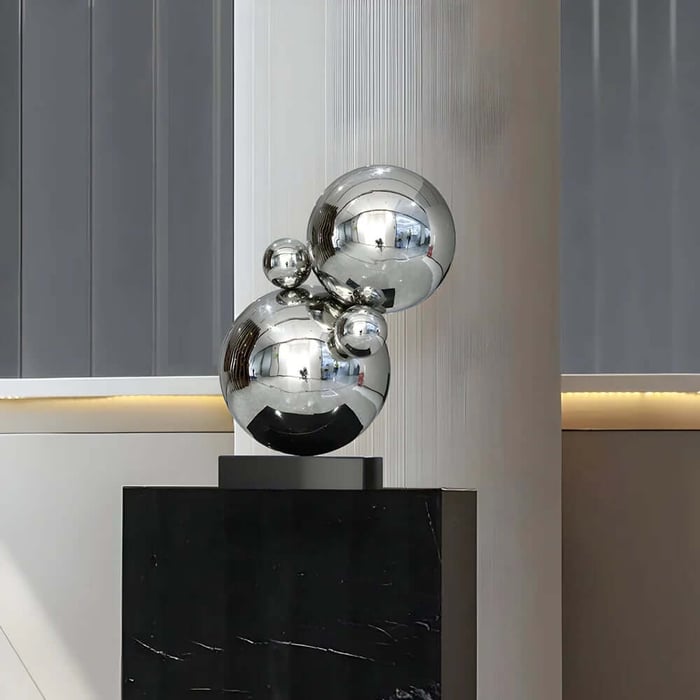
Faceted Forms That Catch Light From Every Angle
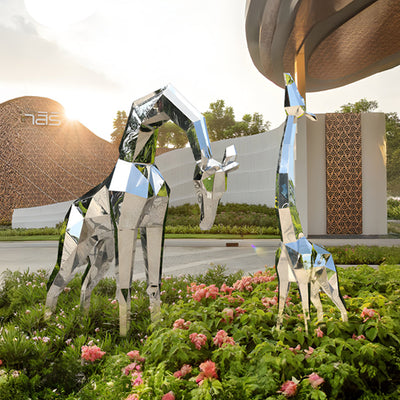
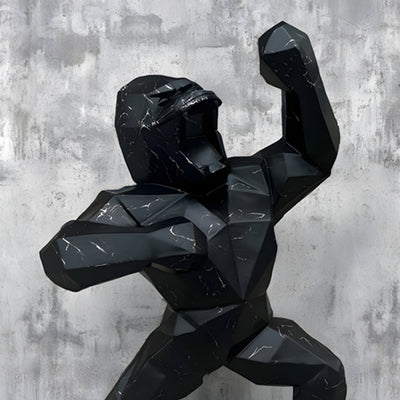
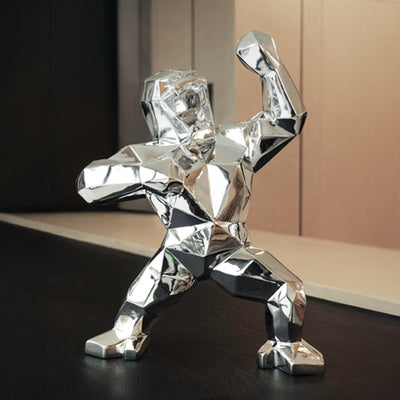
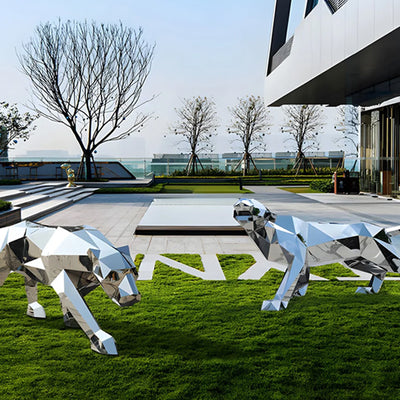
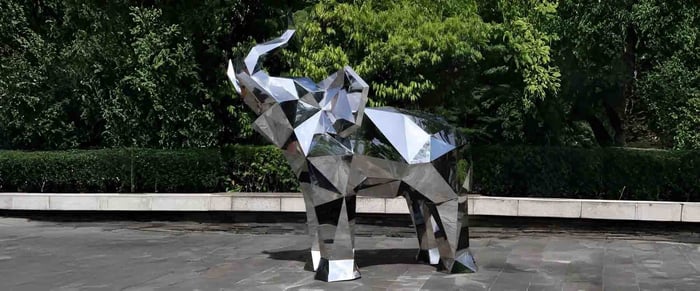
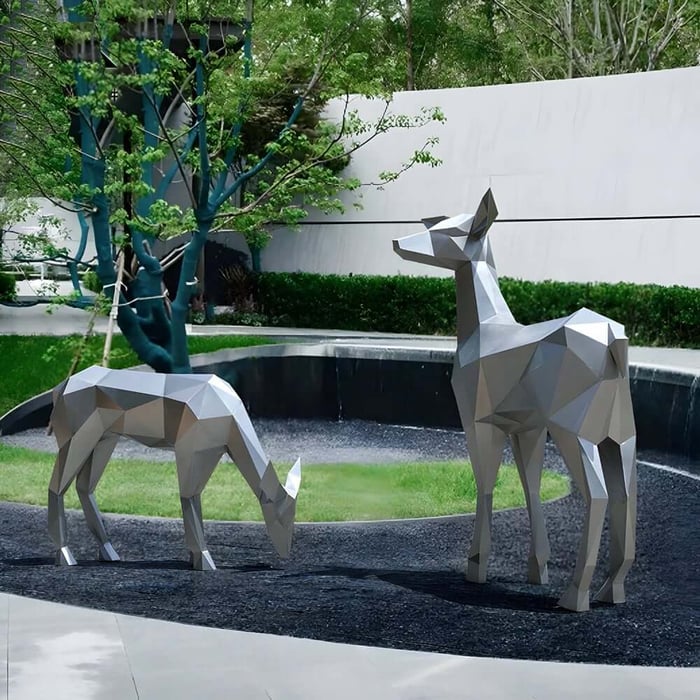
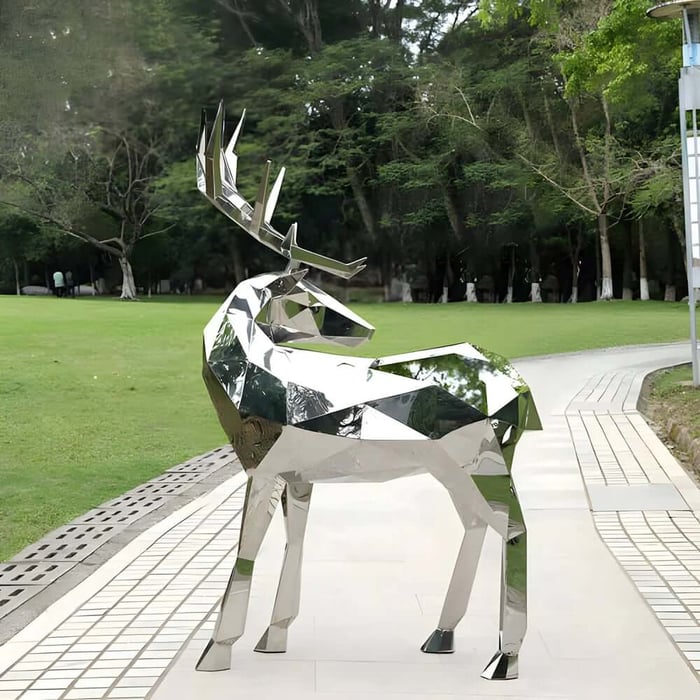
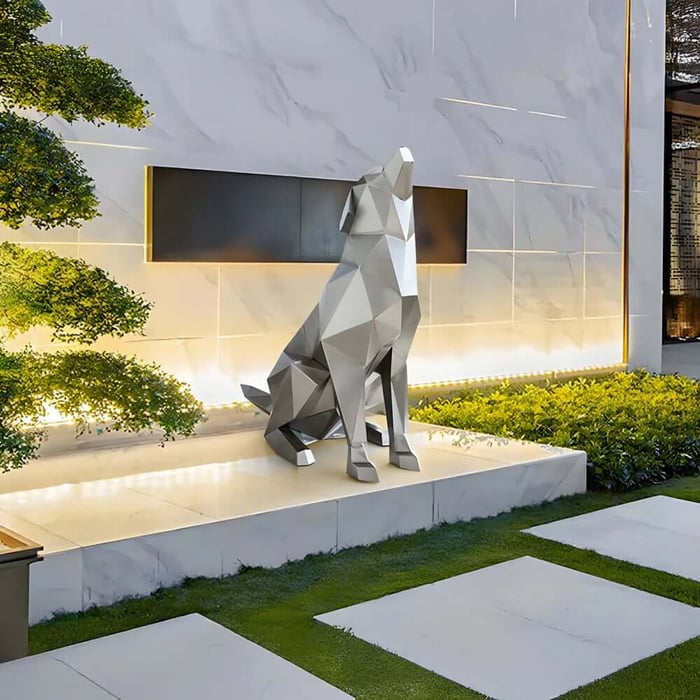
Faceted pieces are made from multiple planes, often triangular, that create a gem-like look. Think modern and bold, with crisp edges and surfaces that reflect light differently from every angle.
This style is popular because it feels dynamic even when it doesn’t move. A faceted sculpture changes through the day as sunlight hits different planes. In bright outdoor settings, that can be dramatic. Indoors, under spotlights, the angles create sharp highlights and deep shadows that make the piece look sculptural and deliberate.
Faceted geometric sculptures suit spaces with clean architecture straight lines, simple planting, modern materials. If your surroundings are already busy, choose a simpler faceted form rather than an overly complex one. The aim is contrast, not chaos.
This is also a style where thickness and finish matter. Thin panels can look flimsy; well-built planes feel weighty and confident. If you’re commissioning, ask about edge treatment and internal support so the crisp geometry stays crisp over time.
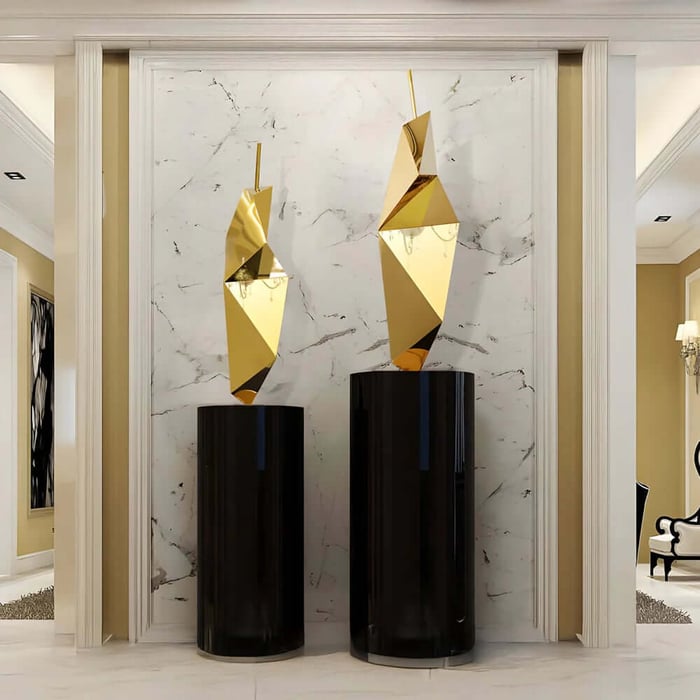
Kinetic Geometric Sculptures That Bring Subtle Movement
Kinetic geometric pieces include rotating rings, balanced elements that shift slightly, or components that respond gently to wind. The movement is usually subtle enough to catch your eye without turning the sculpture into a novelty.
People love this style because modern spaces can feel static. A kinetic piece introduces life. It gives visitors something to notice, then notice again. Outdoors, a light breeze can create slow, satisfying motion. Indoors, movement can come from careful balancing or rotation that’s activated by touch (where appropriate).
Kinetic geometric sculptures work best where they can be appreciated repeatedly: near a walkway, along an entry path, or in a lobby where people pass through daily. The key is reliability. A piece should look beautiful even when still. Movement should be a bonus, not the whole point.
Because of the mechanical elements involved, quality matters more here than in most styles. If it’s outdoors, materials and fittings need to be weather-ready, and the installation needs to be secure.
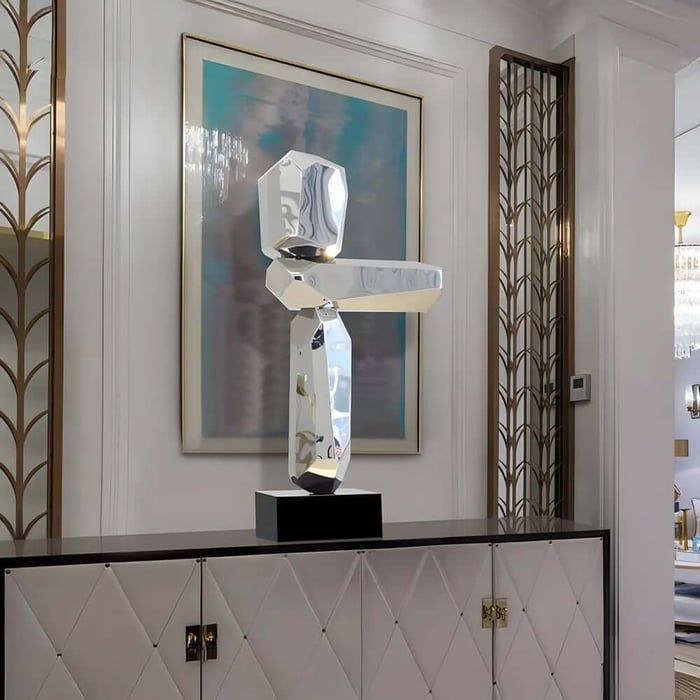
Mirror and Polished Finishes for Maximum Impact
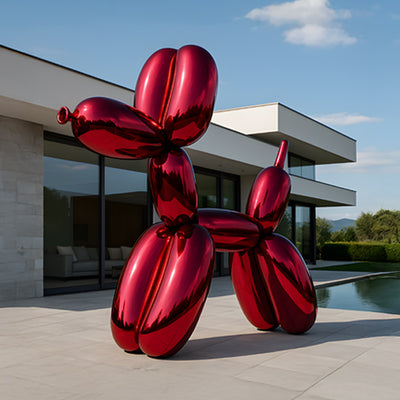
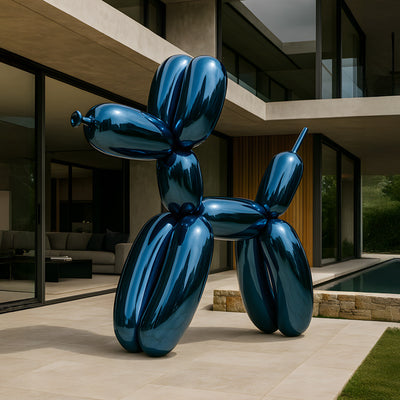
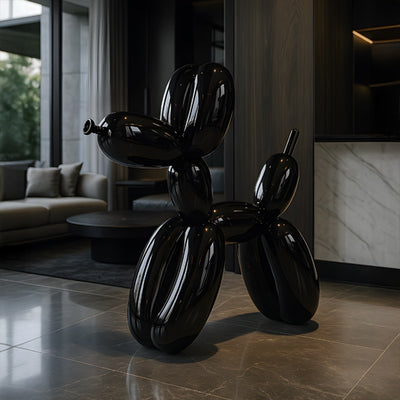
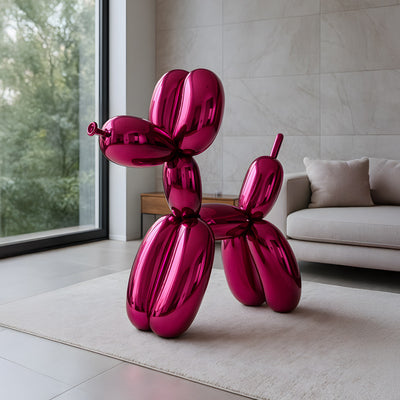
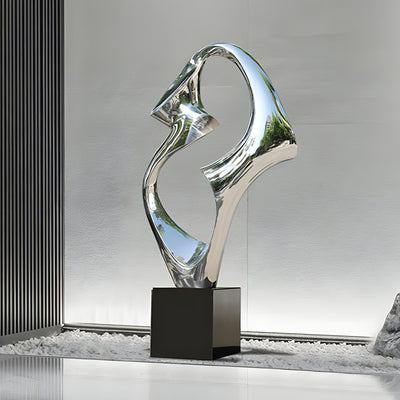
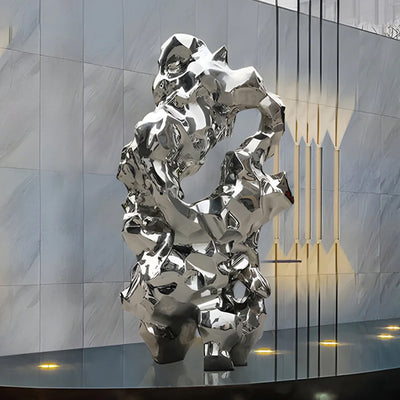
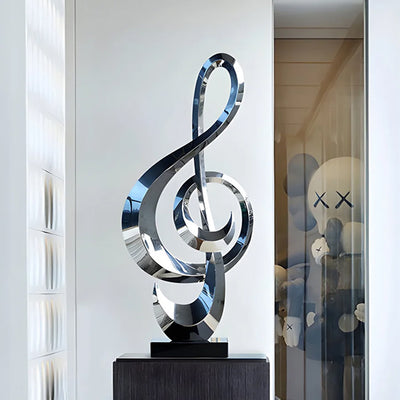
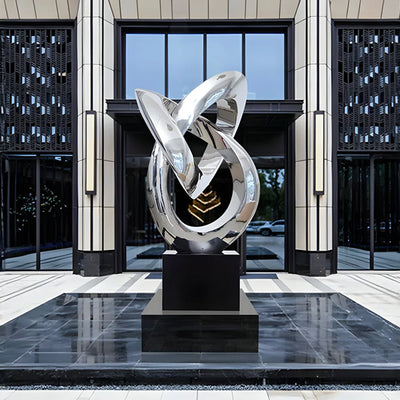
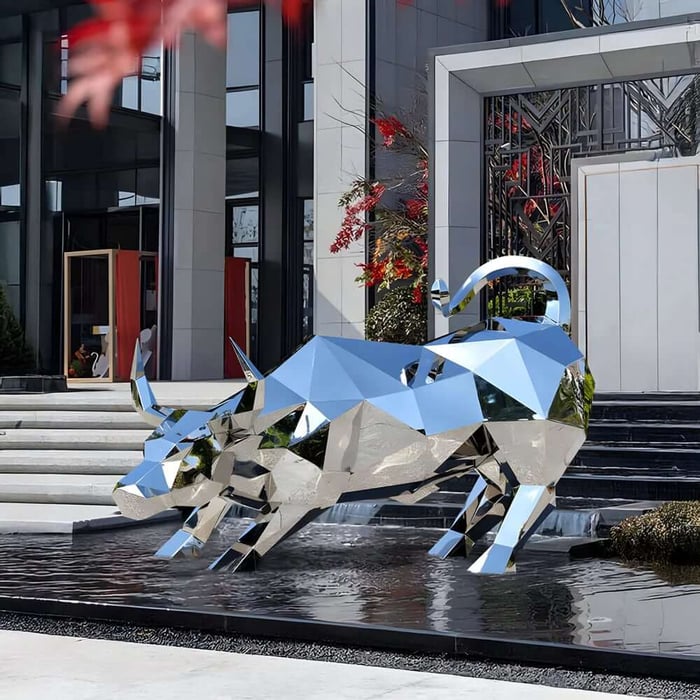
Reflective finishes remain one of the biggest reasons people choose geometric sculptures. Polished stainless steel and mirrored surfaces reflect sky, greenery, and architecture, which helps the sculpture feel integrated into its environment rather than sitting on top of it.
This style works because it’s both bold and adaptable. A reflective sculpture changes with the seasons and time of day. It can look bright and crisp at noon, warm at sunset, and almost mysterious at night under lighting.
The trade-off is upkeep. Mirror finishes show marks more easily than matte ones. If you’re placing reflective geometric sculptures outdoors, think about splashes from sprinklers, muddy footpaths, or salt air. Many people solve this by choosing a brushed or satin finish instead, which still looks premium while being far more forgiving day to day.
This is also where tastes often overlap if you like reflective geometry, you’ll likely enjoy browsing abstract sculptures too, because the appeal is similar: strong form, clean presence, and plenty of visual impact without a literal subject.
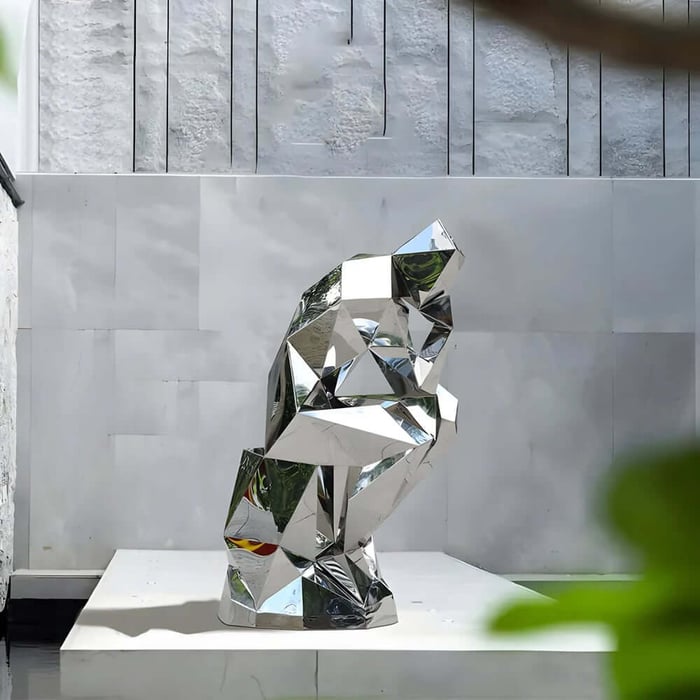
Modular Designs That Build Rhythm and Structure
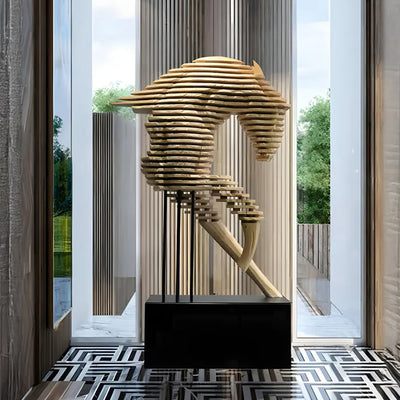
Modular sculptures use repeating units blocks, rings, plates, or geometric elements stacked or arranged with purposeful spacing. They can be minimalist or complex depending on how many parts are used and how tightly they’re grouped.
This style is popular because repetition feels satisfying. It creates rhythm in the same way patterns do in architecture. Modular geometric sculptures also suit commissioned work because they can be scaled up or down, widened or narrowed, and adapted to the proportions of a specific site.
They work especially well along approach routes: driveways, pathways, long corridors, or the edge of a lawn. Repetition draws the eye forward. Indoors, modular pieces can act as a centrepiece in open-plan spaces, giving a room a “designed” energy without adding clutter.
When choosing modular work, pay attention to spacing and balance. The sculpture should read clearly at a distance and still hold interest up close. Strong internal structure matters too modules should feel stable and intentional, not like parts that could shift.
Wall-Mounted Geometry for Smaller Spaces
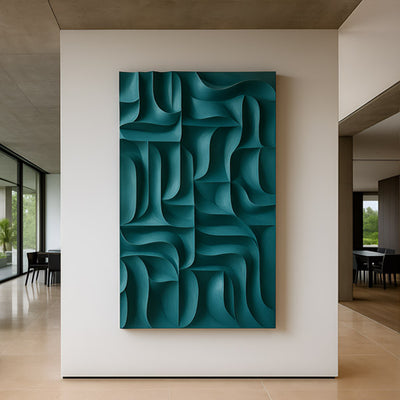
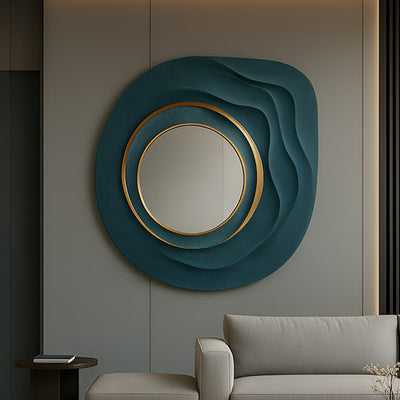
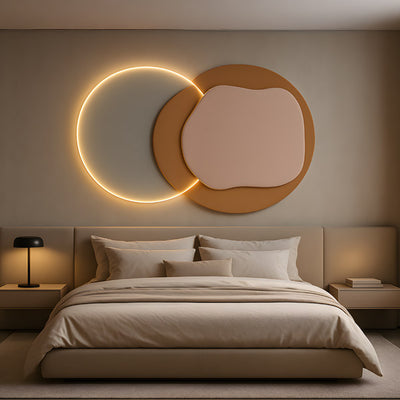
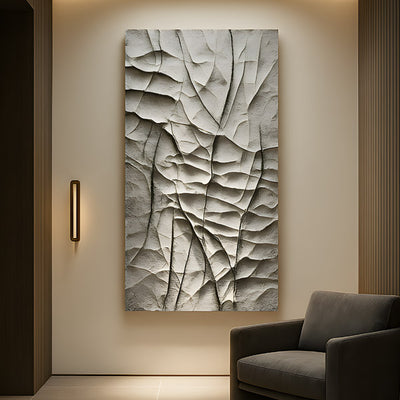
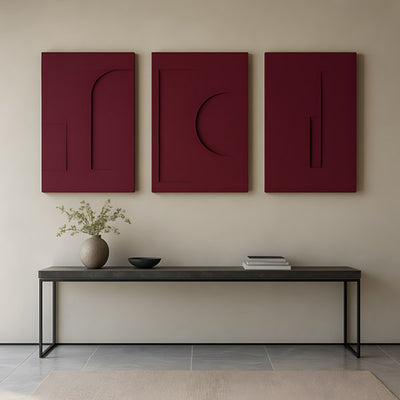
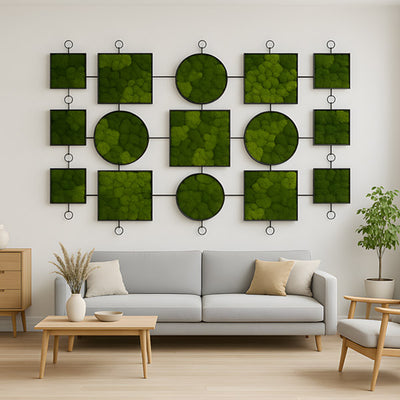
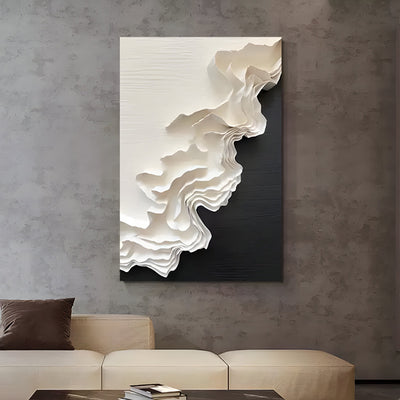
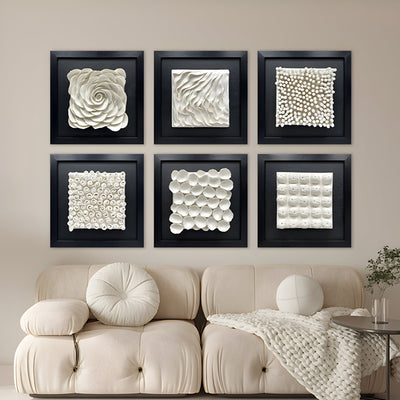
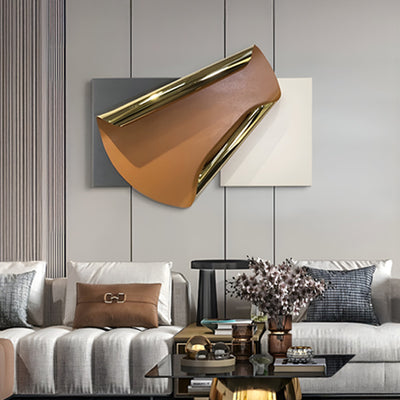
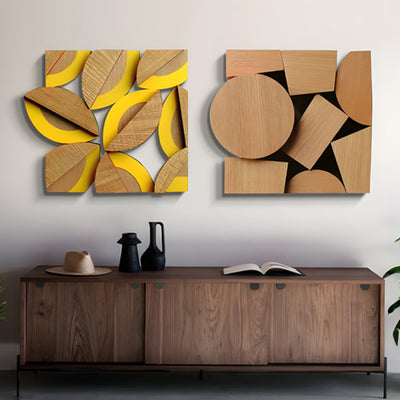
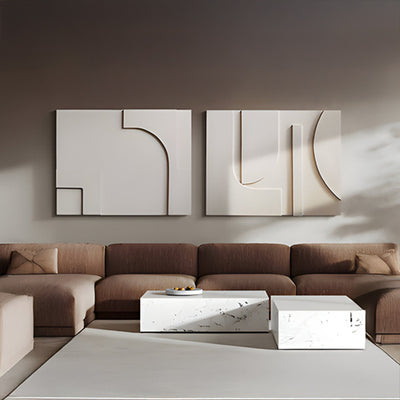
Not every space suits a freestanding piece. Wall-based geometric sculptures give you depth and shape without using floor space. They can be layered panels, folded metal forms, or 3D geometric arrangements designed to create shadow and dimension.
They’re popular because they solve a common problem: blank walls that feel unfinished. A geometric wall piece adds a focal point while keeping the room clean and uncluttered. In hallways and stairwells, they create interest without narrowing the space. Outdoors, they can transform courtyard walls or entrances when made from weather-suitable materials.
The best wall pieces consider lighting. Even subtle depth can look dramatic when light hits it from the side. If your space has overhead lighting only, choosing a sculpture with stronger layering will help it read well, especially in the evening.
And if you’re styling an outdoor space and want something more figurative alongside geometry, it’s natural for buyers to compare modern forms with wildlife sculptures before deciding what best fits the setting.
How to Pick the Right Geometric Sculpture Without Overthinking It
Choosing between geometric sculptures is easier when you decide what the sculpture needs to do.
Start with the job: focal point or finishing touch
If you want a focal point, choose a bolder silhouette, stronger contrast, and larger scale.
If you want a finishing touch, choose a simpler form, softer finish, or smaller presence.
Consider the setting: indoor vs outdoor
Outdoor pieces need to hold their own against the “noise” of nature texture, movement, changing light. Indoor pieces often need to complement furniture and architecture without dominating it.
Think about light
If your space gets strong sunlight, faceted or reflective styles will look dramatic. If light is softer, monoliths and modular pieces often work best because proportion and silhouette do more of the heavy lifting.
Get scale right
This is the biggest deciding factor. Many people buy geometric sculptures that are too small. If the piece can’t be recognised from your main viewing position, it will feel like décor rather than sculpture.
Practical Care Tips to Keep Your Sculpture Looking New
Good maintenance is usually simple, especially if you plan for it.
Polished metal and stainless steel: clean with mild soap and water, use a soft cloth, and avoid abrasive pads that can dull the finish.
Powder-coated finishes: check occasionally for chips and touch up early if needed.
Outdoor installations: ensure the base is stable, and confirm the sculpture is anchored appropriately for wind-prone areas.
A sculpture that’s cared for properly will look better for longer, and it will keep its crispness one of the main reasons people choose geometric sculptures in the first place.
Conclusion: Choose a Style, Then Build the Space Around It
FAQs
What size geometric sculpture should I buy for my space?
Go bigger than you think. For indoors, choose a piece that visually holds its own against your furniture. For outdoors, pick a size where you can recognise the silhouette clearly from your main viewing spot (patio, window, or path).
What material is best for outdoor geometric sculptures?
Stainless steel and powder-coated metal are top choices for outdoors because they handle weather well. Stone and concrete are also excellent if you want a low-glare, permanent look with minimal fuss.
How do I choose between a polished or brushed finish?
Polished finishes give the strongest “wow” effect but show fingerprints and water marks more easily. Brushed or satin finishes still look premium while hiding day-to-day marks, which makes them easier to maintain outdoors.
How are geometric sculptures installed outdoors do they need anchoring?
Large outdoor pieces usually need anchoring for stability, especially in windy areas or high-traffic spaces. The safest approach is a fixed base (bolted to concrete or a secure footing) so the sculpture stays level and secure long-term.
How do I maintain geometric sculptures so they keep looking new?
For metal and stainless steel, clean with mild soap and water using a soft cloth, and avoid abrasive pads. For powder-coated surfaces, check occasionally for chips and touch up early. A simple routine keeps edges crisp and finishes looking sharp.