
Luxury interiors are not created by spending more. They are shaped by intention, proportion and thoughtful detail. When selected with care, living room art becomes more than decoration, setting the tone for the entire space.
It defines atmosphere, strengthens architectural features and introduces a sense of quiet confidence that flows throughout the home. If you want your space to feel elevated rather than simply styled, the artwork you choose matters. Below are carefully curated ideas designed to bring depth, balance and refinement to your entire home.

1. Oversized Statement Living Room Art for Immediate Impact
Nothing communicates confidence like scale. An oversized artwork transforms a blank wall into a focal point that anchors the entire layout. In open-plan homes, a large abstract canvas above the sofa or fireplace establishes structure and prevents the room from feeling fragmented.
For a refined look, choose neutral palettes such as ivory, stone, charcoal or muted metallic tones. These shades complement most interiors while maintaining sophistication. The piece should span roughly two-thirds of the sofa’s width to ensure balanced proportion.
Large-scale works are particularly effective in rooms with high ceilings. They draw the eye upward, creating a sense of height and strengthening the architectural presence of the space.
2. Textured Living Room Art for Depth and Dimension
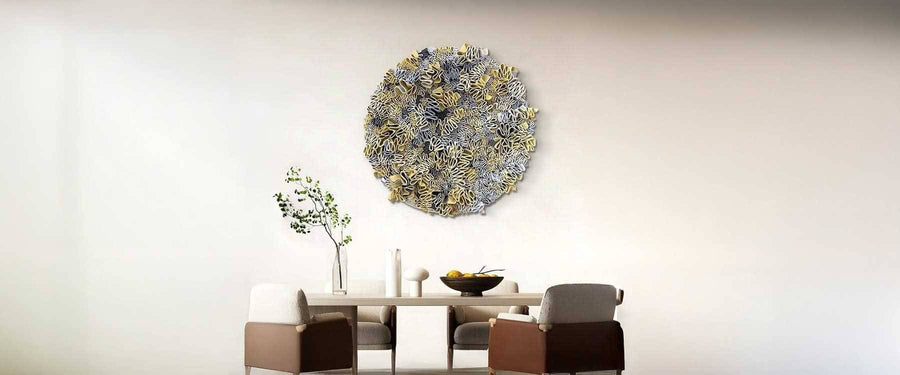
Flat walls can make even well-designed rooms feel unfinished. Textured Living Room Art introduces subtle movement and shadow, which shifts naturally with light throughout the day.
Layered canvas, plaster finishes and sculptural pieces add dimension without overwhelming the room. For contemporary interiors, sculptural 3D art creates architectural interest while maintaining a clean aesthetic. These pieces are especially effective in minimalist spaces where fewer decorative elements allow texture to take centre stage.
When using texture, keep the colour palette restrained. Depth should come from material rather than bold tones.

3. Porcelain Living Room Art for a Polished Finish
Material choice can elevate artwork from decorative to gallery-worthy. Porcelain art offers a smooth, refined surface that enhances detail and reflects light subtly across the room.
This style of Living Room Art pairs beautifully with marble coffee tables, brushed brass accents and natural stone flooring. The finish feels permanent and architectural, making it ideal for contemporary or transitional interiors.
Unlike standard prints, porcelain surfaces create a crisp, luxurious presence that blends seamlessly into sophisticated design schemes.
4. Symmetrical Living Room Art Above the Sofa
Symmetry introduces order and calm. Instead of a single large piece, consider two complementary artworks placed side by side. This approach works particularly well in formal settings or spaces with balanced architectural features.
Choose matching frames or canvases with cohesive tones to maintain harmony. A symmetrical arrangement enhances the structure of the wall while keeping the overall aesthetic refined and intentional.
Spacing is crucial. Leave 5 to 8 centimetres between the pieces and ensure they sit 15 to 25 centimetres above the sofa for visual balance.

5. Curated Gallery Wall with a Luxury Edge
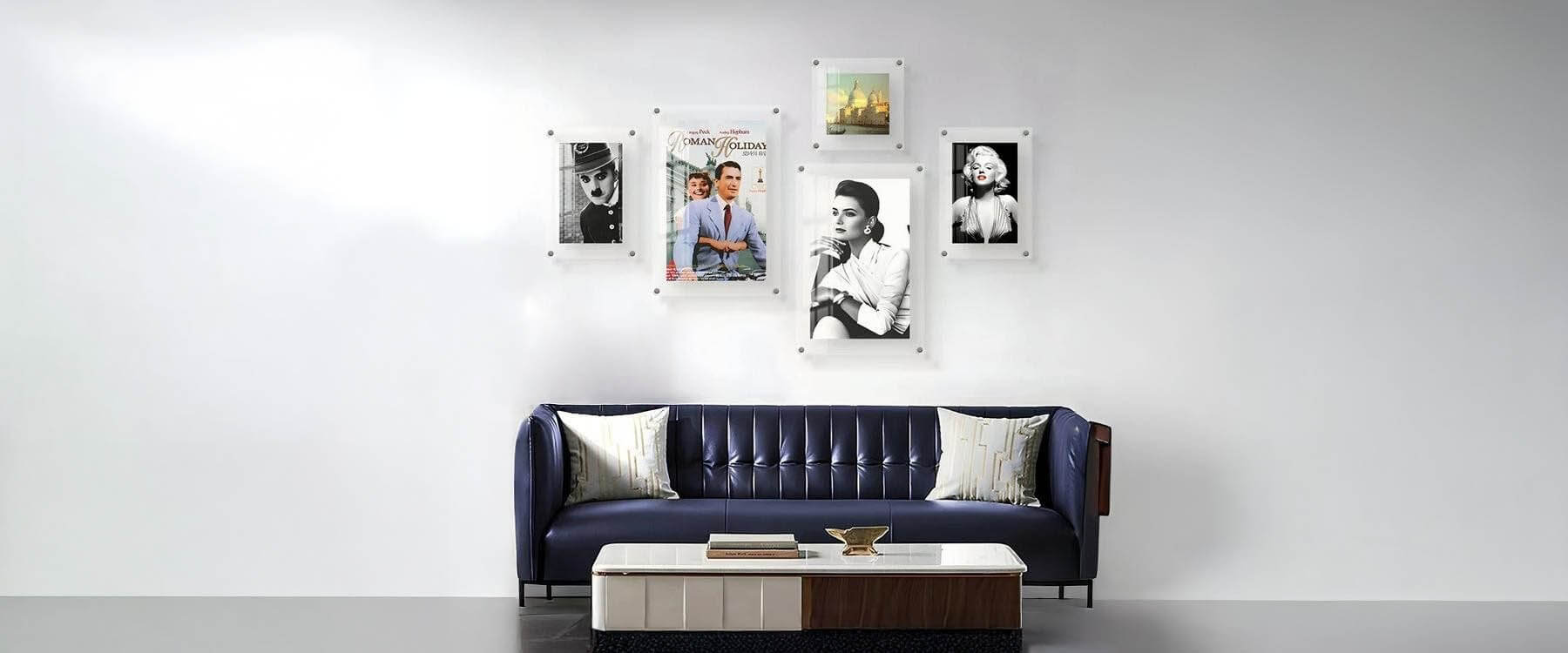
Gallery walls can feel elevated when they are curated with discipline. The key is cohesion rather than variety.
To achieve a refined finish:
Keep frames consistent in colour or material
Maintain equal spacing between pieces
Align edges carefully for structure
Limit the palette to two or three complementary tones
Combine abstract art with subtle photography
This type of artworks well in transitional interiors where personality meets structure. A gallery wall should feel intentional, not random.
6. Monochrome Living Room Art for Understated Elegance
Luxury does not always require bold colour. Monochrome artwork introduces sophistication through contrast and subtle texture rather than vibrancy.
Black-and-white abstract canvases, soft grey landscapes or tonal line drawings blend effortlessly into neutral interiors. These pieces allow high-quality materials such as velvet, marble and wood to stand out without competing for attention.
Monochrome styling is especially effective in homes aiming for timeless design. It resists passing trends while maintaining depth, refinement and visual interest.

7. Statement Art as a Long-Term Investment
Luxury interiors are built to last, with every element chosen for longevity and purpose. High-quality artwork should be viewed as an investment rather than a temporary accessory.
Consider:
Original pieces from emerging artists
Limited edition prints
Hand-finished textured canvases
Sculptural wall features with architectural presence
Investment pieces create individuality and ensure your space feels distinctive. They also retain their appeal as trends evolve, adding lasting value to the overall design of your home.
8. Living Room Art That Complements Architectural Features
Artwork should enhance, not compete with, architectural details. In rooms with fireplaces, alcoves or panelling, placement matters as much as design.
Consider the visual weight of surrounding elements such as mirrors, shelving or statement furniture. The artwork should feel anchored within the space rather than floating or competing for attention.
Hang living room art at eye level, with the centre positioned approximately 145 centimetres from the floor. In rooms with tall ceilings, slightly higher placement may maintain proportion, but avoid positioning art too close to the ceiling.
Lighting also elevates impact. Subtle wall lights or ceiling spotlights create a gallery-style atmosphere and highlight texture.

9. Living Room Art for Different Room Sizes
Small Living Rooms
In compact spaces, one impactful piece works better than multiple small frames. Vertical artwork draws the eye upward, creating the illusion of height. Glossy or lightly reflective finishes can enhance natural light and make the room feel more open.
Large Living Rooms
Expansive walls require presence. Oversized Living Room Art prevents the space from feeling empty and anchors seating areas effectively. Wide-format canvases or multi-panel arrangements are ideal for open layouts.
Scale should always reflect the room’s proportions.
10. Avoiding Styling Mistakes That Diminish Luxury
Even exceptional artwork can lose its impact if styling is careless. Placement, proportion and surrounding décor all influence how a piece is perceived within the space. Without thoughtful positioning and balance, even the finest work can feel disconnected from the room.
Hanging artwork too high
Choosing pieces that are too small for the wall
Overcrowding one area
Ignoring lighting
Clashing colour palettes
Luxury is achieved through restraint and precision. Every element should feel deliberate and visually aligned with the overall design.